Construction Accounting Team Organizes Project Archives and Staged Payments
A construction accounting team organized project archives, multi-contract tracking and staged payments while collecting labor and machine costs automatically per project.
Company Profile / Background
A construction accounting team serves a contracting business where every job is a web of documents, contracts and staged settlements. The accountant's day is dominated by two questions: where is the file for this project, and how much has actually been spent on labor and machinery against it. Before improvement, the answers lived in paper folders and in people's memory, and project cost was only understood long after it was incurred, when correcting it was no longer possible. The team wanted order without drowning in administrative work.
Core Challenges
Project cost collected too late
Every expense on a site is, in effect, construction cost, but on-site labor, materials and machine charges could not be gathered in real time. By the time overspending showed up in a monthly report, it was already too late to react, and the accountant was left explaining variances that nobody could have caught earlier.
No single project archive
Project content, schedule, owner, team and documents were scattered across desks, email and shared drives, so pulling together a complete picture of any job for an audit or a payment request meant hunting through many places and hoping nothing was missing.
Staged payments and contracts hard to track
A single project often carries several contracts, and payments are released in stages tied to milestones. Without a system linking contracts, stages and support documents, the accountant could not easily show progress or support a drawdown, so payment requests dragged and cash arrived late.
How the System Solved It
The team deployed the HaoYeCai cloud ERP suite (the ERP product by Chanjet) as the single home for each project's records and costs. Once documents, contracts, and cost lines are attached to the same project card, the archive builds itself and spending is captured as it happens.
One archive per project
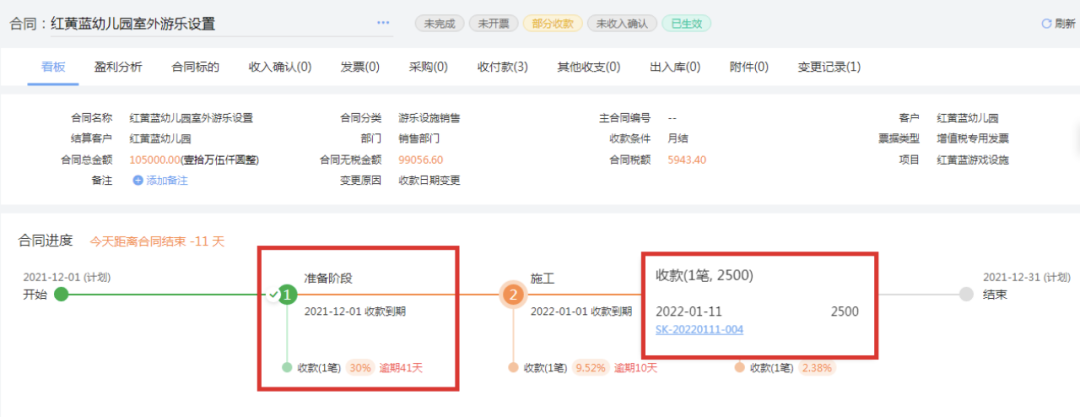
The platform lets the team record project content, timeline, owner, team and documents directly, building a complete, searchable archive for every job instead of a pile of loose files. Multiple contracts can be signed against one project, with clear visibility into each contract's progress and the support status of related contracts, so nothing falls through the cracks.



Labor cost tied to the project
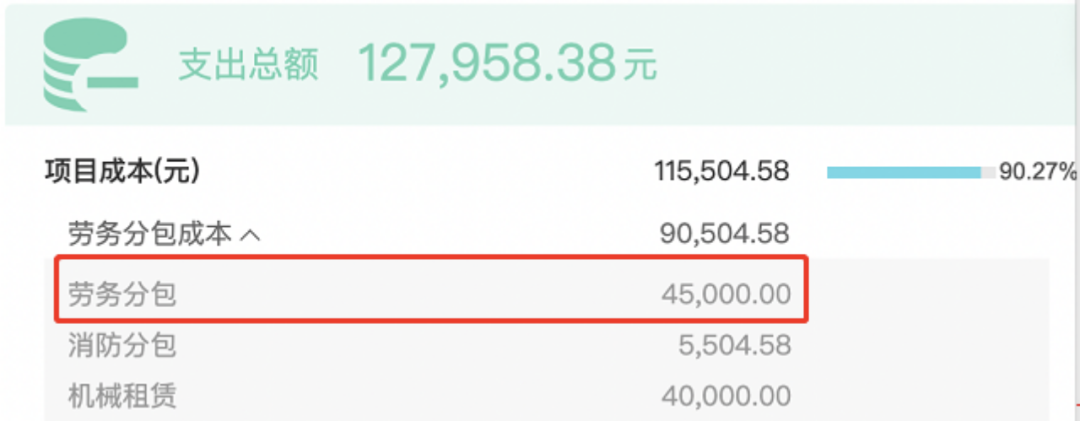
Wages and other payments for project staff are linked to the project, capturing the people cost automatically so it no longer has to be reconstructed by hand at period end. The accountant sees labor load per job as it builds, which makes crew sizing and overtime easier to question.
Machine and other costs captured as well
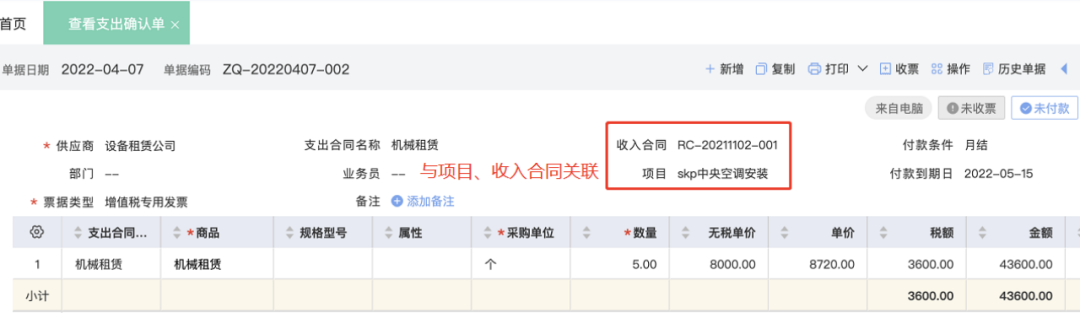
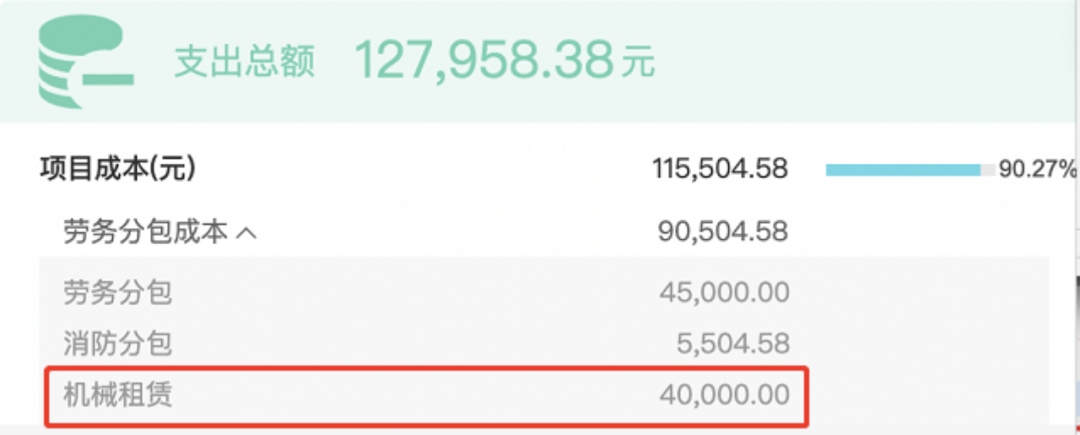
Machine rental, fixed-asset depreciation and other expense categories are also associated with the project, collecting the equipment and overhead cost in the same disciplined way. Because every cost type lands on the same card, the total project cost is complete and no category is silently forgotten.

Measurable Results
Earlier sight of overspending
Because labor and machine costs now flow to the project as they happen, the accountant can flag a cost overrun while there is still time to act, instead of reporting it after the money is gone. That early warning turns cost control from a post-mortem into a live habit.
Faster, cleaner payment support
A complete project archive plus linked multi-contract and staged records means a drawdown request can be assembled in minutes with the right supporting documents attached. That reduces the back-and-forth with project managers and owners, shortens the cash cycle, and lets the accountant spend effort on analysis instead of paperwork.
Audit-ready by default
Because every document, contract and cost line lives on the project card, an audit or owner review becomes a search rather than a scramble. The accounting team can answer any question about a job's history on the spot, which builds trust with clients and lenders alike.
Conclusion
A construction accountant's leverage comes from organized archives and timely cost capture. By unifying project files, multi-contract tracking and automatic labor and machine cost collection, the ERP suite lets the accounting team close books earlier and protect margin with confidence. The archive also becomes a reusable asset: lessons from one job feed cleaner estimates on the next. For a team that used to lose hours to filing, that shift alone pays for the system.
Related reading
Solving Apparel Wholesale Pain Points with Online Selection and Smart Warehousing
An apparel wholesaler cut order-entry time, reduced churn, and tamed multi-warehouse picking with a cloud ERP. Online selection and attribute cataloging streamlined the flow.
Read guide →Customer Case StudyAustralia Frozen Meat Processor: Accurate Costing for Whole-Chicken Cutting
How a Melbourne frozen-meat processor used ERP barcode, BOM disassembly and batch control to cut receiving time and cost every chicken part precisely.
Read guide →Customer Case StudyHow a Beijing IC Company Achieved Finance–Operations Integration for Precision Management
A Beijing integrated-circuit maker unified purchasing, outsourcing, kit sales, and accounting in one ERP, automating cost allocation and cutting month-end close effort.
Read guide →