Fresh & Frozen Seafood Retail: Online Ordering and Reconciliation
How a fresh and frozen seafood wholesaler-retailer digitized store ordering and reconciliation with ERP, cutting manual entry and sharpening margin visibility.
Why Fresh and Frozen Seafood Is Hard to Run
The fresh and frozen seafood trade moves quickly and spoils even faster. Operators that serve both wholesale and retail channels share a familiar set of headaches: stores that are difficult to coordinate, inventory that turns over in a matter of days, and month-end reconciliation that swallows hours of staff time. Cold-chain handling adds another layer of pressure, because a missed delivery or a wrong count can mean spoiled stock and a direct hit to profit. Without a connected system, head office loses sight of what each store actually ordered, received, and sold. That blind spot quietly erodes margin and makes every planning decision a guess.
Company Profile: A Seafood Wholesale-and-Retail Operator
Our case study is a seafood and frozen-food trading company built around a wholesale-plus-retail model. Its headquarters runs a central cold-storage warehouse that handles consolidated purchasing and inventory control, while several storefronts serve end consumers directly. The catalog spans cuttlefish, mackerel, salmon, processed fish heads, and golden vermicelli scallops, along with other chilled and frozen lines.
- A central cold store acts as the master warehouse for consolidated buying
- Multiple retail stores serve local consumers face to face
- Both wholesale and retail order flows run through the same operation
- Product lines include cuttlefish, mackerel, salmon, processed fish heads, and golden vermicelli scallops
Core Challenges Before Implementation
Store ordering was manual and error-prone
Stores placed orders with head office by phone or WeChat, and staff then re-keyed every request into the system by hand. Beyond being slow, this step invited transcription mistakes that led to wrong shipments. During peak periods the office had to process orders from every store at once, and requests were easily missed, directly disrupting store operations and frustrating customers.
Stocktaking data arrived late and in messy formats
At month-end, stores reported their counts through Excel sheets, which meant delayed transmission and inconsistent layouts. Head office could not see real-time stock levels per store, so purchasing plans and inventory transfers were built on guesswork rather than hard facts. The lag made it impossible to react when one location ran short while another sat overstocked.
Sign-off status was invisible, making reconciliation painful
The office had no live view of when stores actually received goods. It could only call around or wait for stores to report back. That left credit-period management unreliable and produced timing gaps and mismatches at reconciliation. Because receipt times were fuzzy, calculating each store's gross margin rested on shaky cost data, and finance could never fully trust the numbers.
How the System Solved It
The company adopted an integrated platform that connects sales management and purchasing management into one store-ordering and reconciliation workflow, replacing phone calls and spreadsheets with a single source of truth.
Digital store ordering with end-to-end order tracking
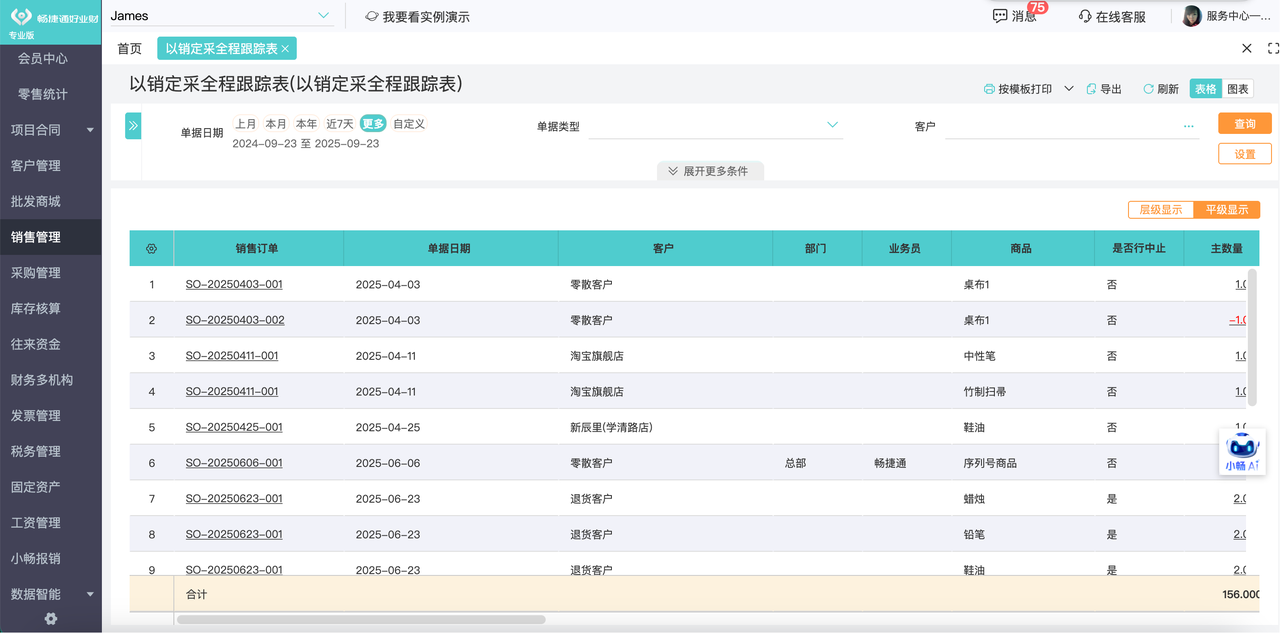
Stores now place orders online through a dedicated wholesale mall using their own accounts, and the order data flows straight to the head-office sales workbench with no manual entry at all. The office reviews and approves orders online, and once approved they move automatically into fulfillment. A sales-driven purchasing tracker makes the whole path visible, from store order to head-office purchase to dispatch, closing the long-standing gap between ordering and procurement.
Purchase returns keep inventory quality under control
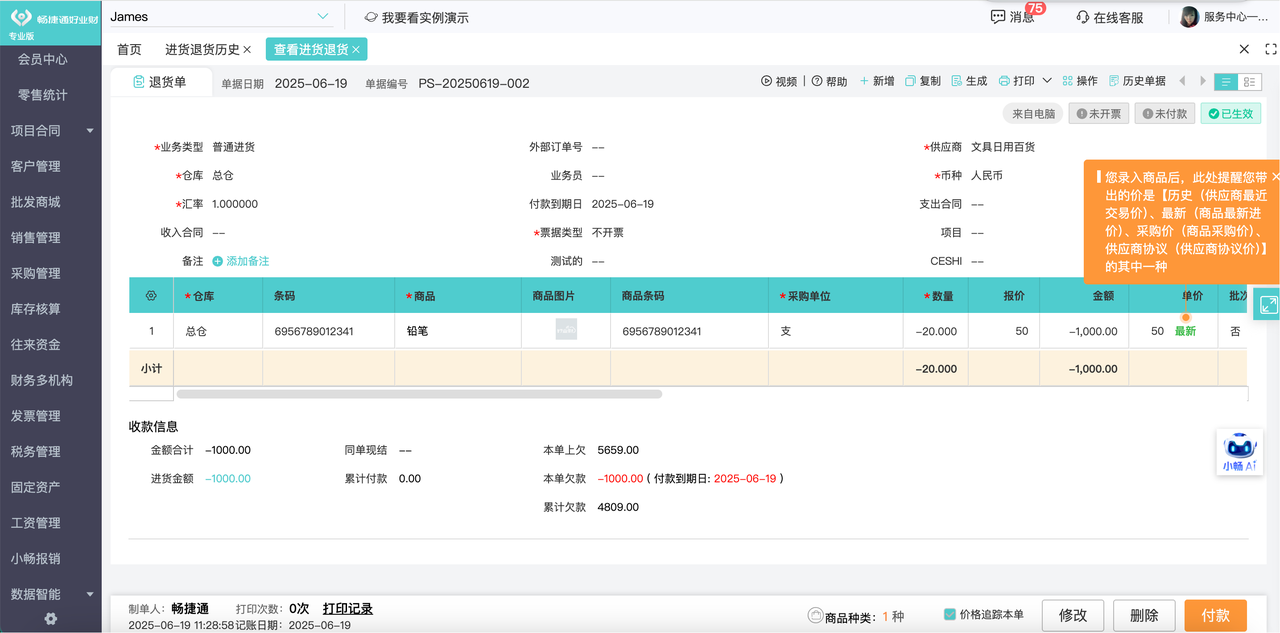
When received seafood shows quality problems or quantity discrepancies, the purchase-return function lets staff raise a standardized return document in just a few clicks. Returns can be generated from the original purchase order and fully linked back to it, so the entire return cycle stays traceable. That linkage prevents duplicate payments and removes the supplier reconciliation differences that used to appear at month-end.
Measurable Results
Ordering is faster and cheaper
With stores ordering through the wholesale mall, order data reaches head office automatically, eliminating re-keying entirely. Staff are freed from repetitive data entry and can focus on order review and business analysis instead. The time saved translates directly into lower operating cost and fewer shipping errors.
Standardized data supports sharper decisions
A consistent customer master and product master let sales data be exported and analyzed across multiple dimensions. Management can now clearly see each store's sales, stock position, and profitability, giving purchasing plans and store operations a reliable data foundation instead of intuition.
Visible sign-offs make reconciliation accurate
Store receipt status is tracked online, so head office sees real-time deliveries and sign-off times. That gives credit-period management and customer reconciliation dependable inputs, and month-end store gross-margin costing becomes precise. Finance moves from chasing missing figures to managing a clean, disciplined ledger.
Conclusion
By putting the platform in place, the company did more than fix store ordering and reconciliation. It built a transparent, collaborative operating backbone that lets it scale confidently in the fast-moving fresh and frozen seafood market, where speed and accuracy decide who wins.
Related reading
Solving Apparel Wholesale Pain Points with Online Selection and Smart Warehousing
An apparel wholesaler cut order-entry time, reduced churn, and tamed multi-warehouse picking with a cloud ERP. Online selection and attribute cataloging streamlined the flow.
Read guide →Customer Case StudyAustralia Frozen Meat Processor: Accurate Costing for Whole-Chicken Cutting
How a Melbourne frozen-meat processor used ERP barcode, BOM disassembly and batch control to cut receiving time and cost every chicken part precisely.
Read guide →Customer Case StudyHow a Beijing IC Company Achieved Finance–Operations Integration for Precision Management
A Beijing integrated-circuit maker unified purchasing, outsourcing, kit sales, and accounting in one ERP, automating cost allocation and cutting month-end close effort.
Read guide →