How a Mechanical Equipment Firm Cut Finance Workload by 39% with a Project Dashboard
Heze Shangkun replaced Excel tracking and paper contracts with an ERP project dashboard, cutting finance workload 39% while tightening receivables and change control.
Company Background
Heze Shangkun Mechanical and Electrical Equipment Co., Ltd. was founded on July 20, 2016, in Heze, Shandong Province. Its operations cover the sale of mechanical and electrical equipment and materials, metal products, and non-hazardous chemical products, together with import and export agency, equipment repair, technical services, R&D in electrical drive technology, and the sale of educational instruments. After nearly seven years of development, Shangkun has become an experienced equipment enterprise with a solid track record.
Growth Brings New Pressures
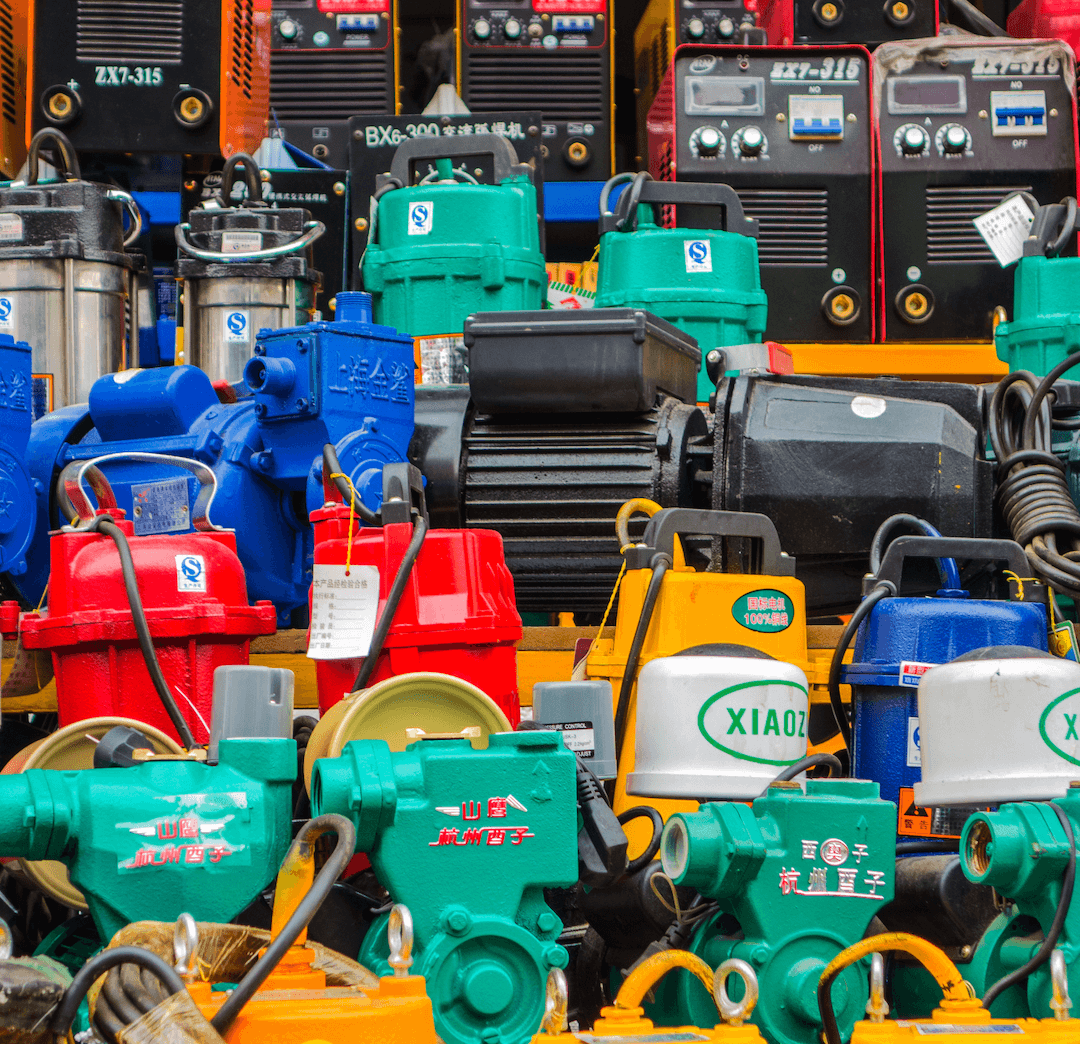
Shangkun runs repair and sales operations for many types of equipment, maintains more than ten branch offices across China, and takes on over 100 projects every year. Rapid growth is good news, but it also multiplied the firm's operational challenges. The question became how to meet those challenges head-on and lift efficiency through digital management, a journey worth examining for any equipment distributor scaling up.
Four Operational Challenges
Challenge 1: Many projects, manual collection tracking, late receivables
Before adopting ERP, Shangkun logged collection dates in Excel. With so many projects and weak supervision, the team had no reliable way to sense progress, which easily led to rising costs and delayed collections and cost the company real money.
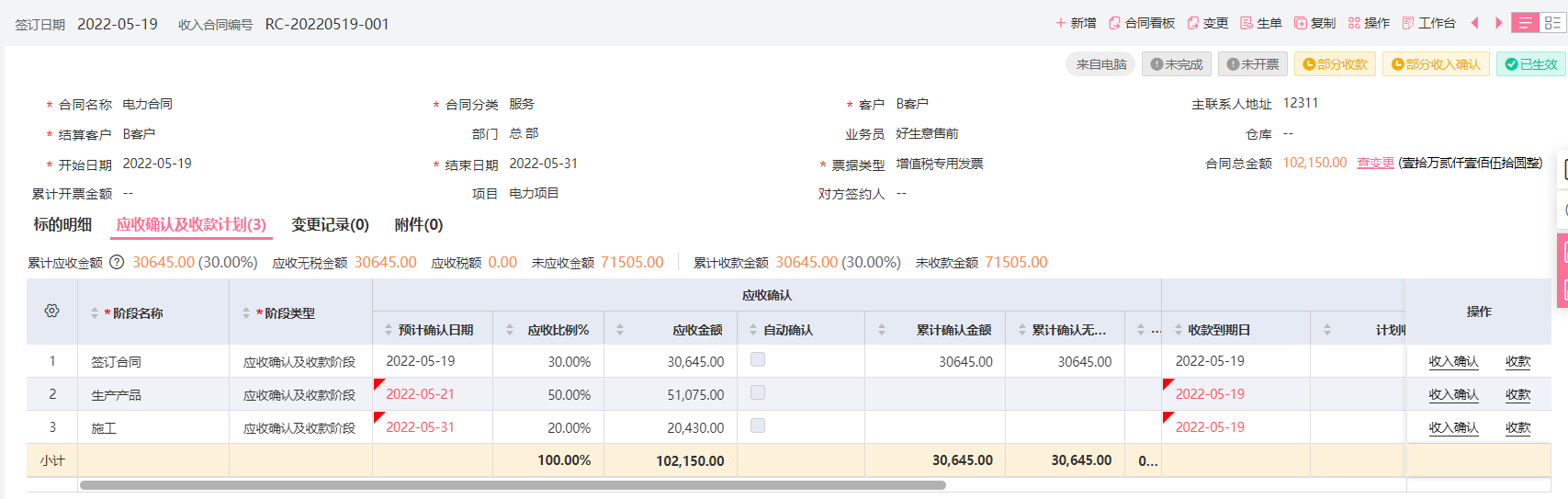
HaoYeCai's project management module supports staged settlement and collection tied to project progress, automatically prompts the collection plan, and raises alerts on exceptions. With before, during, and after reminders plus an overdue function, the company can recover funds on time, spot problems early, and lower its risk exposure.
Challenge 2: Many contracts, paper files hard to manage and find
As the business matured, contract types and volumes grew. A dedicated clerk had to number and file paper contracts, and a storage room was needed to keep them safe. Labor and storage costs rose while efficiency fell. Large paper stacks were hard to search, easy to lose, and prone to aging and damage, and manual handling opened the door to tampering and legal disputes.
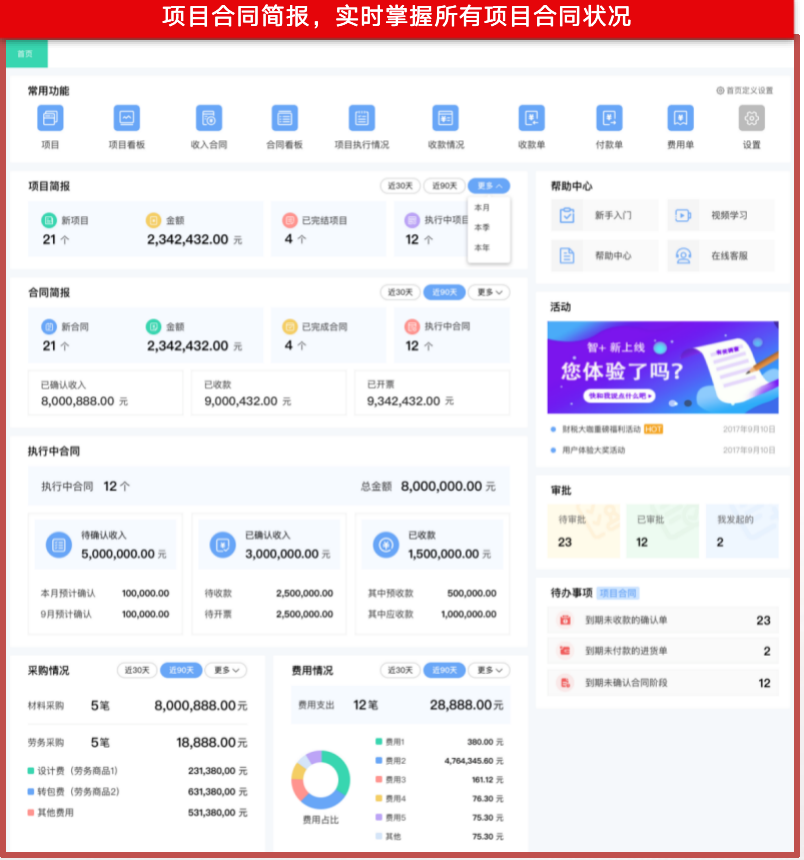
HaoYeCai manages contracts electronically, storing signed e-contracts in the cloud so no physical space or extra staff is needed. Electronic archiving makes retrieval fast and convenient, and both PC and mobile users can check the company's overall project status anytime. Income and collections for completed and ongoing contracts are visible at a glance to owners, project managers, and finance, with procurement and expense details equally clear.
Challenge 3: Extended repair and install times make cost-profit accounting hard
With many projects and varied client demands, equipment repair and installation sometimes stall. Without a system to record changes, staff relied on memory and made frequent errors, which sparked customer complaints, hurt the company's reputation, and made cost and profit accounting even harder.
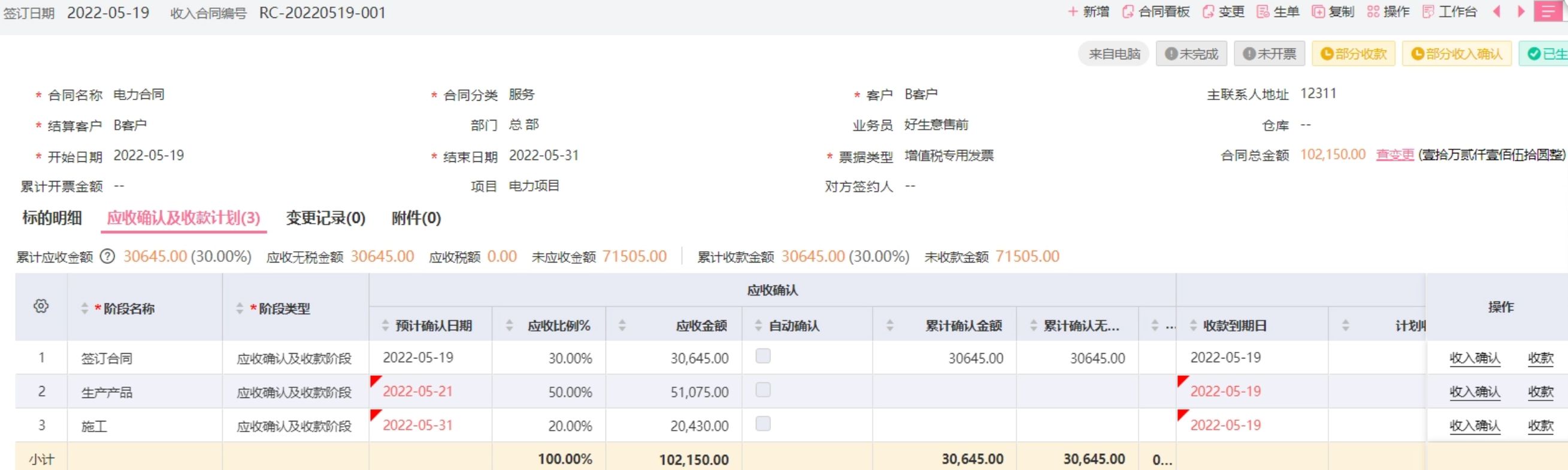
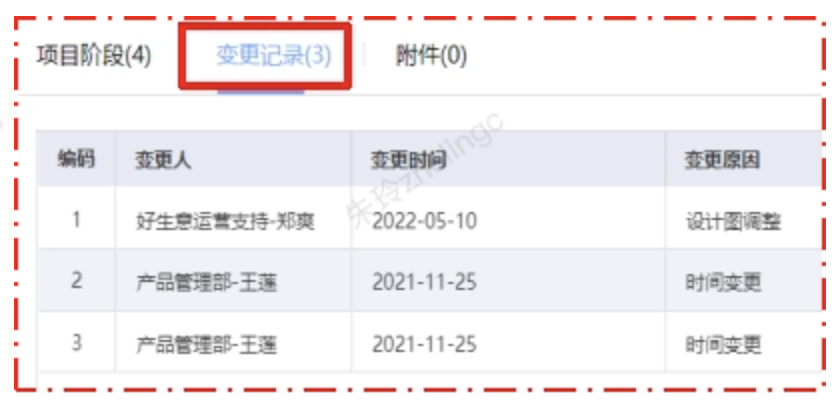
HaoYeCai records every project change in detail, with before-and-after comparisons and full lifecycle tracking. That not only prevents disputes between client and company but also makes bookkeeping far easier, letting accountants calculate profit without guesswork.
Challenge 4: Ad-hoc data requests force finance overtime and errors
Without a project dashboard overview, the owner would occasionally ask for project data on short notice. Accountants had to compile figures under time pressure, where high volume and urgency invited mistakes, frustrating both sides.
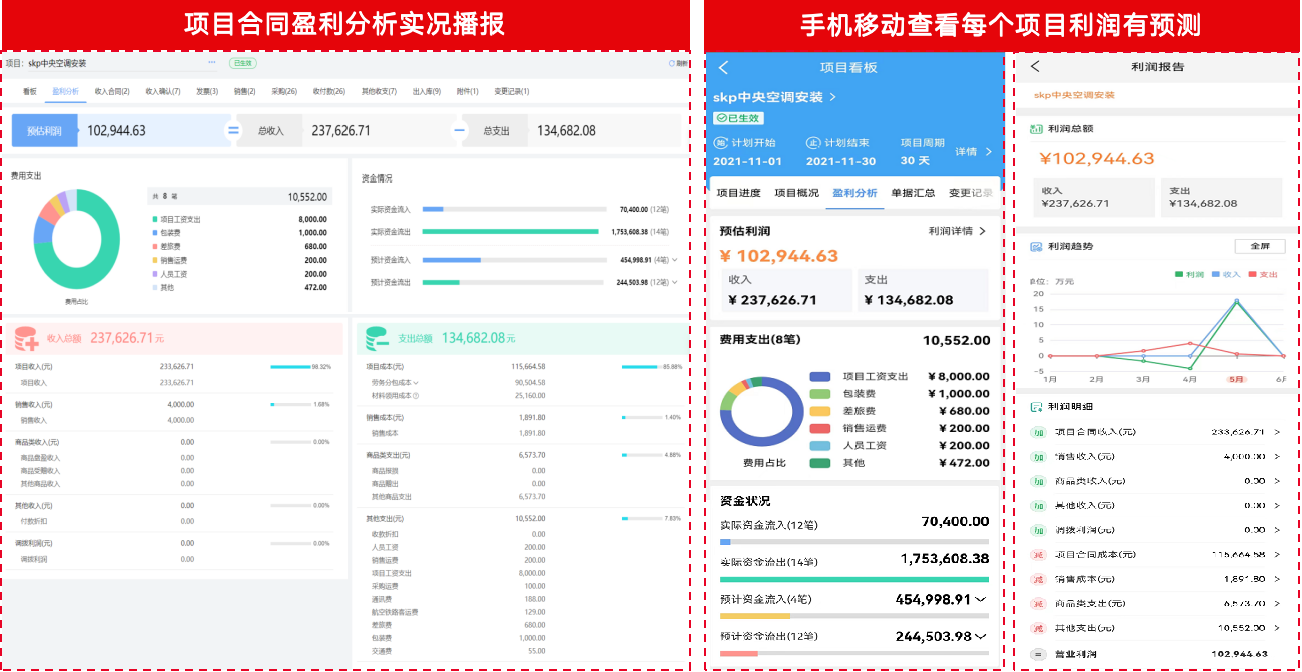
The system lets users view project income and expense anytime, forecast profit, monitor income and cost line items in real time, and analyze profitability, with live progress updates accessible from PC or mobile by owners, project managers, and finance alike.
The Outcome: 39% Less Finance Workload
With Chanjet's help, Heze Shangkun now recognizes revenue and collections in stages aligned to contract progress, and finance collects against that progress while the system issues before, during, and after alerts. Classified project archives and a contract workspace make it easy to locate any contract, and the project dashboard shows contract execution in real time with no separate manual statistics, trimming the finance team's workload by 39%. Costs are aggregated by project automatically, producing project profit statements, ledger balances, and analysis reports on demand. The owner can open any project, see its linked contracts, collections, and profit, and understand operations directly.

Lessons for Equipment Distributors Scaling Up
Shangkun's story is familiar to any equipment distributor that grows beyond a handful of projects. Spreadsheets and paper files work at small scale but break down once jobs spread across regions and branches. The 39% drop in finance workload is the headline number, yet the deeper benefit is discipline: collections are prompted automatically, contracts live in one searchable place, and change history is captured instead of remembered. That discipline is what lets a growing firm add projects without adding proportional back-office strain, and it is the kind of operational leverage an ERP project dashboard is built to deliver.
Related reading
Solving Apparel Wholesale Pain Points with Online Selection and Smart Warehousing
An apparel wholesaler cut order-entry time, reduced churn, and tamed multi-warehouse picking with a cloud ERP. Online selection and attribute cataloging streamlined the flow.
Read guide →Customer Case StudyAustralia Frozen Meat Processor: Accurate Costing for Whole-Chicken Cutting
How a Melbourne frozen-meat processor used ERP barcode, BOM disassembly and batch control to cut receiving time and cost every chicken part precisely.
Read guide →Customer Case StudyHow a Beijing IC Company Achieved Finance–Operations Integration for Precision Management
A Beijing integrated-circuit maker unified purchasing, outsourcing, kit sales, and accounting in one ERP, automating cost allocation and cutting month-end close effort.
Read guide →