Hotel and F&B Operator Unifies Homestay, Dining and Salon on One Platform
A hotel and F&B operator unified homestay, dining and salon businesses on one platform, auto-syncing cashier data and calculating dish-level material cost.
Company Profile / Background
A hospitality operator runs a bundled business: a homestay, a restaurant and a salon, each with its own revenue and cost shape and its own daily rhythm. It had been running a stand-alone desktop finance package alongside a separate inventory tool, while restaurant data was entered by hand into inventory and then re-keyed as vouchers into finance. Multiple systems that did not talk to each other meant duplicate work, late reports, and frequent errors that had to be chased down by hand. As the business grew and added outlets, management wanted real business-finance integration rather than three partial views of one company.
Core Challenges
Manual double entry between systems
Restaurant transactions were typed into inventory by hand and then typed again as accounting vouchers at day's end. The repetition was slow and tempting to skip on a busy night, and the two records often disagreed, undermining trust in the numbers and forcing reconciliations that ate into close time.
No per-business profitability
Homestay, dining and salon were blended in the books, so the owner could not see which unit earned and which drained cash. Without that split, it was hard to price a room, a plate or a treatment wisely, and capital was allocated on hunches rather than evidence.
Coarse food cost
Restaurant cost was tracked roughly at the category level, not by dish, so menu pricing and waste control lacked a solid foundation. A popular item could quietly lose money while a slow mover looked profitable, and the kitchen had no number to act on.
How the System Solved It
The operator moved the three businesses onto the HaoYeCai cloud ERP suite (the ERP product by Chanjet), where each unit is a project and the connector links the restaurant till to inventory and finance. From there, the double-entry problem and the blind spots start to disappear.
Independent accounting per business unit
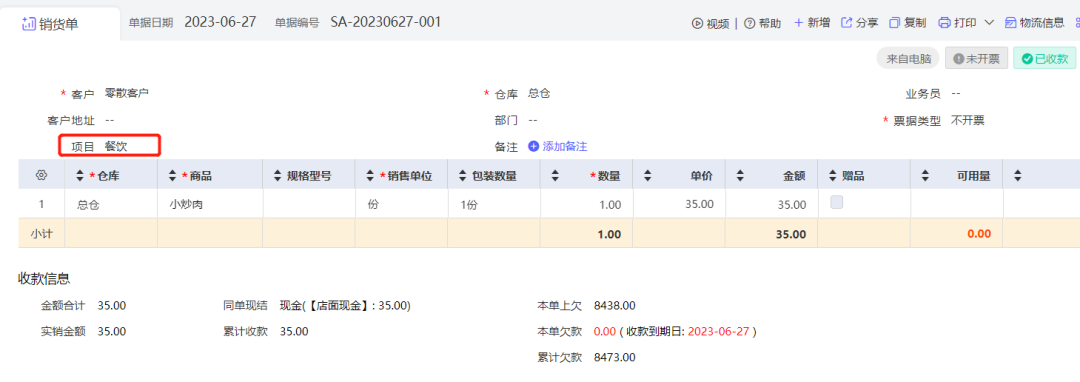
The homestay, restaurant and salon are set up as independent projects, each accounted for on its own, while the company overall is consolidated in one system. This satisfies both per-unit profitability and group-level reporting without buying separate software for each outlet, and a new unit can be added as one more project.
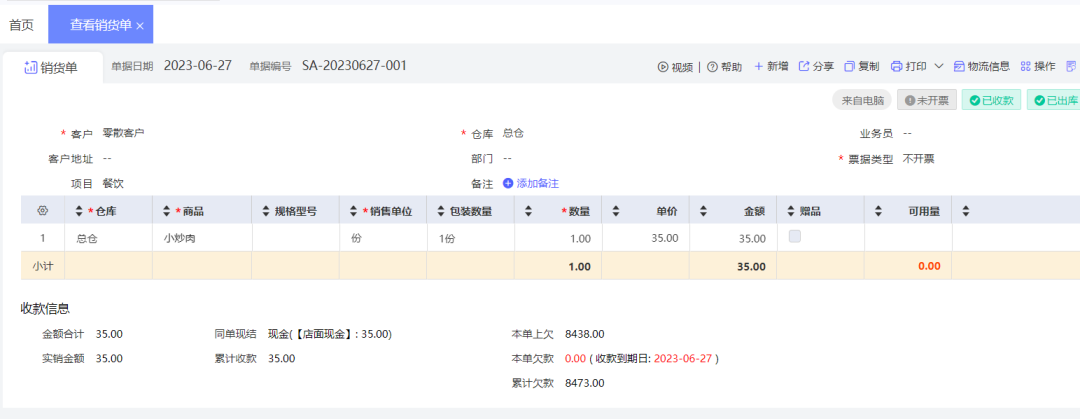
Cashier data synced straight to inventory
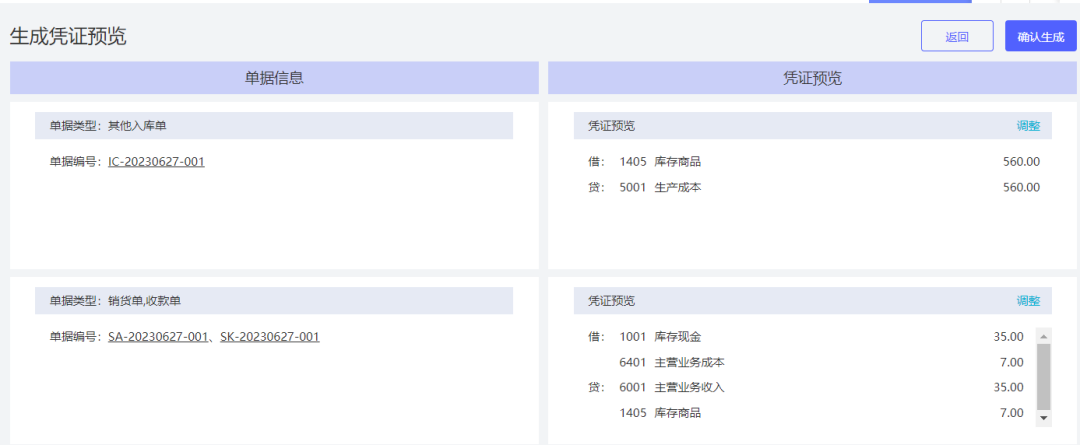
Through a connector, restaurant point-of-sale data flows directly into the inventory system as sales happen, removing the manual re-entry step entirely. The homestay, salon and gift sales are handled as normal trade business, so the operator achieves both unit-level and company-level accounting from the same ledger.
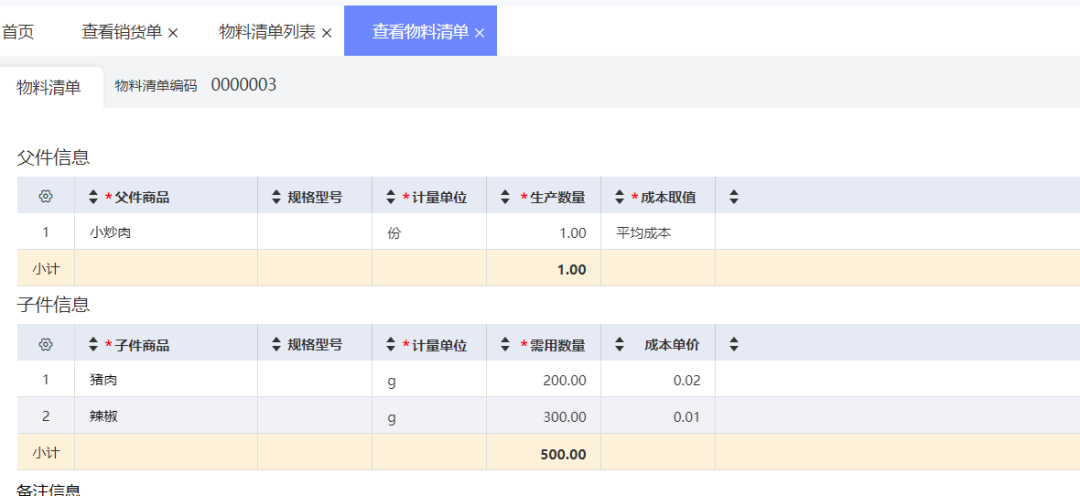
Dish-level cost through assembly orders
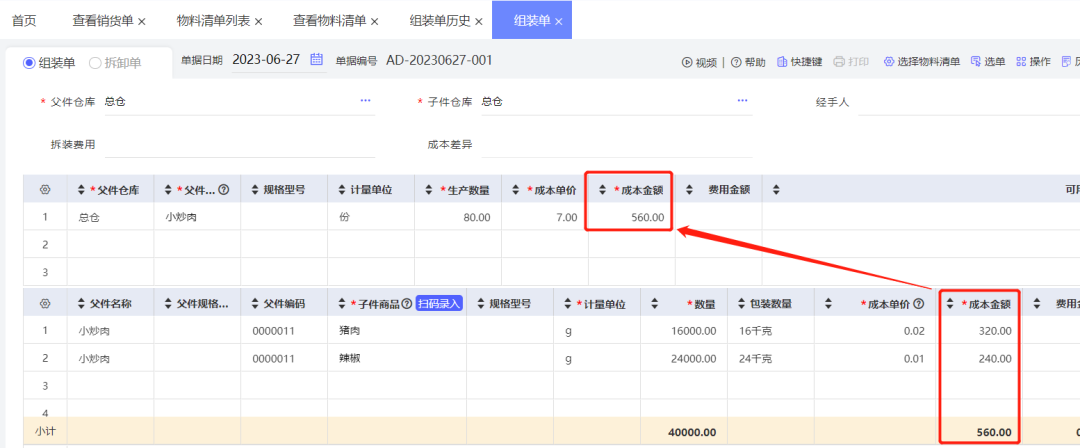
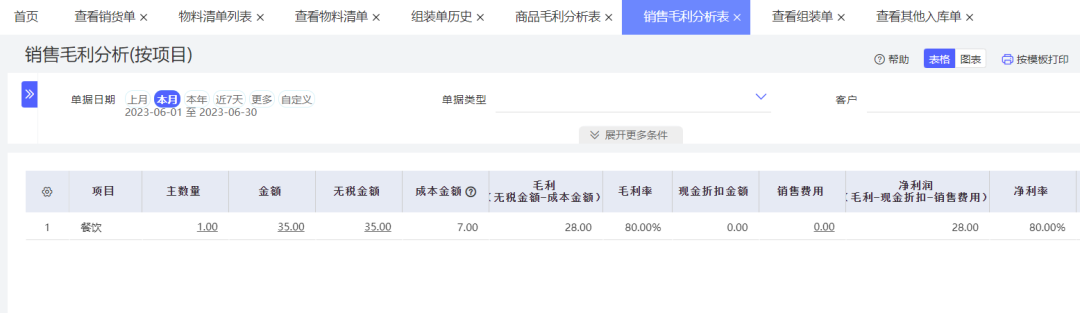
For fine food-cost control, if the POS carries a cost card, it syncs directly to an assembly order in the platform, which automatically calculates the material cost of each dish from its recipe. Where no cost card exists, the team builds the assembly order from the number of dishes sold in the period, still arriving at an accurate per-plate cost that the chef can trust.

Measurable Results
Manual entry eliminated
With cashier data flowing automatically into inventory and finance, the duplicate typing disappears and the two records finally agree at the end of every shift. That frees staff from reconciliation, cuts entry errors, and lets the close happen in minutes instead of the next morning.
Profit and food cost made visible
Per-unit accounting shows which of the homestay, restaurant and salon earns, while dish-level cost gives the kitchen a precise basis for pricing and waste control, turning intuition into managed margin. The owner can finally answer a simple question, which part of the business is worth expanding, with a report rather than a guess.
Ready for the next outlet
Because each new location is just another project on the same platform, opening a branch no longer means standing up a new system and a new set of spreadsheets. The operator can scale the bundle of businesses without scaling the administrative burden that usually comes with it.
Conclusion
A multi-format hospitality business does not need several disconnected tools. By integrating cashier data, accounting each unit independently and calculating cost per dish, the ERP suite replaced manual double entry with a single, trustworthy business-finance view. The staff stopped being clerks and the owner started steering the business from one screen.
Related reading
Solving Apparel Wholesale Pain Points with Online Selection and Smart Warehousing
An apparel wholesaler cut order-entry time, reduced churn, and tamed multi-warehouse picking with a cloud ERP. Online selection and attribute cataloging streamlined the flow.
Read guide →Customer Case StudyAustralia Frozen Meat Processor: Accurate Costing for Whole-Chicken Cutting
How a Melbourne frozen-meat processor used ERP barcode, BOM disassembly and batch control to cut receiving time and cost every chicken part precisely.
Read guide →Customer Case StudyHow a Beijing IC Company Achieved Finance–Operations Integration for Precision Management
A Beijing integrated-circuit maker unified purchasing, outsourcing, kit sales, and accounting in one ERP, automating cost allocation and cutting month-end close effort.
Read guide →