Cross-Border Chemical Sourcing: Accurate Multi-Currency Costing for an Indonesian Manufacturer
An Indonesian paint maker tamed scattered stock, allocated China freight and tariffs per batch, and ran AR/AP in rupiah with an ERP built for cross-border costing.
Why Cross-Border Chemical Costing Is Hard
Chemical producers already wrestle with volatile material prices, intricate inventory and strict costing accuracy. Add international sourcing and the difficulty multiplies: multiple currencies, overseas freight, import duties and distributor rebates all have to land in the right cost bucket. Without digital control, those extra layers turn true product cost into a rough estimate rather than a number managers can trust.
Company Snapshot
The business here is an Indonesian chemical manufacturer and trader producing paints, coatings, latex paint and putty powder. It runs an order-driven model: some raw materials are bought in China and shipped by sea to Indonesia, while others are sourced locally. The internal plant blends and mixes them, then delivers finished goods straight to customers. That mix of cross-border and local supply makes cost allocation the central management problem.
Three Pressing Challenges
Raw-material stock was scattered and invisible
Inventory data lived in assorted spreadsheets and systems, so managers could not see true stock levels in real time. Crucially, there was no proper material issue step, meaning consumption at production was never recorded accurately. Month-end counts kept revealing gaps between the books and the floor, directly damaging costing reliability.
Cross-border costing was a manual nightmare
Materials imported from China carried freight, customs duties, insurance and exchange-rate effects that all needed spreading into the specific material's cost. On the sales side, distributor rebates and delivery freight had to be allocated per order. With no systematic allocation tool, the finance team did it by hand, slowly and with frequent errors, so the reported cost was rarely right.
Settlement terms varied and receivables got messy
Different customers ran different terms, cash on delivery, monthly settlement, deposit plus balance, or installment plans. Without one shared receivables and payables system, finance struggled to track each customer's balance and due date, leading to late or duplicated chasing that strained relationships and slowed cash recovery.
How the ERP Resolved It
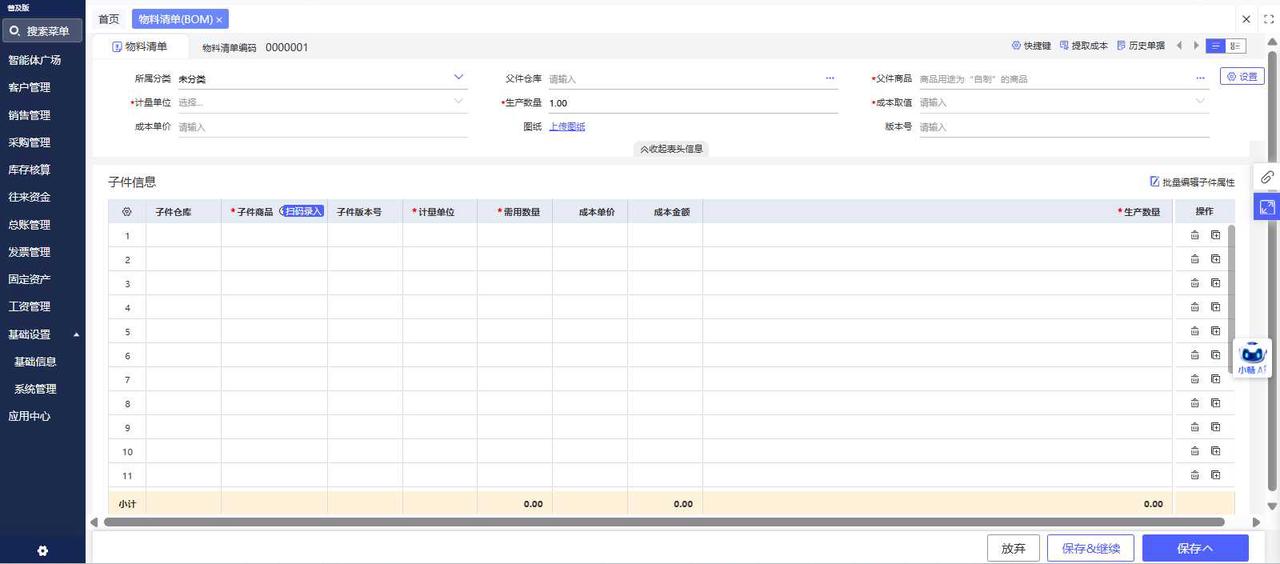
BOM management pinned down production usage
A bill of materials was created for every product, fixing each input's ratio and expected loss rate so blends stay consistent. From a production order and its BOM, the system computes required materials automatically, removing hand calculation and improving plan accuracy. Version control keeps a history of formulas, so when a recipe changes the old version is preserved and the new one takes effect without disrupting active production.
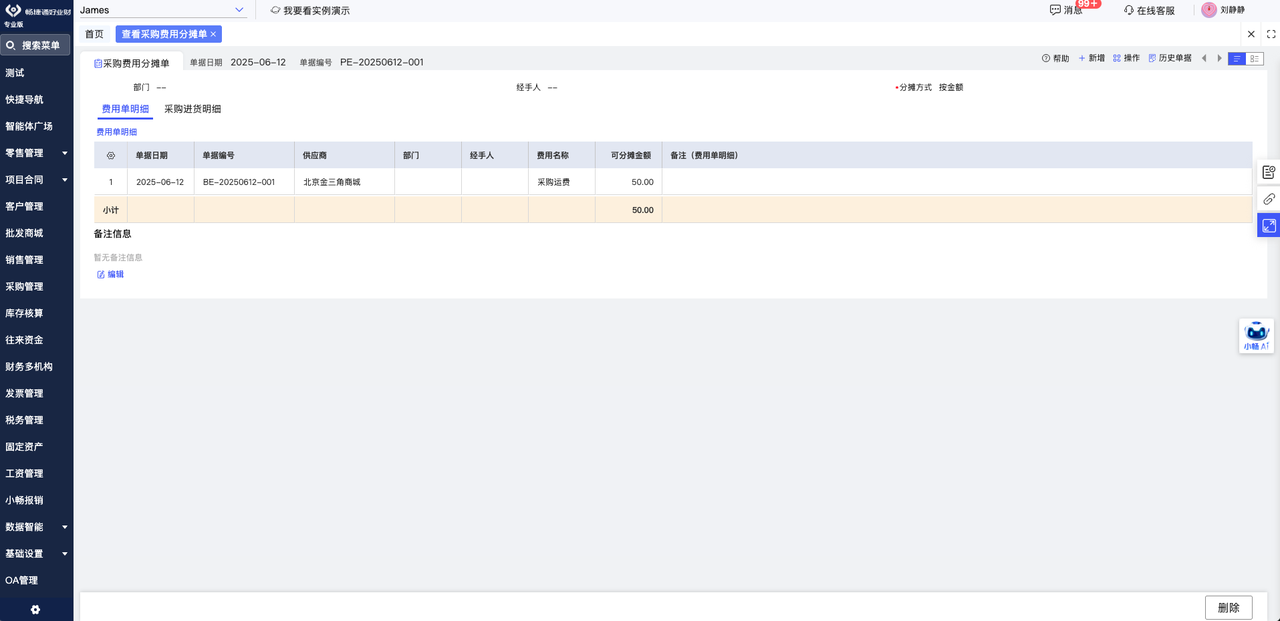
Purchase expense allocation for true import cost
Using the purchase expense allocation document, freight, duties and insurance from China sourcing are spread into the specific materials by quantity or amount. Allocation can be sliced by purchase batch, supplier or item, so each batch carries its real acquisition cost, a solid basis for later pricing. Once allocation finishes, the system posts the matching accounting voucher automatically, keeping the books complete.
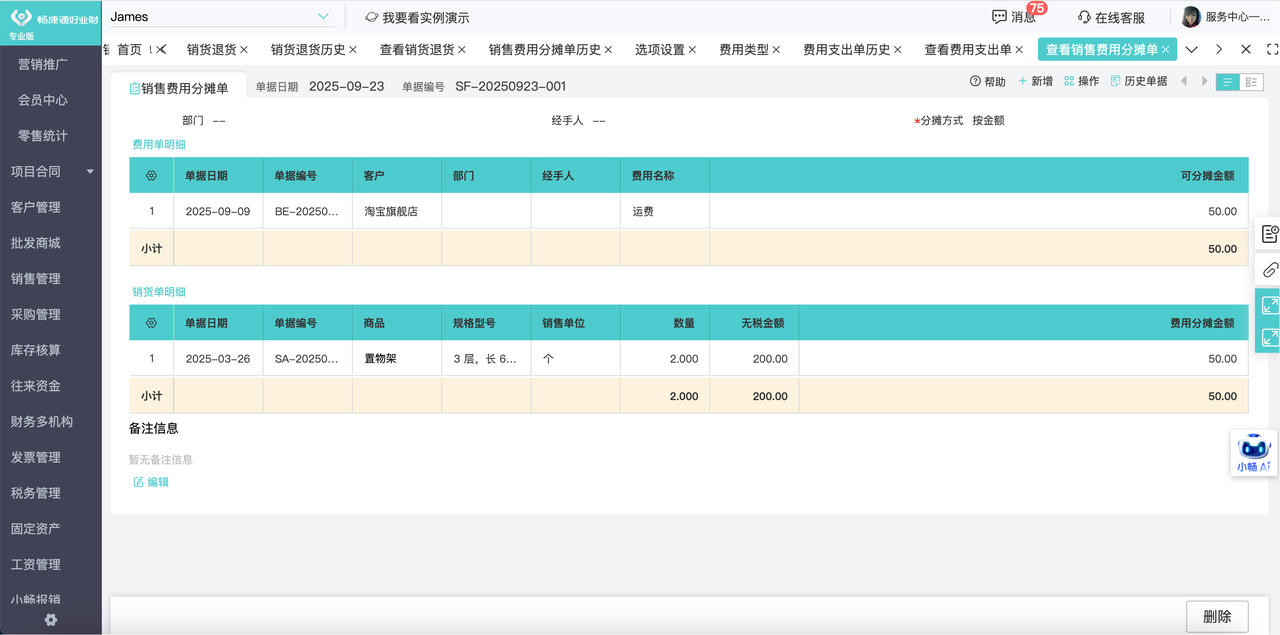
Sales expense allocation for order-level profit
A sales expense allocation document pushes distributor rebates, freight and promotion costs onto the relevant sales orders by preset rules. The engine supports allocation by order value, quantity or customer type, fitting different scenarios. With expenses assigned, managers can view the real profit of each order on the spot, giving the data needed to tune sales strategy.
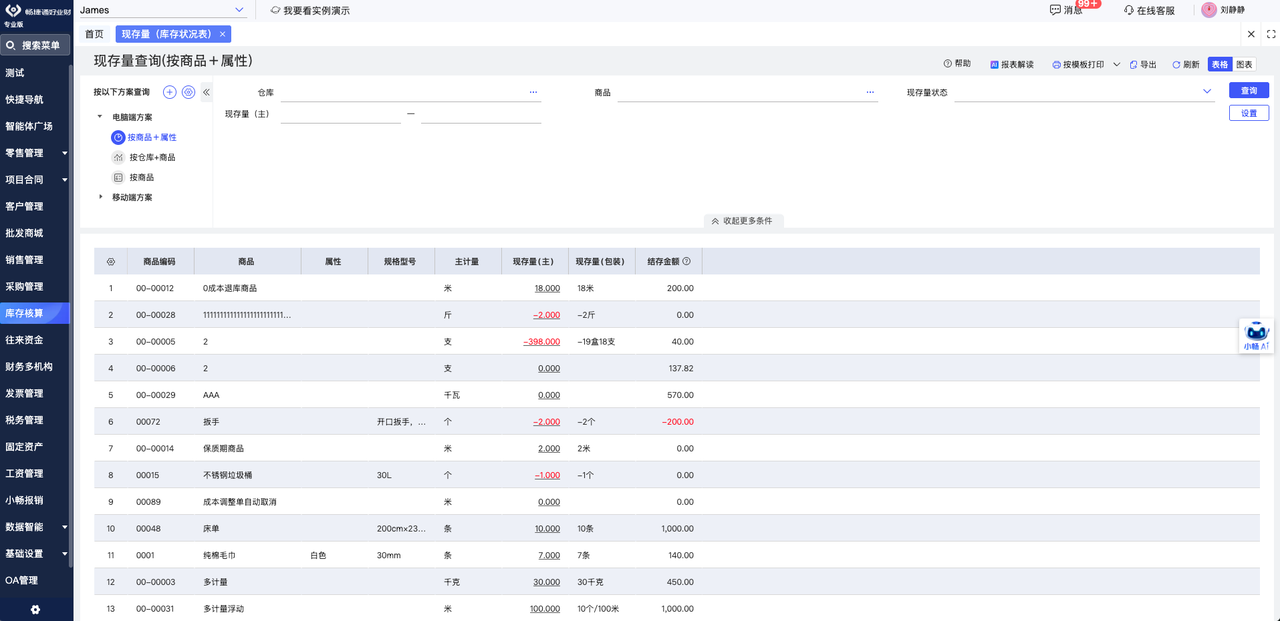
Real-time inventory with proactive warnings
A stock-on-hand view, filterable by item, warehouse and attribute, shows material levels the moment they change. Min, max and safety stock are set on each item, and the system warns automatically when stock dips below the safety line, preventing material shortages from halting production. Filters for positive, zero or negative balances and for value ranges make abnormal stock easy to spot at a glance.
Localization for an Indonesian operation
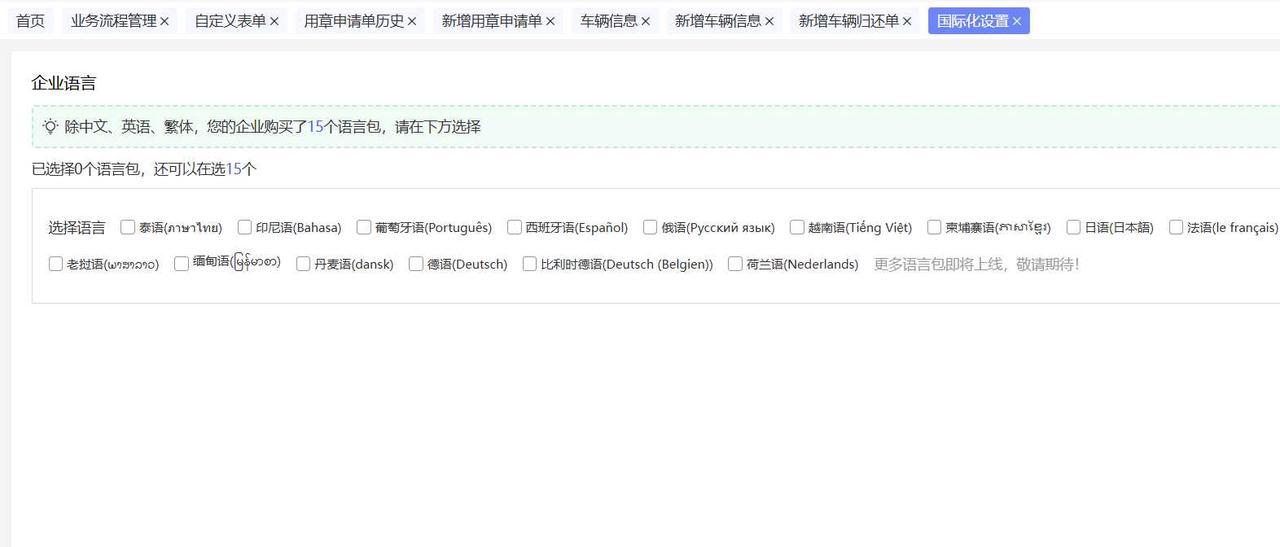
The interface supports multiple languages including Chinese and English, so local staff work comfortably in their own language and move faster. The base currency was set to Indonesian rupiah, so every business document and financial report is measured in rupiah, meeting local compliance and giving a single, consistent currency view across the operation.
Measurable Outcomes
BOM control plus live stock visibility ended the scattered-data and book-versus-floor mismatch. The warning mechanism keeps materials available, so production plans are reliable and shortages no longer interrupt the line. Purchase and sales expense allocation placed a true per-batch cost and per-order profit in front of managers, with China freight and duties finally spread correctly, making pricing and margin analysis trustworthy.
Supporting varied settlement terms through receipt and payment documents with write-off gave finance a clear picture of every customer's balance and due date, improving collection timing, lowering capital risk and raising cash turnover.
Takeaway
Implementing the ERP did more than tidy up inventory, costing and receivables; it established a standardized, fine-grained and internationalized management system. For a manufacturer competing across borders in Indonesia, that foundation is what makes steady growth and confident expansion possible.
Related reading
Solving Apparel Wholesale Pain Points with Online Selection and Smart Warehousing
An apparel wholesaler cut order-entry time, reduced churn, and tamed multi-warehouse picking with a cloud ERP. Online selection and attribute cataloging streamlined the flow.
Read guide →Customer Case StudyAustralia Frozen Meat Processor: Accurate Costing for Whole-Chicken Cutting
How a Melbourne frozen-meat processor used ERP barcode, BOM disassembly and batch control to cut receiving time and cost every chicken part precisely.
Read guide →Customer Case StudyHow a Beijing IC Company Achieved Finance–Operations Integration for Precision Management
A Beijing integrated-circuit maker unified purchasing, outsourcing, kit sales, and accounting in one ERP, automating cost allocation and cutting month-end close effort.
Read guide →