How a Kitchenware Wholesaler Unified Field Sales and Multi-Warehouse Shipping
A kitchenware and packaging wholesaler unified field sales, mobile ordering, and five-warehouse shipping on one cloud ERP. The platform ended double entry and sped up fulfillment.
Company Profile / Background
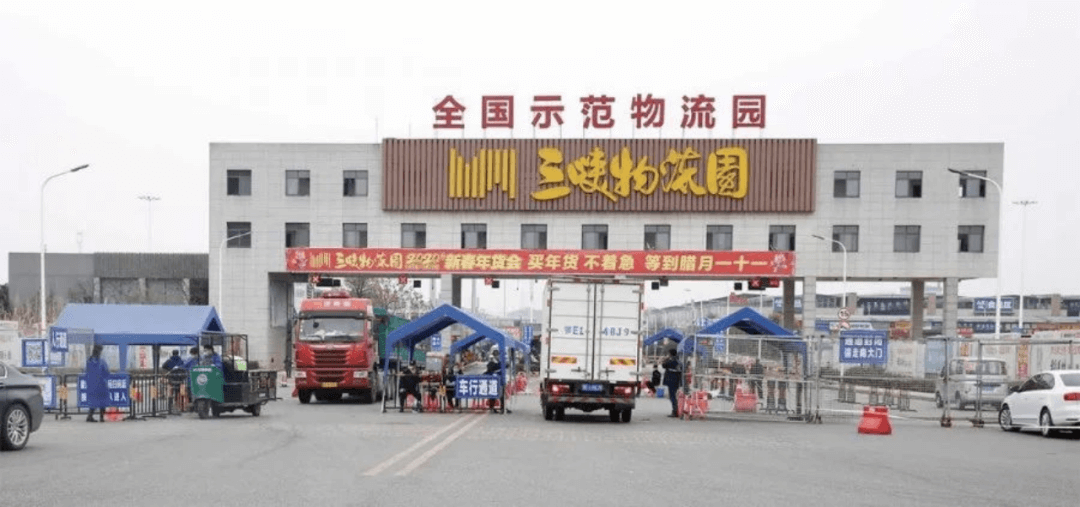
The distributor profiled here operates out of the Yichang Three Gorges Logistics Park and runs a compact but fast-moving business. It works from roughly 300 square meters of operating space, led by a team of more than ten salespeople, and owns one disposable foodservice packaging factory, one retail store, and five separate warehouses. Its product range spans disposable catering packaging supplies, kitchenware, and condiments sold wholesale. With close to one thousand downstream customers, including secondary wholesalers and restaurants, the company sits squarely in the high-frequency, high-volume distribution segment where order accuracy and warehouse coordination make or break margins.
What made the operation distinctive was its hybrid sales model. Orders arrived through the physical stall, through sales reps running vehicle routes, through customer phone calls, and through WeChat messages. Inventory was spread across locations that did not share a roof: the factory, the retail store, and the five warehouses each held stock, and every warehouse had to serve both in-store pickup requests and online shipment orders, often in both bulk and retail pack sizes.
Core Challenges
Sales order entry was slow and error-prone
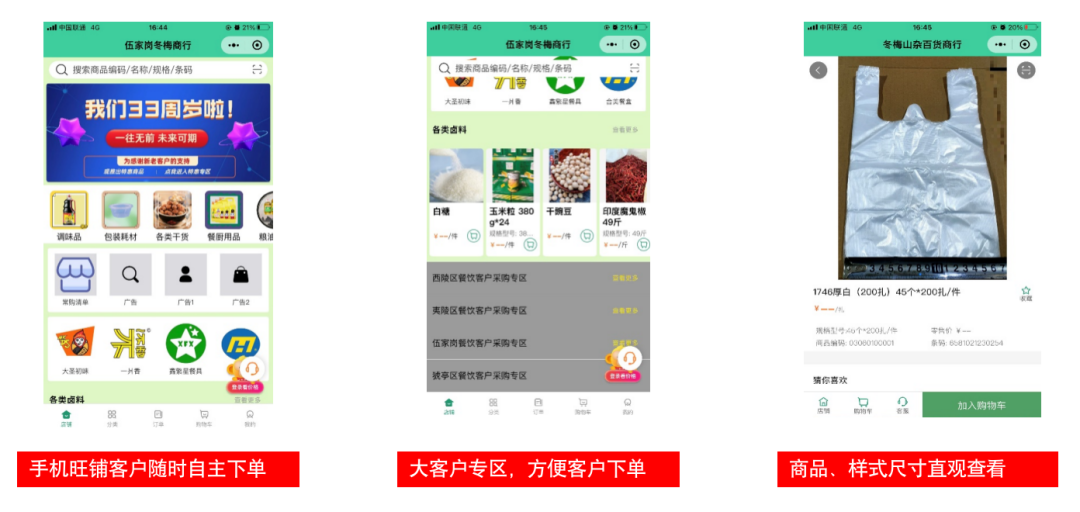
Reps worked largely on paper. A rep visiting a customer or driving a route would hand-write a sales order, then hand it to the owner's wife, who re-keyed the same document into the computer back at the office. Because some customers placed orders late at night, and because each rep was responsible for 200 to 300 accounts, the re-entry bottleneck compounded quickly. Product information also moved fast: new SKUs appeared constantly, and customers routinely needed to know a product's size, material, or capacity before committing.
Inventory was fragmented across five warehouses
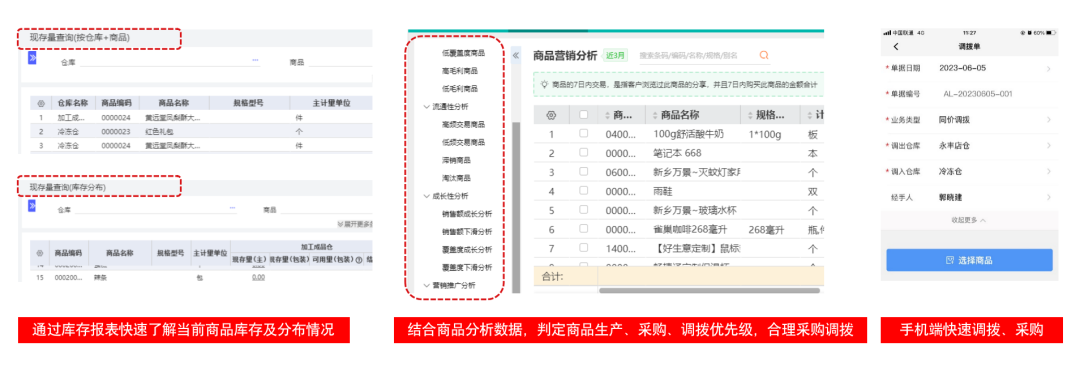
With the factory, store, and warehouses in different locations, multi-warehouse shipping was the default rather than the exception. Every warehouse had to satisfy both walk-in store requests and online shipment orders, and staff had to handle both large and small packaging for the same items. Without a shared, real-time view of stock, coordinating fulfillment was a daily juggling act that relied on phone calls between sites.
How the System Solved It
Mobile customer, supplier, and product onboarding
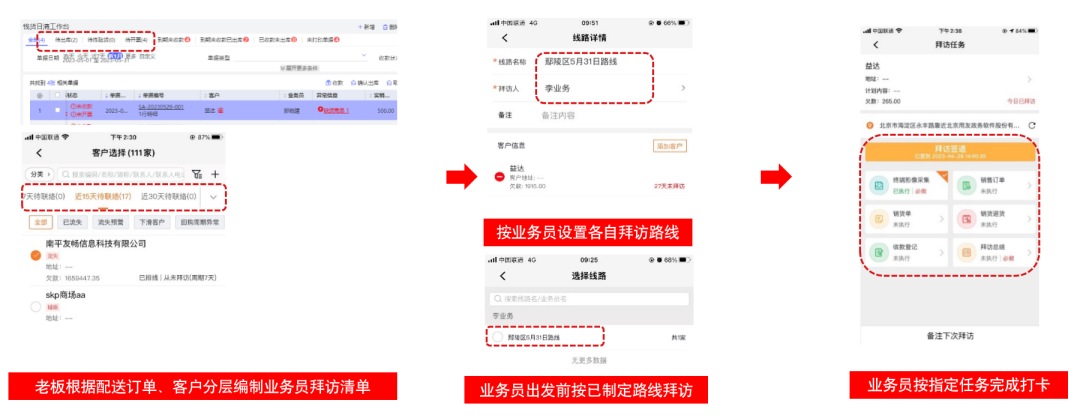
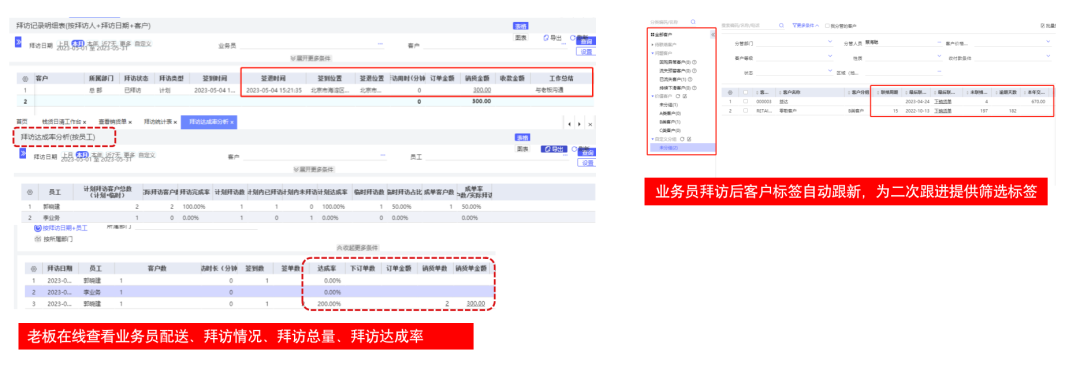
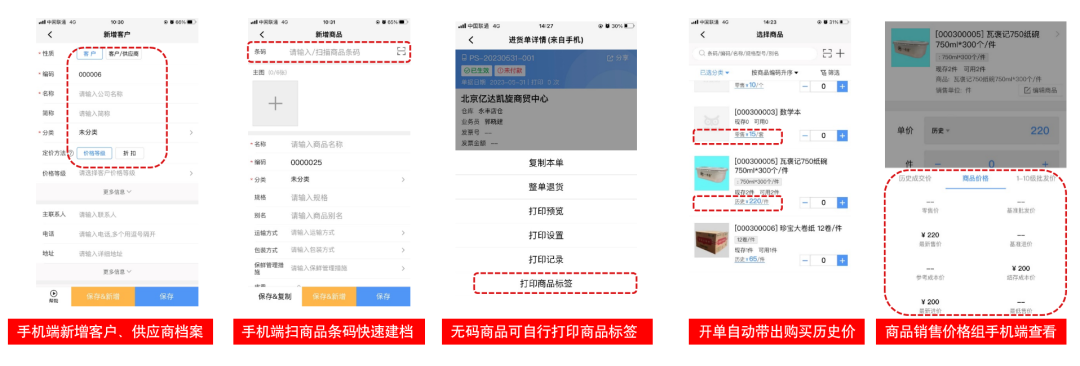
The company deployed the HaoYeCai cloud ERP suite (the ERP product by Chanjet) with its mobile app at the center of field operations. Reps can now create customer, supplier, and product records directly from a phone. When a rep meets a new customer or needs to add a new item on the spot, there is no more paper hand-off: the record is created once, in the field. Historical purchase prices and customer tier prices are carried automatically, so a rep can quote accurately without calling the office.
Faster quoting and order capture
During stall sales or route selling, when a new customer or a custom item comes up, the rep opens the app, adds the product and customer profile, and issues the sales order immediately. The platform surfaces the customer's historical buying price and tier price to help the rep quote on the spot, turning what used to be a two-step paper process into a single action completed at the customer's location.
Cloud printing sends orders straight to the warehouse
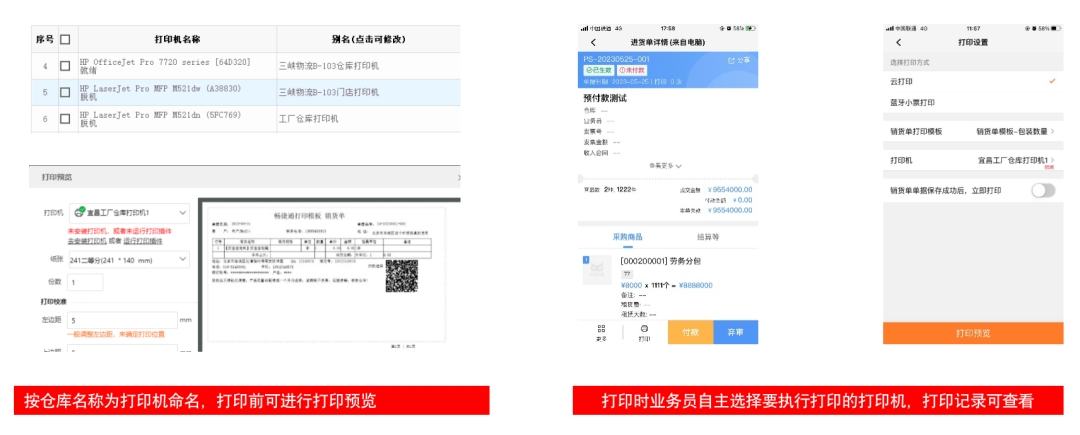
Once a rep finishes an order on the mobile app, the platform's cloud printing feature pushes the sales order directly to the warehouse printer. The warehouse team picks and ships without waiting for a re-keyed document, which removes the second data-entry step and the delays it caused. Orders taken late at night are simply ready on the printer the next morning.
Measurable Results
One record, entered once
The single biggest change was eliminating the double-entry loop. Orders created in the field now flow straight to fulfillment and finance, so the owner's wife no longer re-keys every document. With tier and historical prices auto-applied, quoting is faster and more consistent across all ten-plus reps, and new customers or items no longer wait for office hours to be registered.
Multi-warehouse fulfillment without the chaos
Because stock across the factory, store, and five warehouses is now visible in one system, the team can allocate shipments from the right location and handle both bulk and retail packs without manual coordination. Late-night and route orders no longer sit in a paper queue, and the warehouse works from a single, authoritative printout rather than conflicting phone messages.

Conclusion
For a distributor moving close to a thousand customers through stalls, routes, phones, and WeChat, the bottleneck was never demand: it was the friction of capturing and fulfilling orders across scattered locations. By putting mobile order entry and cloud printing on top of a unified multi-warehouse inventory, this kitchenware and packaging wholesaler turned a manual, paper-heavy process into a single connected workflow. The result is a cleaner hand-off between sales and warehouse, fewer lost or delayed orders, and an operation that can keep pace with fast-moving product lines and a large, dispersed customer base.
Related reading
Solving Apparel Wholesale Pain Points with Online Selection and Smart Warehousing
An apparel wholesaler cut order-entry time, reduced churn, and tamed multi-warehouse picking with a cloud ERP. Online selection and attribute cataloging streamlined the flow.
Read guide →Customer Case StudyAustralia Frozen Meat Processor: Accurate Costing for Whole-Chicken Cutting
How a Melbourne frozen-meat processor used ERP barcode, BOM disassembly and batch control to cut receiving time and cost every chicken part precisely.
Read guide →Customer Case StudyHow a Beijing IC Company Achieved Finance–Operations Integration for Precision Management
A Beijing integrated-circuit maker unified purchasing, outsourcing, kit sales, and accounting in one ERP, automating cost allocation and cutting month-end close effort.
Read guide →