How a Mid-Size Equipment Maker Manages Custom Projects End to End
A mid-size equipment maker replaced manual project costing with cloud ERP project management. BOM, budget control, and cost collection now run automatically.
Company Profile / Background
The company is a Hunan-based manufacturer of educational and scientific equipment, serving higher education and vocational training markets. Its product range spans modern teaching and training equipment, industrial-robot training rigs, electromechanical and automotive training systems, multimedia teaching tools, and electronic, physics, and communication measuring instruments. It researches, manufactures, sells, and services this equipment, and has grown into a mid-size enterprise with real influence in its niche.
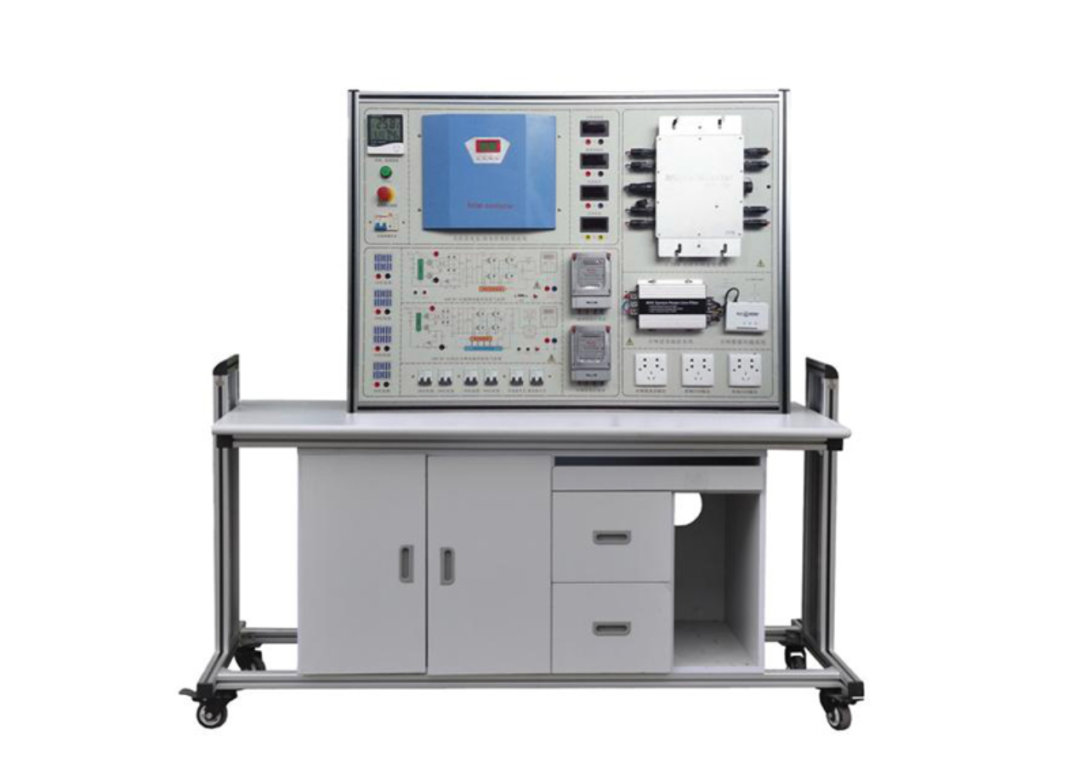
Growth brought a specific kind of complexity. The firm wins many non-standard, custom-configured project orders, each with many project-specific materials, yet project costing was still handled with manual records. That traditional approach could no longer support either current business or future expansion.
Core Challenges
Unclear project progress
With many non-standard projects running at once, no one had an intuitive view of where each stood, what had shipped, or what remained. Status lived in people's heads and scattered notes.
Uncontrolled project materials
Projects involved many materials, and it was unclear what had arrived versus what had not. Assembly picking was not standardized, so parts could be consumed without a clean trail.
Inaccurate project costing
Collecting project costs and expenses was troublesome and error-prone, so profit figures could not be trusted until long after the fact.
Disconnected reimbursements
Expense reimbursement data was not linked to projects, so finance re-booked everything by hand, duplicating work that should flow automatically.
Slow reporting
Project profit, receivables, and payables reports had to be consolidated and re-confirmed repeatedly, so producing them took long and carried manual error risk.
How the System Solved It
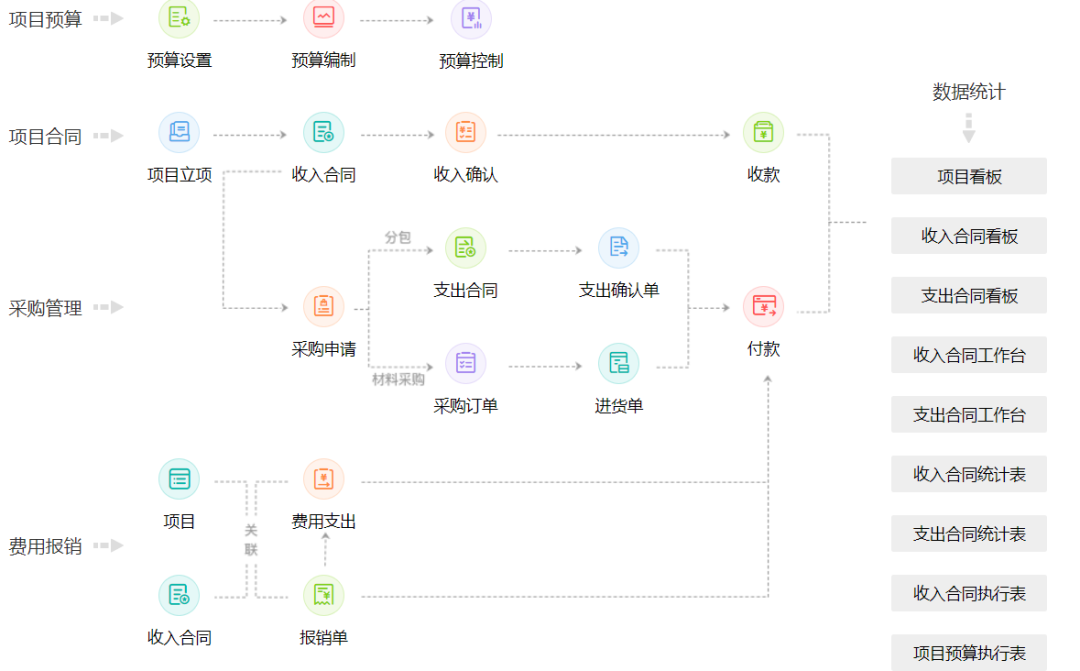
Project kanban and progress tracking
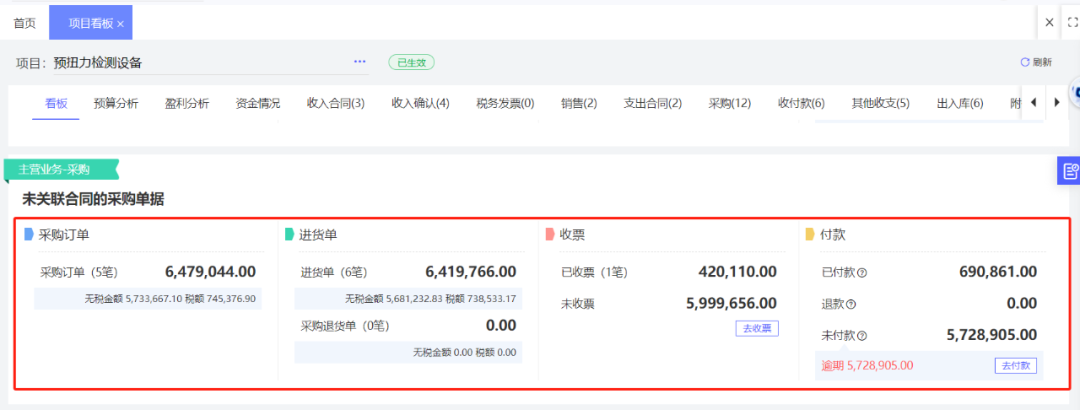
The firm deployed the HaoYeCai cloud ERP suite (the ERP product by Chanjet) and redesigned its flow around a project kanban: track progress, purchase parts early, import a BOM, assemble to the project, issue engineering material out to collect cost, and control material budget by item. The kanban shows progress and contract income or expense anytime.
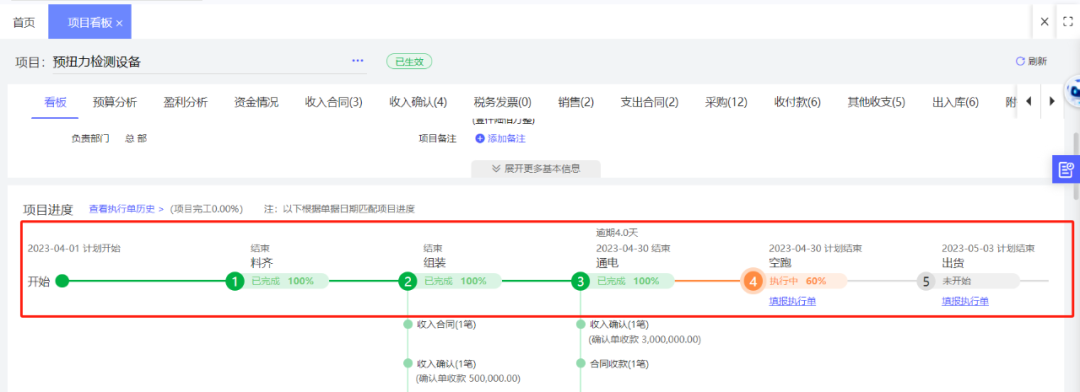
The kanban keeps the latest progress visible.
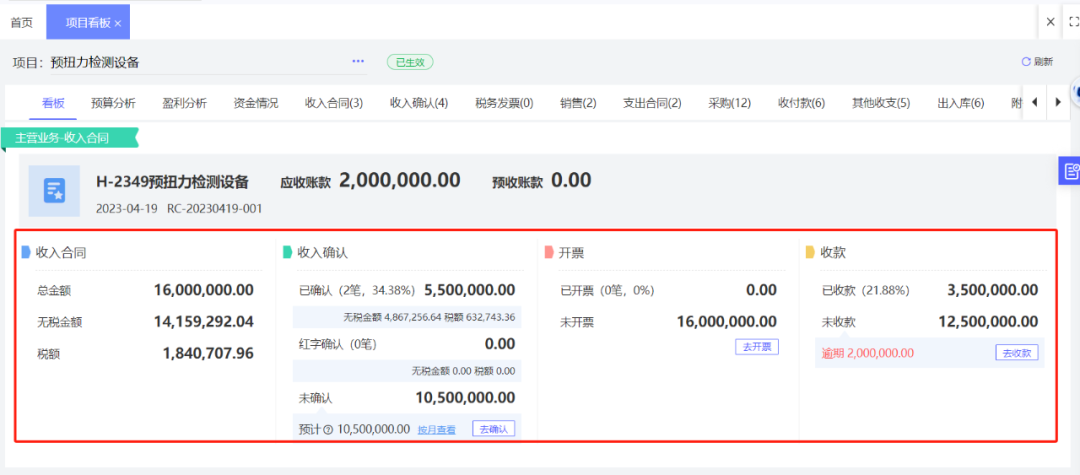
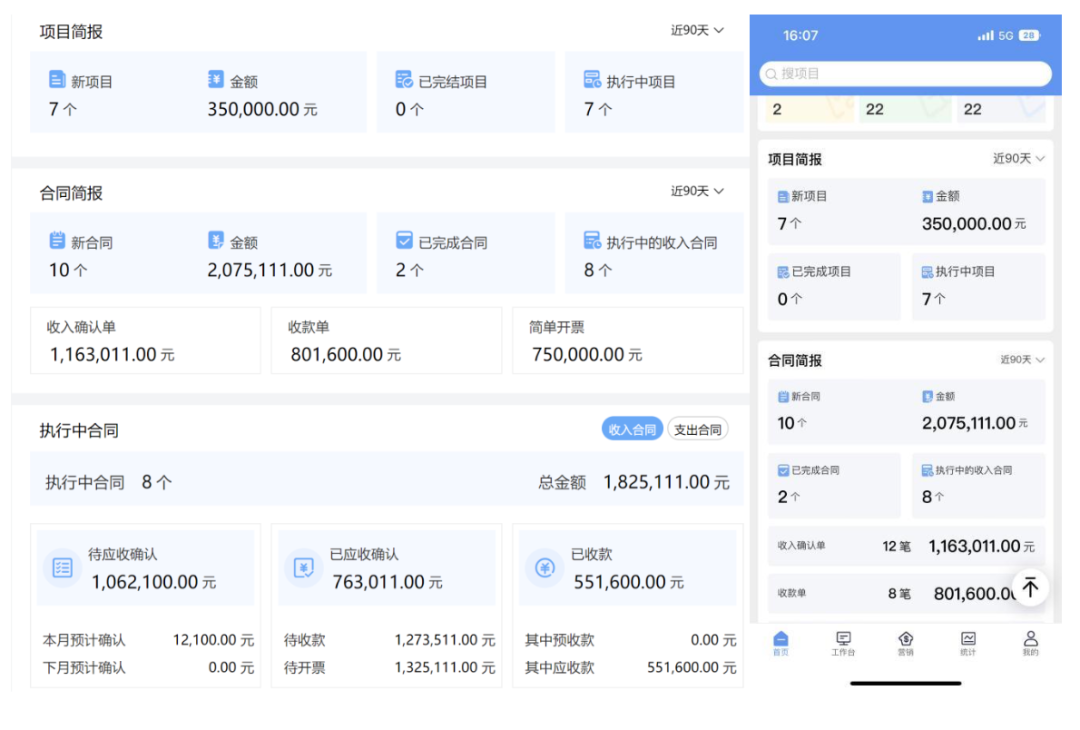
Contract execution shows confirmed revenue, collected, and overdue amounts on one board with procurement execution.
Project budget control
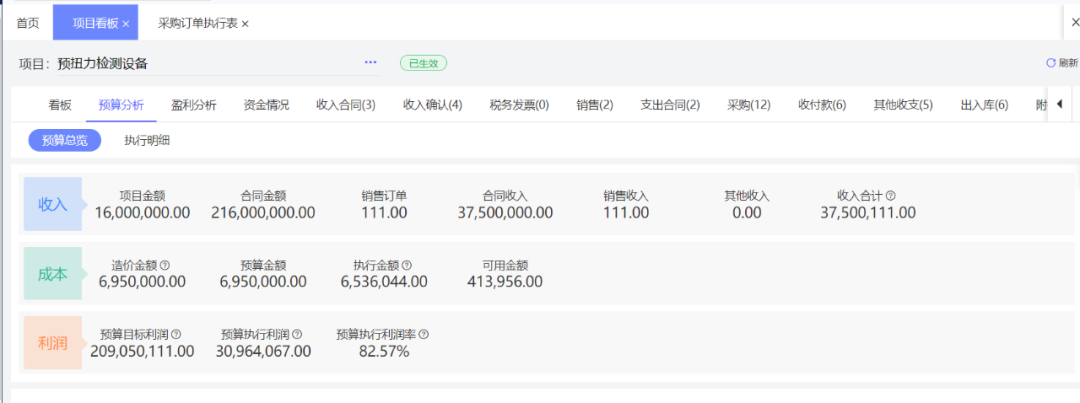
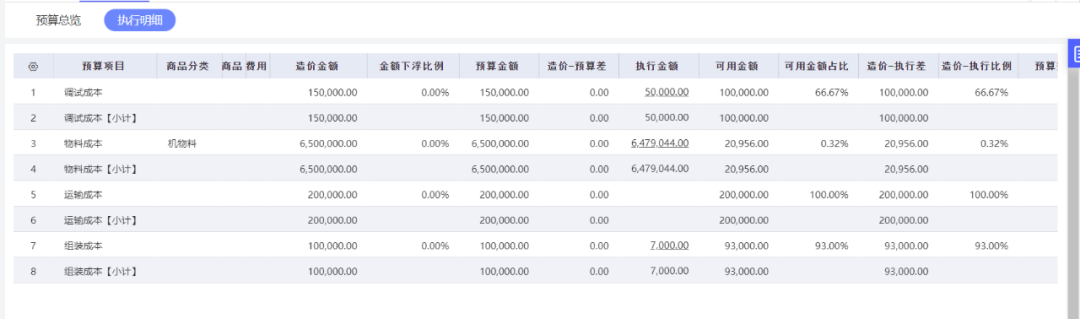
After setup, a budget breaks down into material purchasing, labor, and subcontracting, with a list view of overview and live execution so the team knows where it stands.
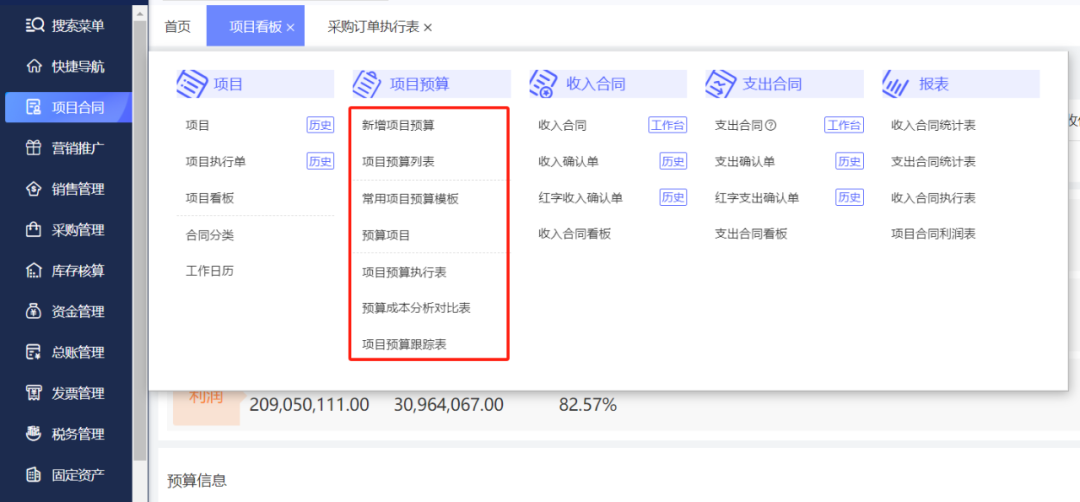
Budget execution is shown live as the project progresses.
Profitability and cash visibility
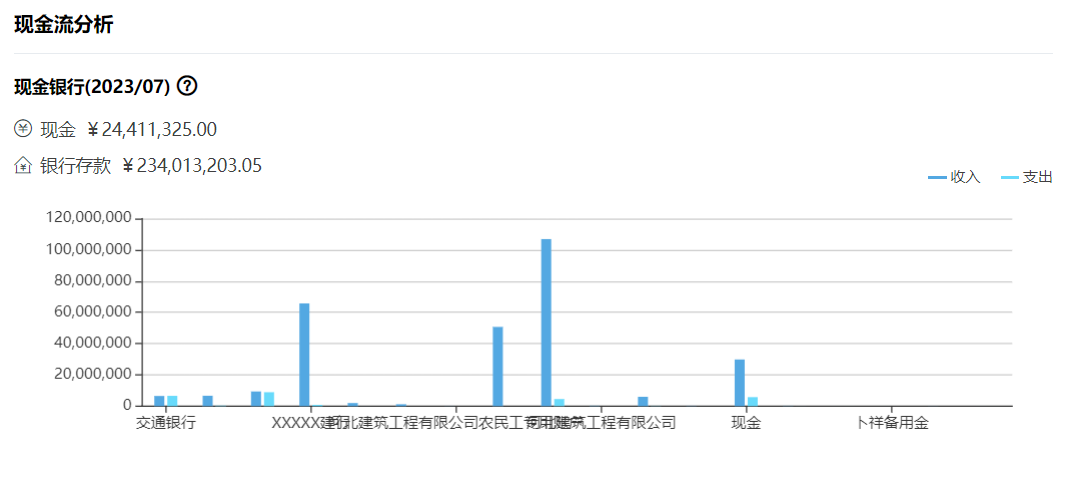
Project profit analysis auto-collects revenue, material costs, and expenses so the team understands profitability, while the cash view shows advances and surplus position clearly.
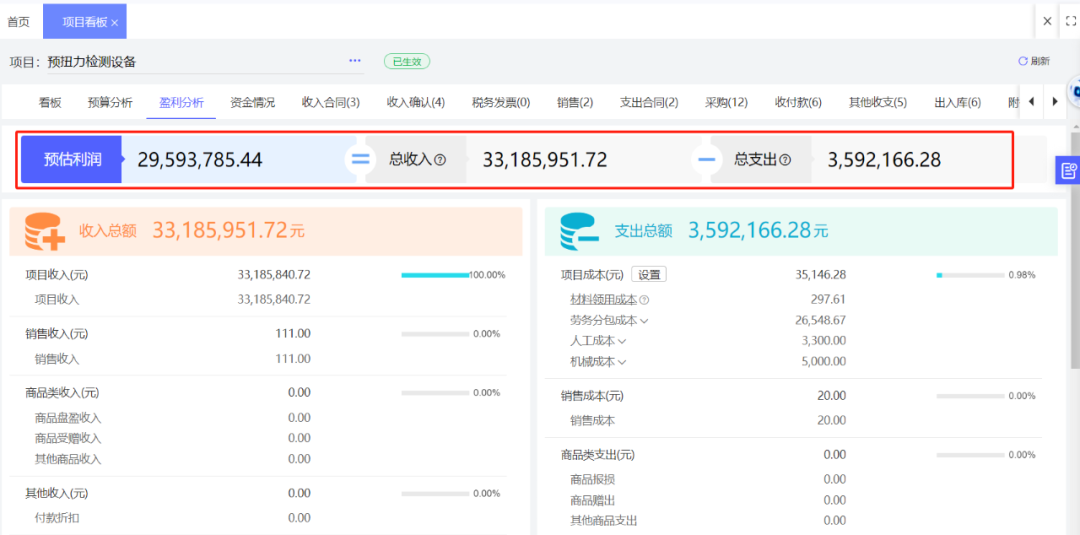
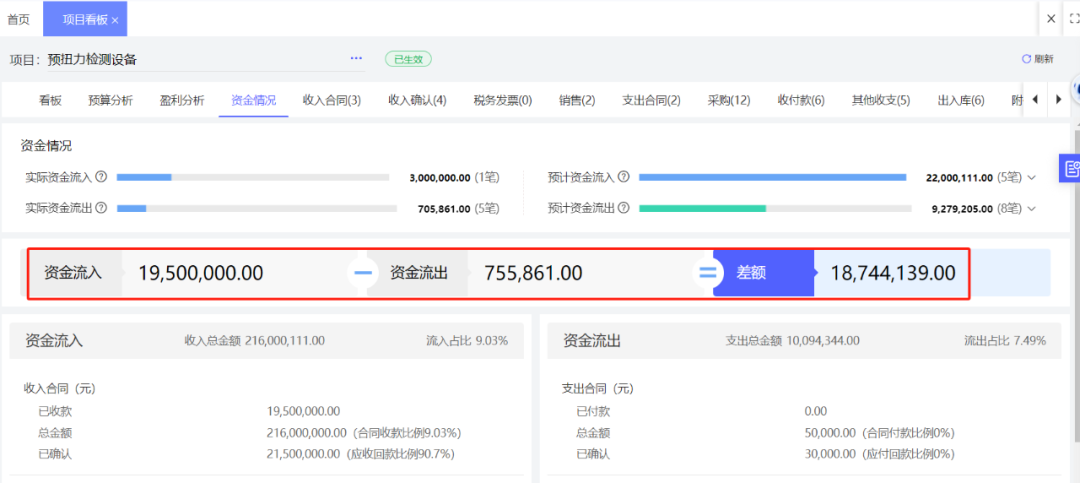
Core data is queryable on computer and phone in real time, so managers see status anywhere.
Material procurement and barcode control
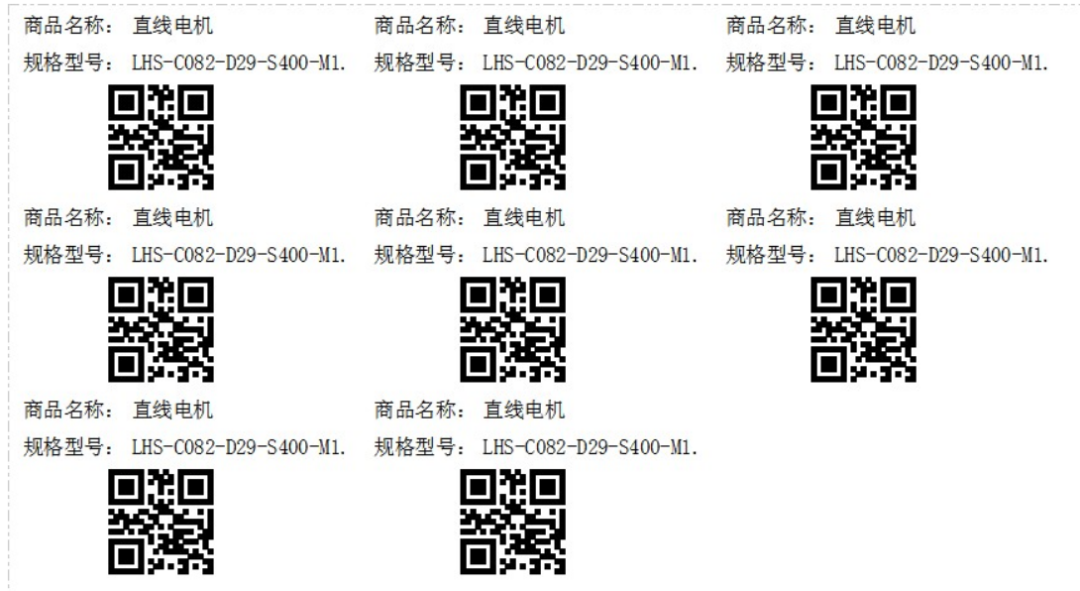
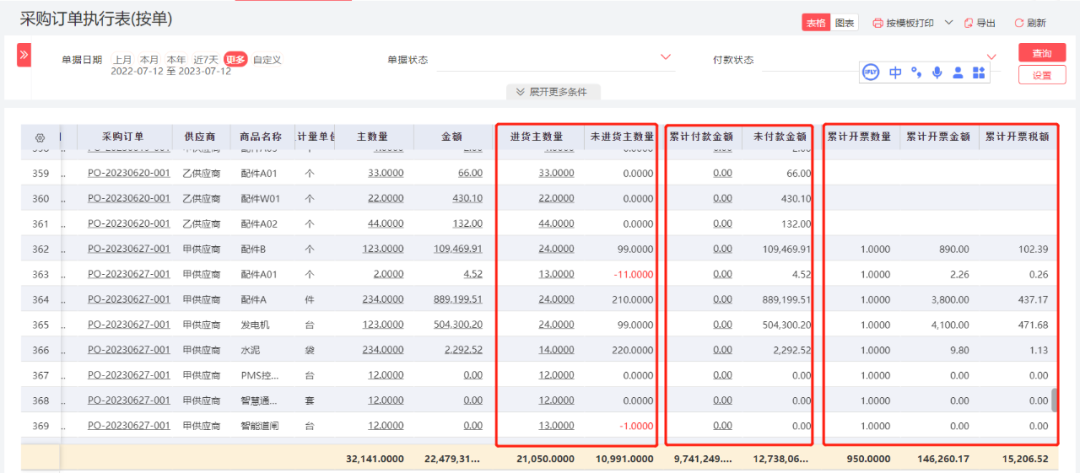
Project material procurement is now clear, with arrived-or-not and paid-or-not visible anytime, and the full requisition-to-receipt process managed in one place with returns and cost allocation. Barcodes printed at receipt speed scan-based picking and transfer-out.
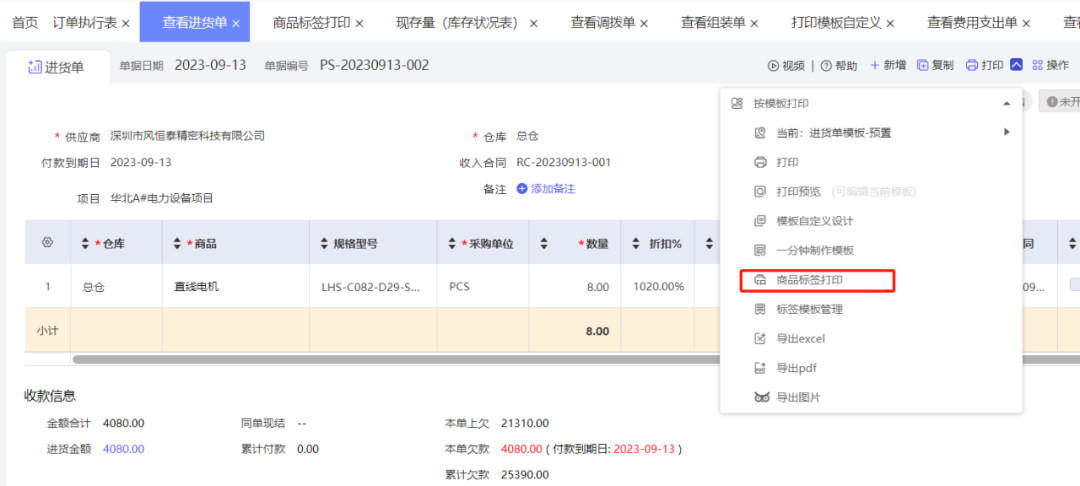
Printing barcodes at receipt speeds later scan-based picking and transfer.
The team sees arrival, invoicing, and payment per purchase.
Assembly, sub-warehouse, and BOM
During assembly, materials move from the main warehouse to a project site warehouse with scan-based outbound, and a data collector's detail is imported into HaoYeCai. Reservation, picking, and sub-warehouse management give stock control, and finished or semi-finished equipment is assembled with one click from the BOM.
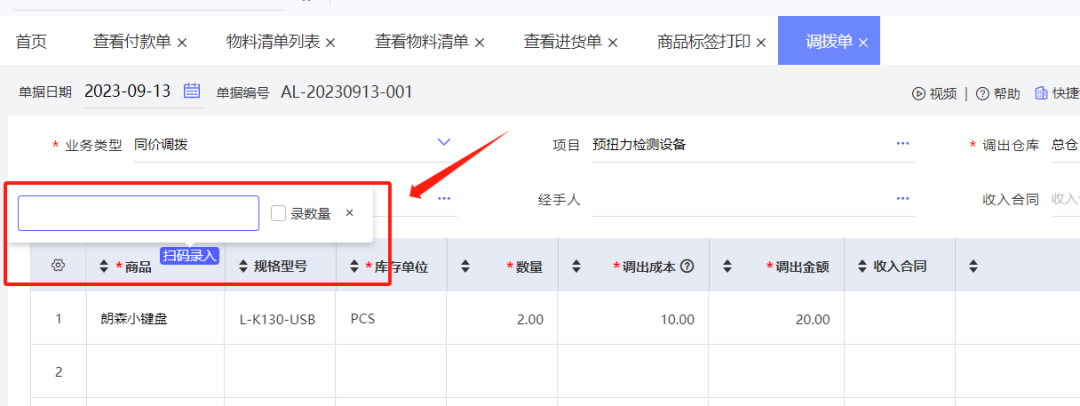
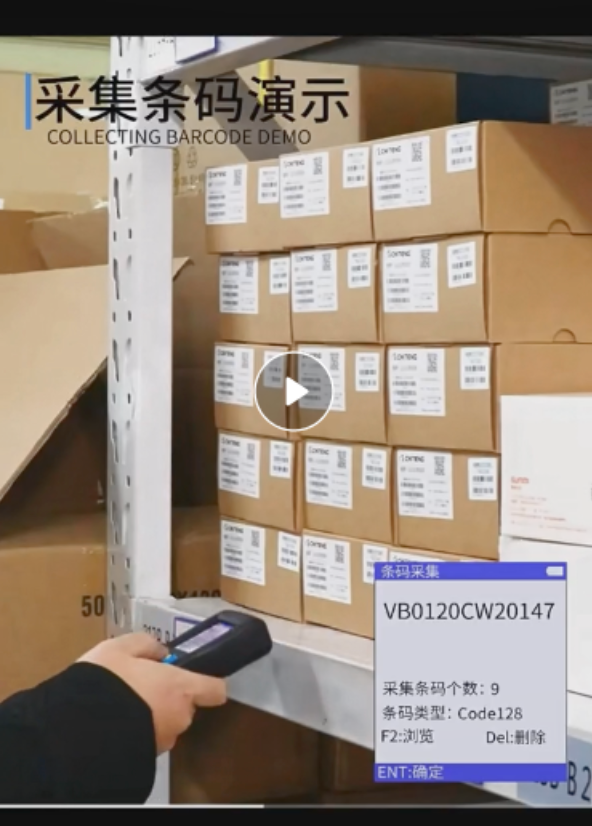
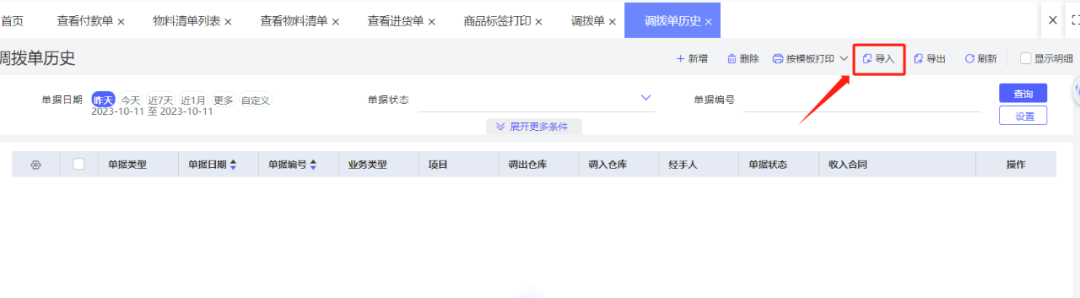
Reservation, picking, and sub-warehouse management support inventory control.
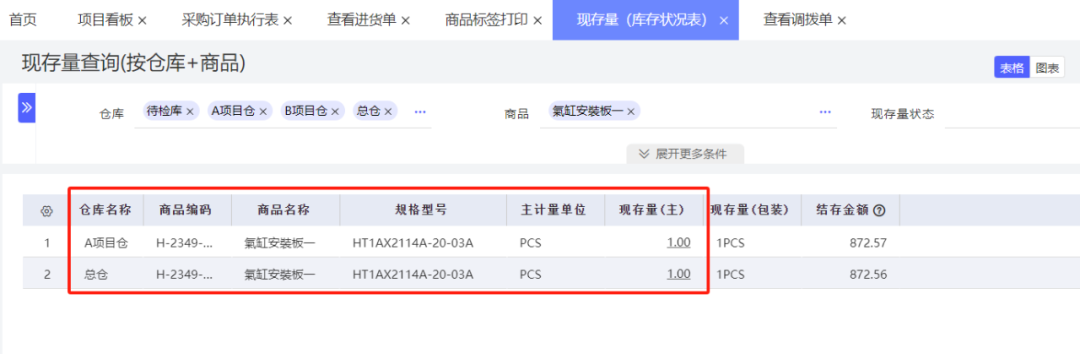
Finished and semi-finished equipment is assembled with one click from the BOM.
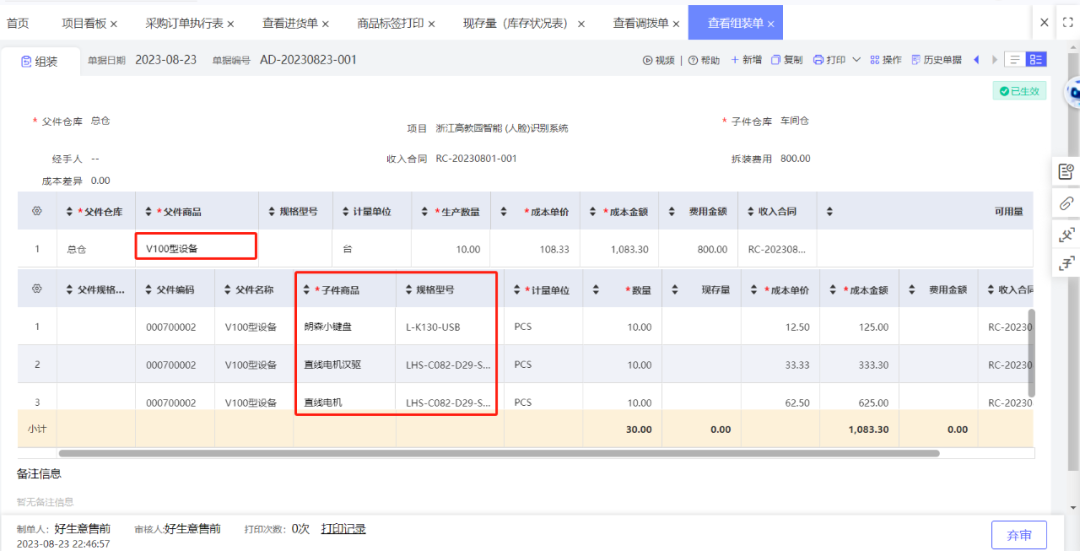
Automatic cost collection
Material, expense, and labor-subcontract costs are collected automatically and in real time, and the system aggregates them to the project as they occur.
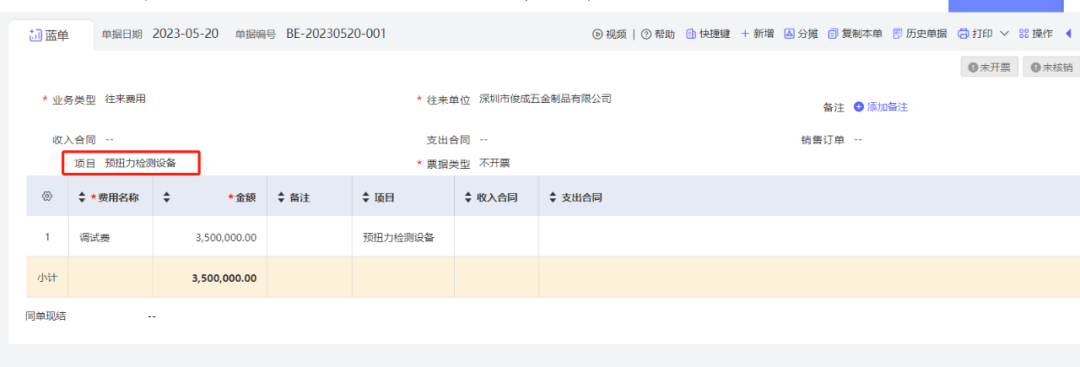
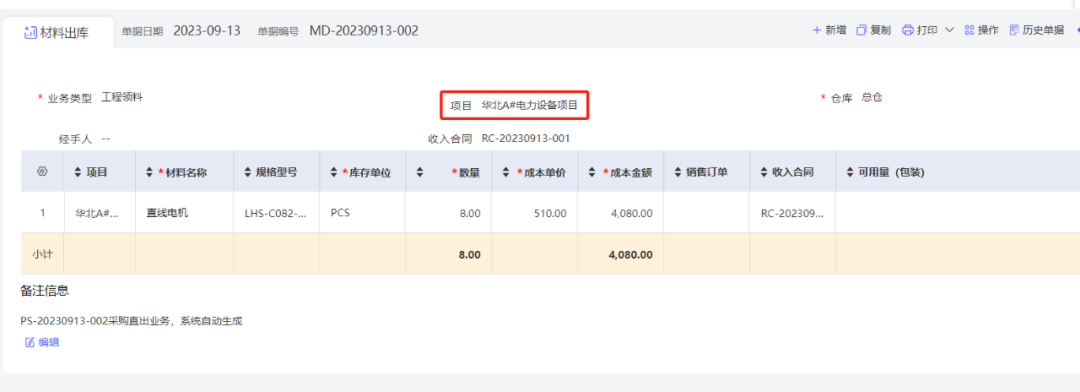
Project data is tallied in real time.
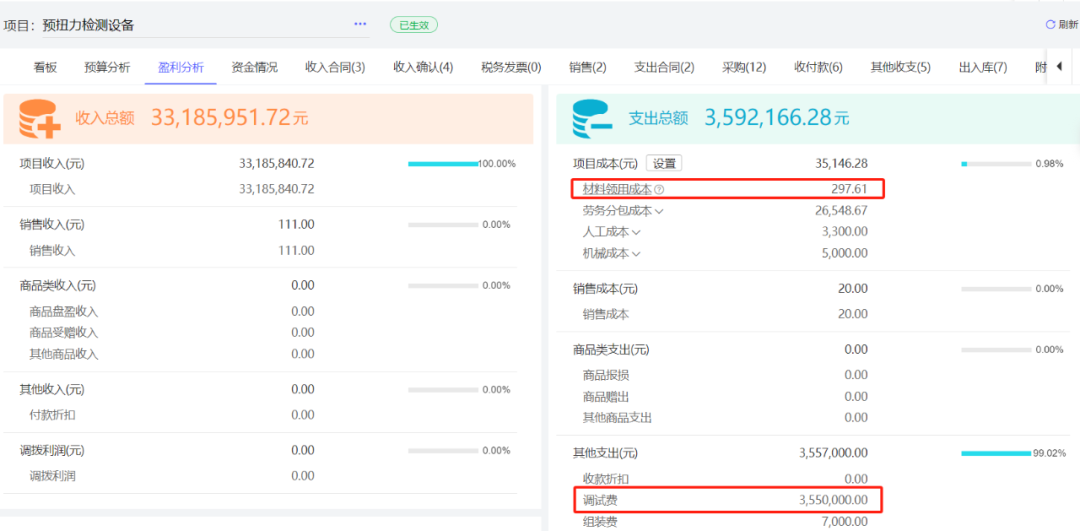
Connected reimbursements and WeCom
Expense reimbursement links directly to the system, cutting duplicate work. The module records expenses, auto-collects them to the project, and runs invoice authenticity and duplicate checks on mobile, and it opens inside WeCom on any device.
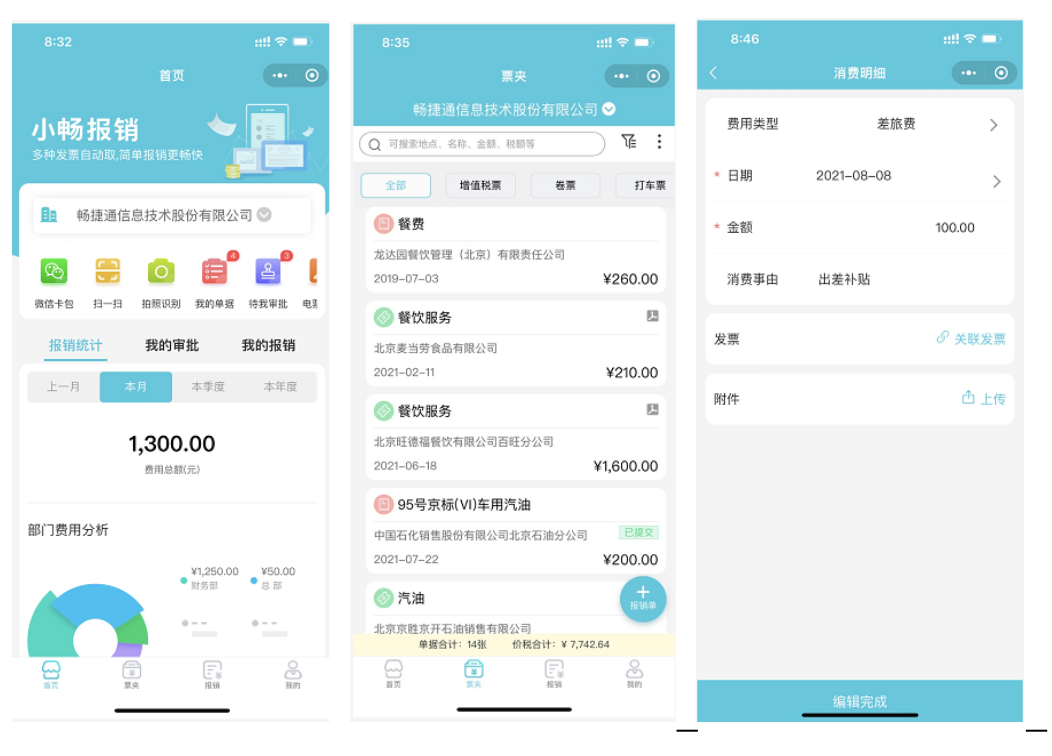
Deep WeCom integration lets staff use the system inside WeCom on any device.
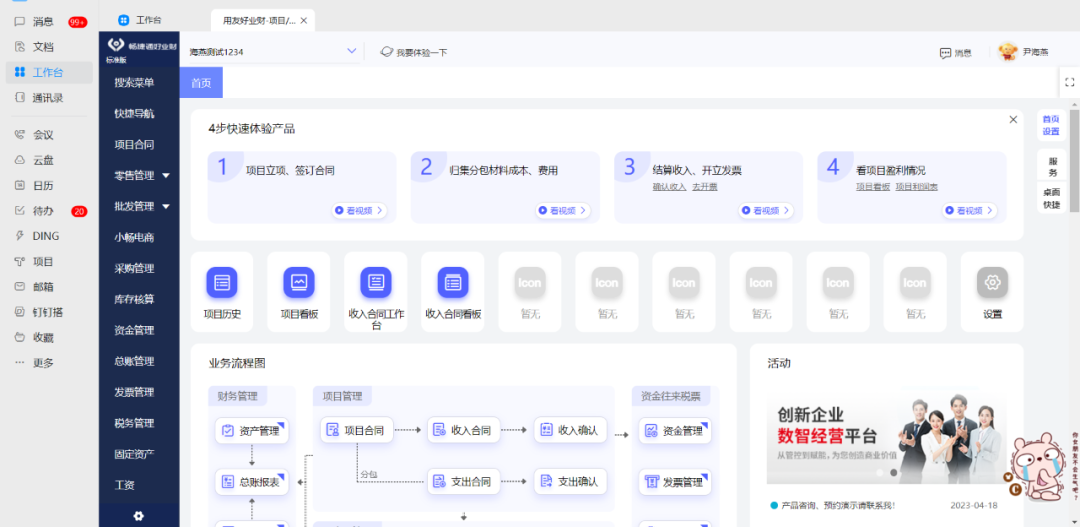
Automatic reporting
Reports generate automatically and are available anytime, reducing statistics work and improving accuracy over manual bookkeeping, with the project profit statement always viewable.
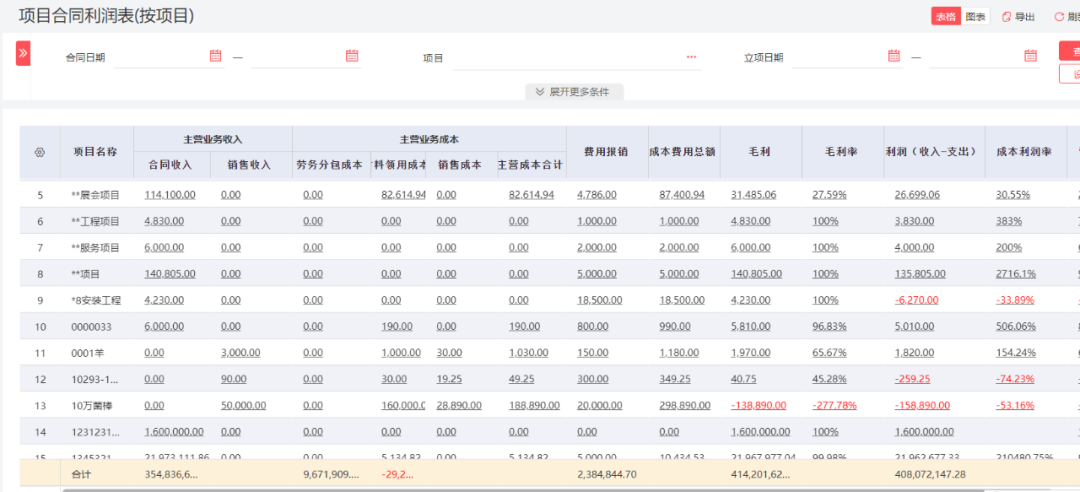
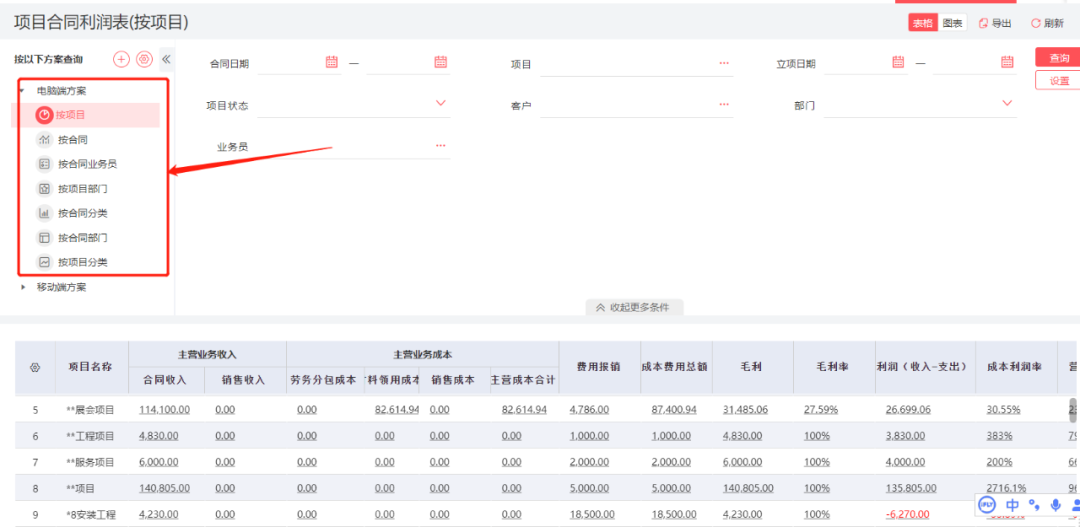
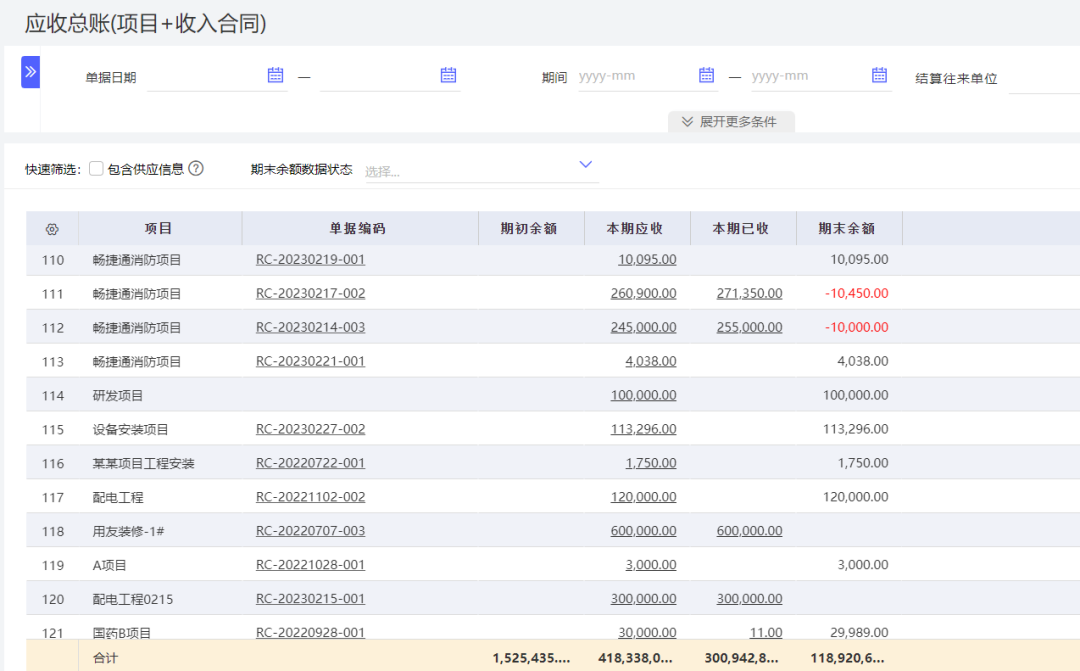
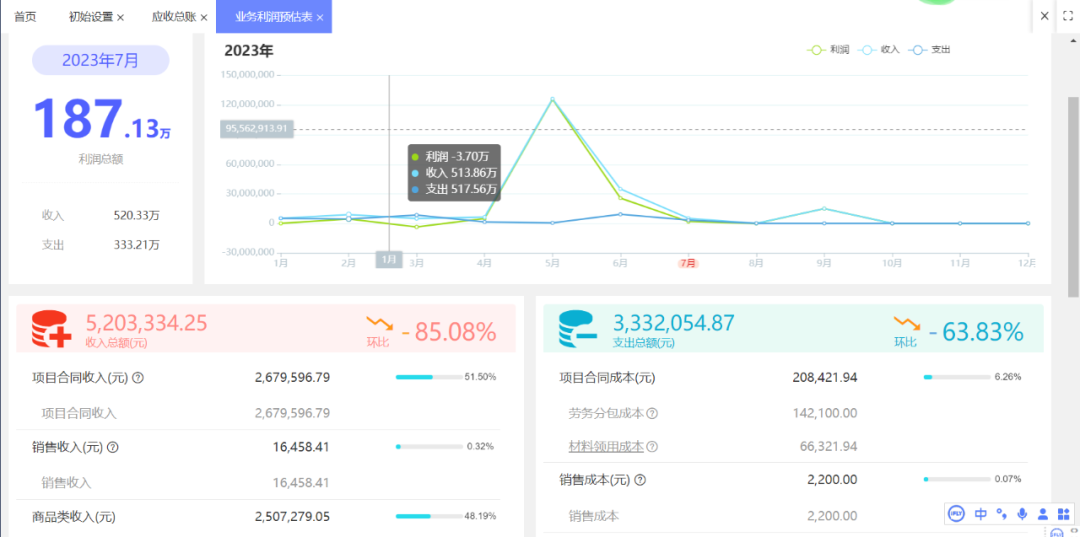
Multi-dimensional reports help the team track business dynamics.
Expert delivery and go-live
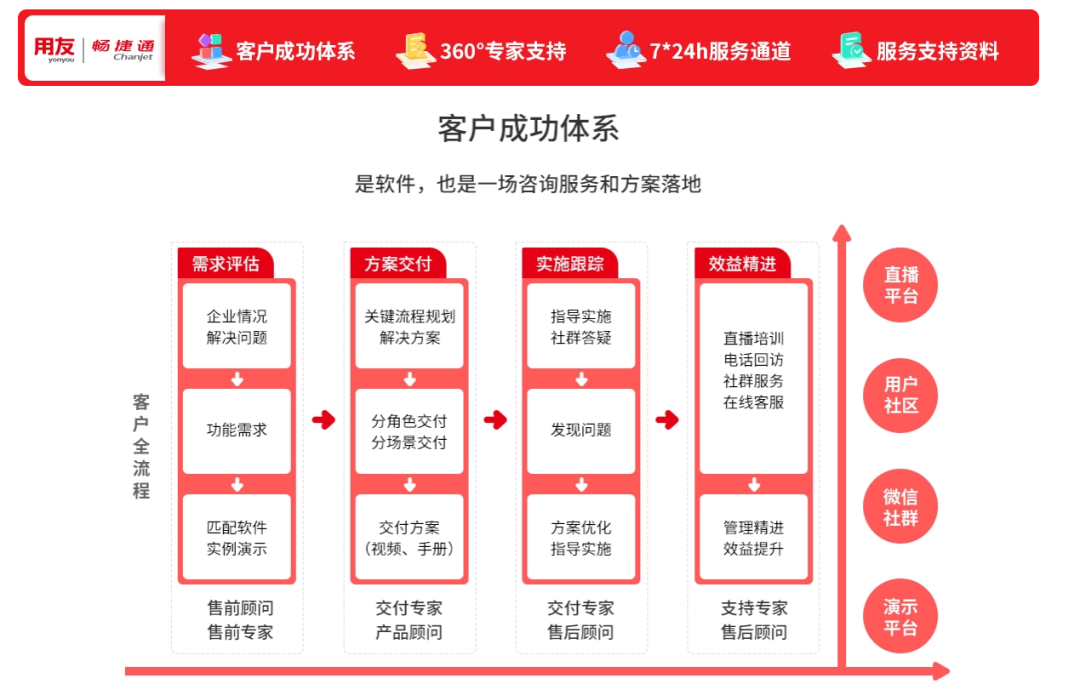
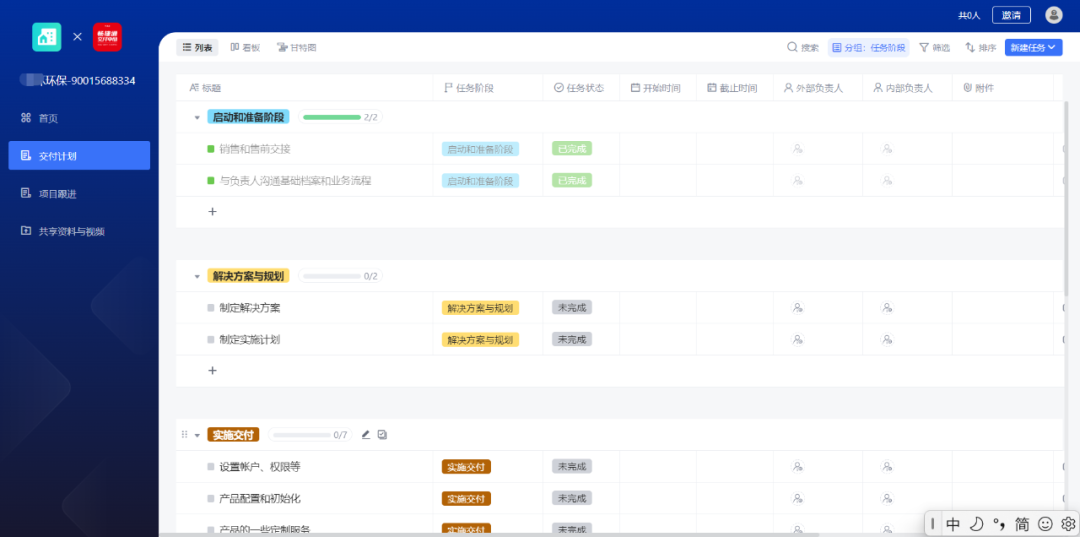
Chanjet headquarters provided training, implementation, and delivery through product-aware experts, and a transparent headquarters delivery system ensured a smooth go-live.

Measurable Results
Visibility into every project
The project kanban, budget control, and mobile query turn progress into a live, shared picture so managers see execution, cash, and budget without manual assembly.
Accurate, automatic costing
BOM-driven assembly, barcode control, and automatic cost collection replace manual records, so profit is known from real data as the job runs.
Faster reporting and less duplicate work
Linked reimbursements and auto-generated statements remove repeated consolidation and give more reliable numbers than manual bookkeeping.
Conclusion
Custom equipment manufacturing lives or dies on knowing per project what it costs and where it stands. By bringing project kanbans, BOM-based assembly, budget control, automatic cost collection, and connected reimbursements onto one cloud ERP, this maker turned a manual, opaque process into a controlled, transparent one.
Related reading
Solving Apparel Wholesale Pain Points with Online Selection and Smart Warehousing
An apparel wholesaler cut order-entry time, reduced churn, and tamed multi-warehouse picking with a cloud ERP. Online selection and attribute cataloging streamlined the flow.
Read guide →Customer Case StudyAustralia Frozen Meat Processor: Accurate Costing for Whole-Chicken Cutting
How a Melbourne frozen-meat processor used ERP barcode, BOM disassembly and batch control to cut receiving time and cost every chicken part precisely.
Read guide →Customer Case StudyHow a Beijing IC Company Achieved Finance–Operations Integration for Precision Management
A Beijing integrated-circuit maker unified purchasing, outsourcing, kit sales, and accounting in one ERP, automating cost allocation and cutting month-end close effort.
Read guide →