Testing Lab Unifies Business and Finance With Integrated ERP Workflow
A testing-services firm saw distorted finance reports when receipts missed the ledger. The ERP suite now auto-generates vouchers, tracks reagents by batch, and reconciles payables.
Company Profile / Background
This case study features a professional technical-services company focused on testing. It buys and sells testing reagents and consumables and also delivers testing services. Some reagents go into providing services while others are sold directly to customers, and the firm controls receivables and payables through its collection and payment routines to build stable revenue and profit. Sitting between trading and services meant one mis-linked document could distort both inventory and the ledger.
The business sits at the intersection of trading and services, which means inventory, costs, and finance must stay perfectly linked. The legacy setup could not hold those links together, creating the problems below. Closing that gap became the single most important goal for the finance team.
Core Challenges
Receipts Never Reached the Financial Reports
After staff manually entered a receipt, the data failed to appear in the financial reports, so receivables, payables, and cash flow came out distorted. Finance kept a separate Excel workbook just to make the numbers reconcile, adding heavy work and frequent inconsistency that undermined management decisions. A testing lab lives on trust, and messy books quietly eroded that trust with clients.
Business and Finance Data Were Split
The operations side's purchase-sales-inventory data and the finance side's vouchers did not connect automatically. Each month finance matched business documents to vouchers line by line, a huge and error-prone task. With complex reagent flows, tracing any transaction was hard and reconciliation slow. When operations and finance disagreed, the client experience was the thing that suffered.
Rough Inventory and Inaccurate Costs
Reagents have short shelf lives and demand strict batch control, yet the firm lacked first-in-first-out costing and batch management. Costs were rough, inventory crude, and expired reagents were not cleared in time, hurting test quality and wasting money. Short shelf life turned ordinary inventory mistakes into real, unrecoverable losses.
How the System Solved It
Three capabilities did the heavy lifting: auto vouchers, smart settlement, and FIFO inventory. Each is described below.
Vouchers Generated From Business Automatically
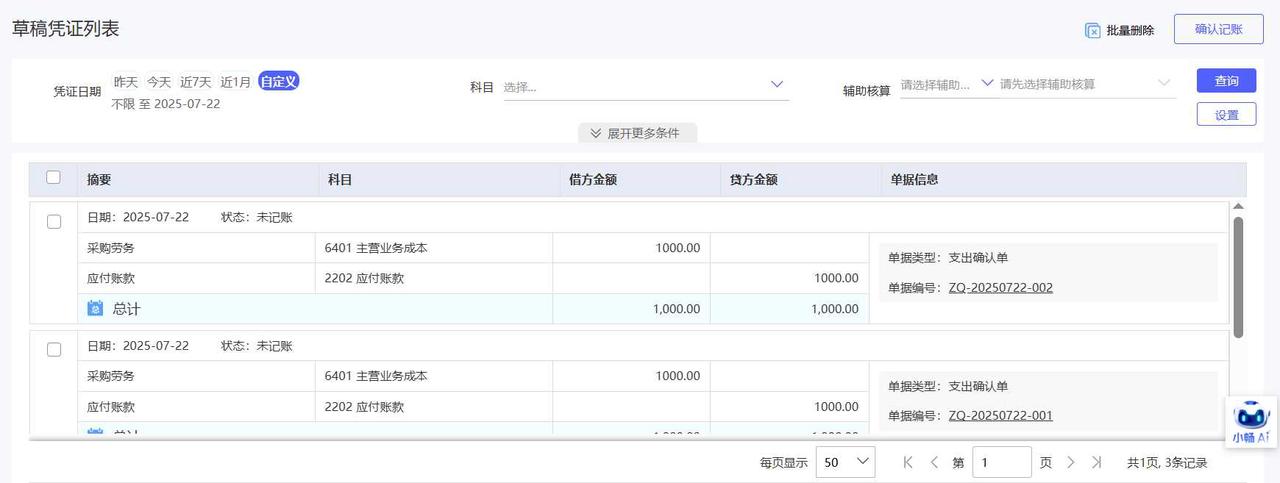
Once purchase and sales documents were approved, the system generated financial vouchers automatically, ending manual entry and guaranteeing that operations and finance stayed consistent. Documents and vouchers linked in real time, so reports reflected reality and gave reliable decision support. Approved documents became ledger entries without a person retyping them.
Smart Settlement Cleared Payables
Receipt and payment documents settled against receivables and payables automatically, keeping the business ledger and the financial ledger reconciled in real time and fully traceable. Receivable and payable detail could be reviewed by customer or supplier, with clear aging that kept cash risk under control. Disputes with suppliers shrank because balances always agreed.
First-In-First-Out Costing Refined Inventory
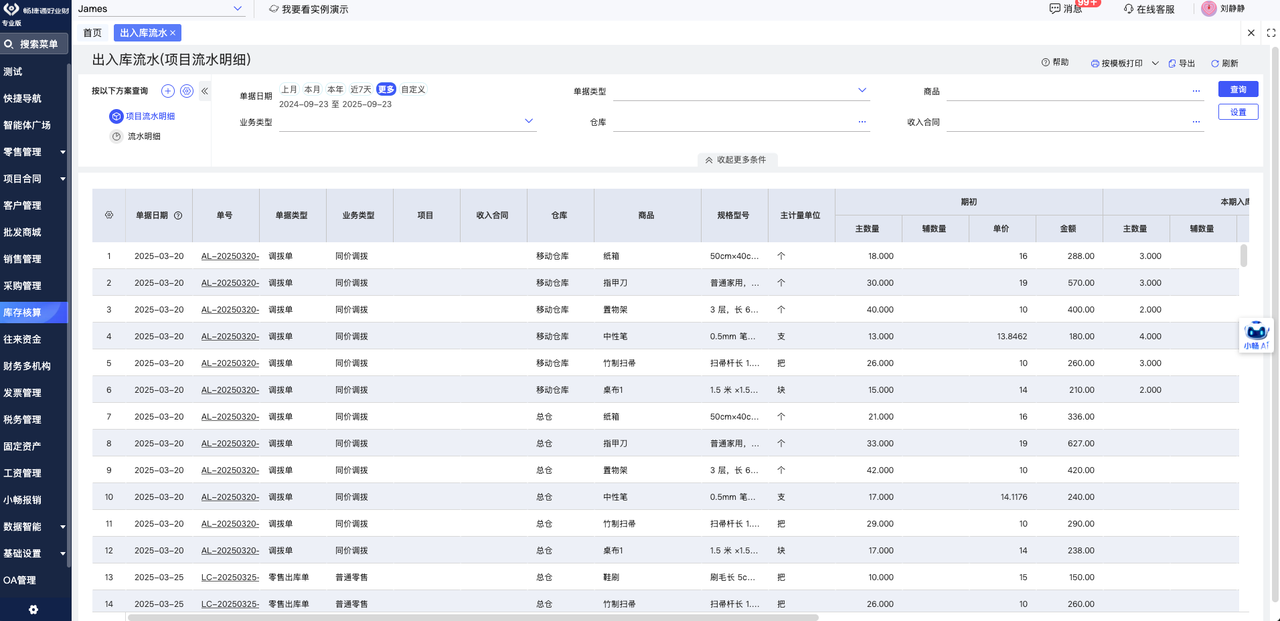
Batch and shelf-life management covered reagents and consumables, protecting quality and compliance. First-in-first-out costing made reagent costs precise and supported pricing decisions, while complete in-and-out records allowed batch tracing and quality control. Expired reagents got spotted early instead of after a failed test.
Invoice Tracking Prevented Errors
Sales documents supported invoice registration with real-time status tracking, avoiding duplicate or missed invoicing. All invoice information sat in one place and could be queried by condition, raising invoice-management efficiency. Invoicing status was visible to everyone instead of locked in one inbox.

Measurable Results
The wins compounded into faster finance and cleaner data. The outcomes below summarize the shift.
Finance Processing Speed Rose Sharply
Business documents now create vouchers automatically, removing manual voucher entry. Finance can spend more time on analysis and decision support, increasing the value it delivers. The month-end close stopped being a fire drill.
Real-Time Reconciliation Improved Decisions
Receipts and payments settle against receivables and payables automatically, keeping the two ledgers reconciled and traceable. Management sees financial position and operating results in real time, backing better business choices. Management saw real numbers while the month was still live.
Standard Inventory Raised Cost Accuracy
First-in-first-out and batch management sharpened reagent costing and standardized inventory. Fine control cut expiry losses and freed working capital, creating clear economic value. Inventory losses from expiry fell noticeably.
Conclusion
By adopting this ERP suite, the testing-services firm overcame the split between operations and finance and built an efficient, accurate, and disciplined digital platform. That foundation strengthens its competitive edge and supports steady growth in the professional technical-services field.
Related reading
Solving Apparel Wholesale Pain Points with Online Selection and Smart Warehousing
An apparel wholesaler cut order-entry time, reduced churn, and tamed multi-warehouse picking with a cloud ERP. Online selection and attribute cataloging streamlined the flow.
Read guide →Customer Case StudyAustralia Frozen Meat Processor: Accurate Costing for Whole-Chicken Cutting
How a Melbourne frozen-meat processor used ERP barcode, BOM disassembly and batch control to cut receiving time and cost every chicken part precisely.
Read guide →Customer Case StudyHow a Beijing IC Company Achieved Finance–Operations Integration for Precision Management
A Beijing integrated-circuit maker unified purchasing, outsourcing, kit sales, and accounting in one ERP, automating cost allocation and cutting month-end close effort.
Read guide →