Research Institute Controls Dedicated Project Funding With Virtual Accounts
A research firm struggled to keep grant money separate across 20 projects worth 7 million yuan. Virtual accounts now enforce dedicated funding with audit-ready exports.
Company Profile / Background
This case study covers a research services company spun out of an engineering university, with the school holding a minority stake. It provides experimental technical services, numerical simulation, and software analysis for research projects. Its workflow runs from project initiation and contract signing through funding arrival, dedicated-use control of expenditures, and finally the audit that closes each project. The firm typically carries around 20 active projects with total funding near 7 million yuan. With the university as a minority shareholder, every grant had to withstand scrutiny that a normal SME would never face.
Because research grants are subject to strict compliance and audit rules, the company needed far more discipline than a simple general ledger could provide. The absence of any unified project and funding system after founding left it exposed to real audit risk.
Core Challenges
Mixed Funding Made Dedicated Use Impossible
With no university-grade project or funding software, every project's money sat in one combined ledger. Income, spending, and balances could not be tracked independently, so funds easily leaked from one project to another. That broke the dedicated-use rule at the heart of research grant management and created a clear audit risk.
Manual Records Could Not Keep Pace
As the number of projects and contracts grew, hand-written records could no longer answer basic questions in time. Checking progress, fund usage, and transaction detail became painful, and management lost real-time sight of how each project was executing, hurting both decisions and control.
Audit Preparation Consumed Huge Effort
Exporting vouchers, ledgers, and other financial data was clumsy. When a project closed and needed an audit with detailed ledgers, vouchers, and a funding-use report, staff faced heavy manual assembly. At scale, manual work simply could not cope, threatening both audit speed and compliance.
How the System Solved It
The rollout used five capabilities: initiation, contract dashboard, virtual accounts, expense control, and audit export. Each is described below.
Project Initiation Tracked the Full Lifecycle
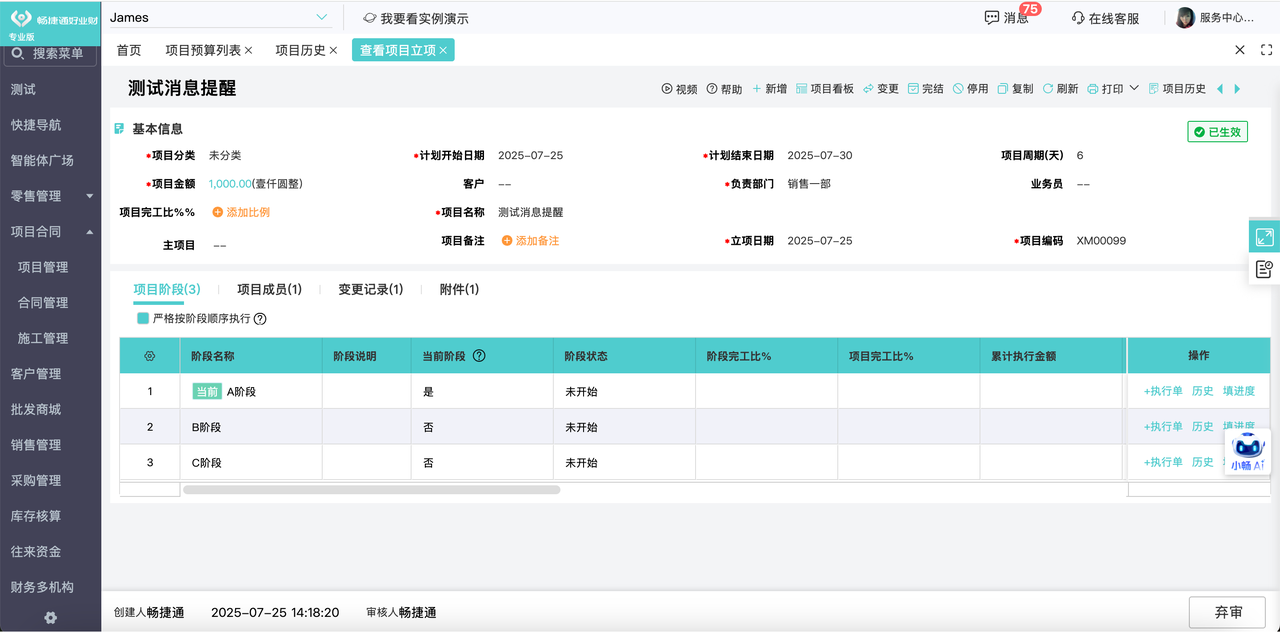
Each research project received its own file capturing name, dates, team, and stage information so all master data stayed unified. Revenue contracts were linked to projects with collection plans such as 80 percent upfront and 20 percent on completion, keeping contract and project data tightly connected. A coding rule of KY plus year plus sequence number made every project identifier standard and unique. Each project got an identity the whole firm could reference.
Contract Dashboard Made Collection Visible
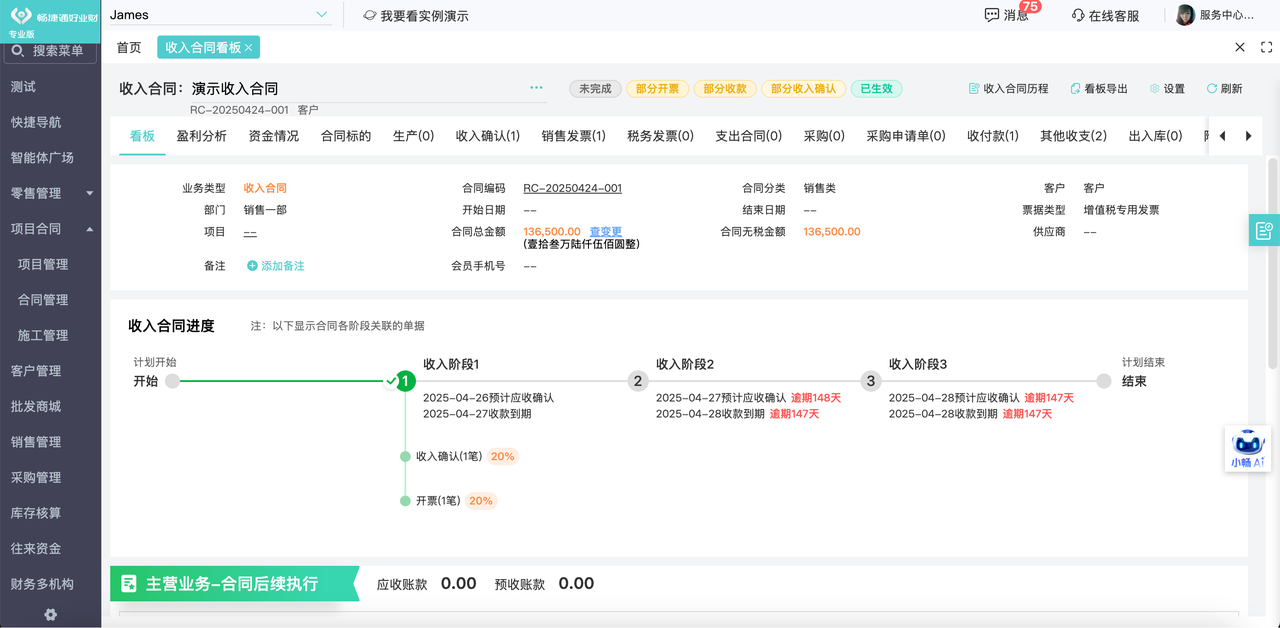
A revenue contract dashboard showed the full execution picture for every research contract, including basics, collection progress, and recognition status. Revenue-recognition documents and sales invoices generated from the contract auto-tracked the collection plan and flagged overdue receipts. Collection status stopped living only in someone's memory.
Virtual Accounts Enforced Dedicated Use
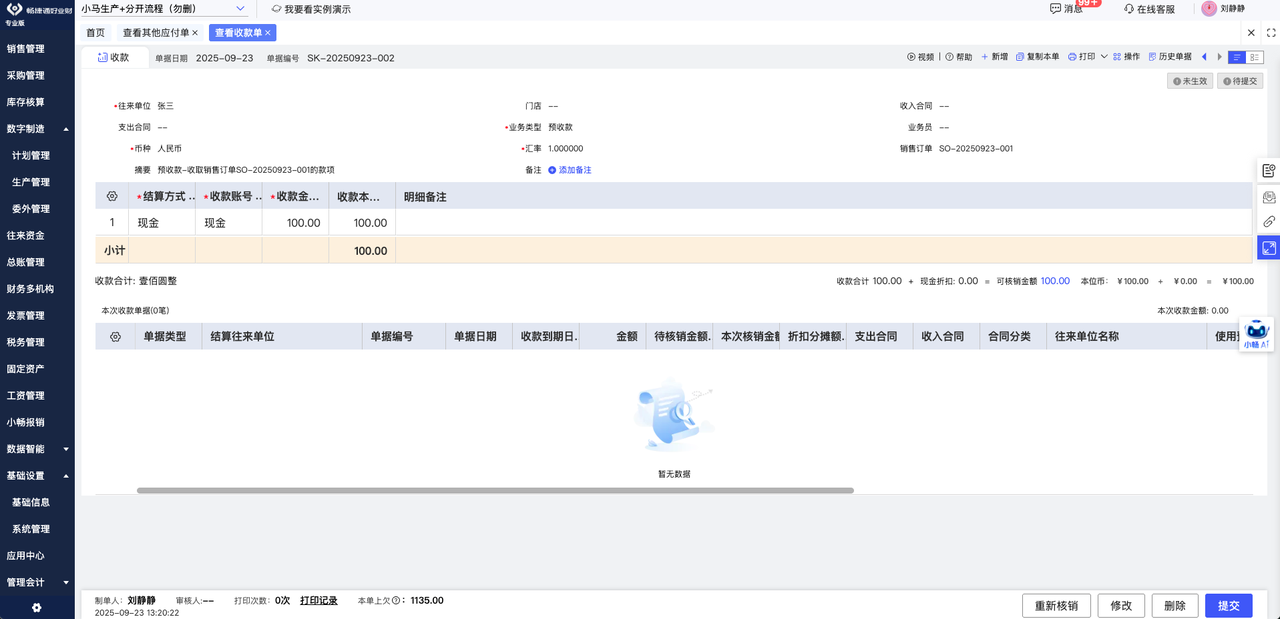
Receipt forms recorded each project's actual inflow with multiple payment methods, keeping money flows clear. In the account settings the firm created one master account plus a virtual account per project: funds landed in the master account first, then moved to the relevant project virtual account via a bank transfer slip, achieving genuine dedicated-use control. Money for one grant could no longer quietly drift into another.
Expense Control Kept Project Costs Clear
A single expense form managed materials, outsourcing, travel, and entertainment costs, with every payment forced to link to its project. Spending contracts were also tied to projects and generated payment confirmations, giving full purchase-to-pay control. Every cost carried its project tag from the start.

Audit Export Met Compliance Needs
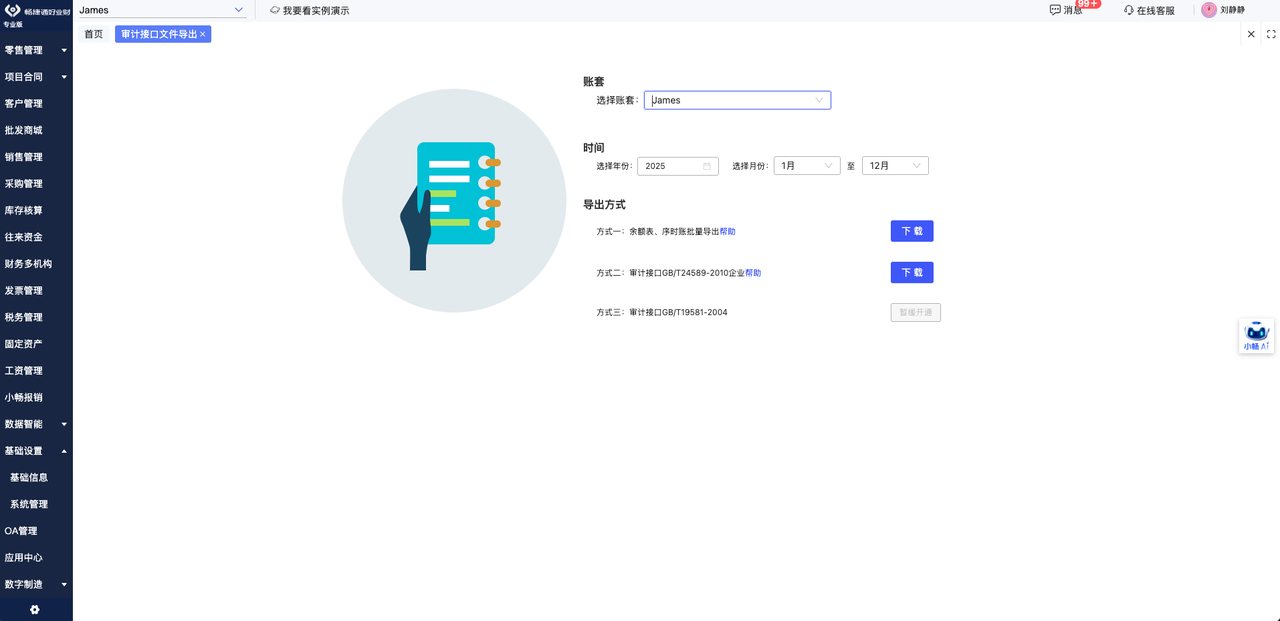
An audit interface export produced standard-compliant files in one click, carrying complete financial records and transaction vouchers to satisfy inspectors. It supported common XML and JSON formats with encryption, meeting different audit bodies' requirements. Audit files exported in the format inspectors expected.
Measurable Results
The changes turned compliance from a looming risk into a routine output. The outcomes below summarize the gain.
Compliance Risk Fell Sharply
Virtual accounts gave each project independent, non-overlapping accounting, so income and spending stayed transparent and fully compliant with grant rules. Audit risk dropped and the firm's compliance posture improved. Dedicated-use rules held without constant manual watching.
Full Project Visibility Lifted Efficiency
A complete lifecycle system took initiation, contract, collections, and closing audit online. Management could check progress, fund usage, and transaction detail anytime, raising both control and decision quality. Management saw any project's status on demand.
Automation Made Audit Prep Effortless
Vouchers and reports generated automatically and exported with one click. Work that once took days now finishes in minutes, keeping audits smooth and on time. Audit prep shrank from days to minutes.
Conclusion
By deploying this ERP suite, the research services firm replaced a chaotic, audit-exposed process with a standardized, efficient, and transparent project-funding platform. It now meets compliance demands with confidence while building a solid digital base for steady growth in the research services sector.
Related reading
Solving Apparel Wholesale Pain Points with Online Selection and Smart Warehousing
An apparel wholesaler cut order-entry time, reduced churn, and tamed multi-warehouse picking with a cloud ERP. Online selection and attribute cataloging streamlined the flow.
Read guide →Customer Case StudyAustralia Frozen Meat Processor: Accurate Costing for Whole-Chicken Cutting
How a Melbourne frozen-meat processor used ERP barcode, BOM disassembly and batch control to cut receiving time and cost every chicken part precisely.
Read guide →Customer Case StudyHow a Beijing IC Company Achieved Finance–Operations Integration for Precision Management
A Beijing integrated-circuit maker unified purchasing, outsourcing, kit sales, and accounting in one ERP, automating cost allocation and cutting month-end close effort.
Read guide →