Simplifying ERP to Cut Cost for a Shenzhen Electronics Maker
A Shenzhen electronics maker found its complex ERP costly and slow to run day to day. A lighter cloud system trimmed maintenance spend and kept cost control precise and auditable.
Company Profile / Background
Many small and mid-sized electronics manufacturers once believed that a more complex system meant finer management. This Shenzhen maker of electronic components, memory cards, and chips discovered the opposite: a heavyweight ERP became an invisible tax on efficiency. It builds some products in-house, outsources others, and runs a hybrid model, precise control of main materials with expense treatment of auxiliaries, so it needed a system that fit, not one that dictated. The lesson it learned, that more features are not the same as more control, is one many small factories only discover after paying for a system nobody uses.
Core Challenges
An Over-Complex System with High Maintenance Cost
The prior Kingdee K3 system was so complex it needed seven or eight people just to maintain. Menus and field names were unintuitive, and shop-floor staff with limited education struggled to operate it, keeping training costs high.
Redundant Process Steps
Auxiliary materials were forced into single-item BOM even when not needed, while a mandatory purchase-requisition step added clicks no one wanted. Process redundancy slowed every transaction.
Training Burden on the Floor
Because the old system spoke in its own jargon, every new hire needed weeks of coaching before they could post a simple receipt. That training cost recurred with each departure, and the knowledge gap invited workarounds that defeated the very controls the system was bought to provide.
Over-Granular Costing with Little Practical Use
Costing was finer than the business required. The firm needed only main-material and total cost; instead, auxiliaries had to enter BOM, and labor and utilities were wanted as month-end totals, not per-item detail. The business was paying for precision it never read, which is the most expensive kind of complexity.
How the System Solved It
The platform's flexible configuration and simplified flow built a system sized for a small manufacturer.
Streamlined Purchasing and Expense-Treated Auxiliaries
Flexible workflow lets purchasing go straight from order to goods receipt, no forced requisition. Auxiliary materials are received and issued without entering BOM, then expense-settled monthly, avoiding tedious single-item management.
Why Expense-Treat Auxiliaries
Screws, labels, and packing foam rarely drive a pricing decision, yet under a rigid BOM they demanded the same meticulous tracking as a memory chip. Treating them as period expenses keeps the cost picture honest where it matters, on the main materials, without spending labor on items whose precision adds no value.
Precise BOM and Clear Cost Collection
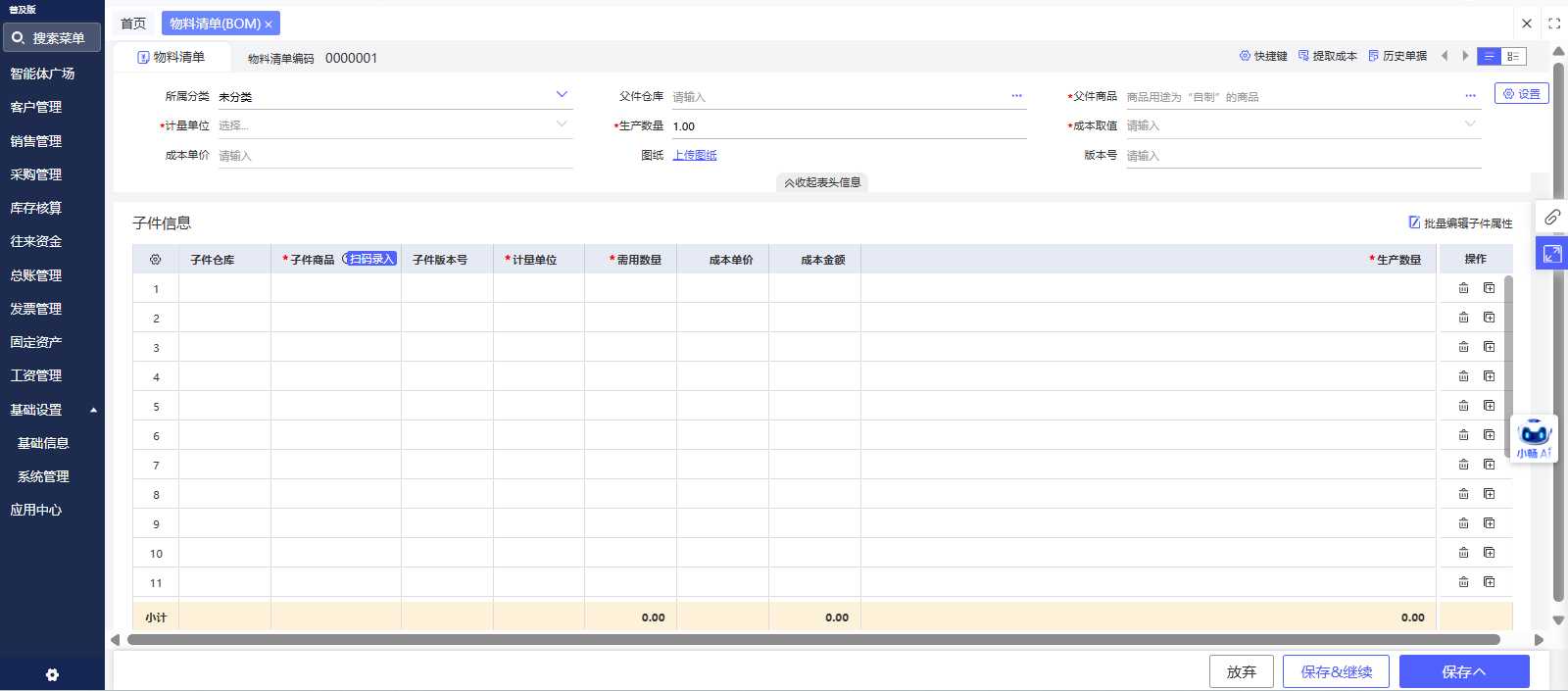
Standard BOM defines accurate main-material combinations with multi-level structure and version control. The system computes required main materials automatically and links them to the production order via self-made issue, removing manual error. Main materials cost by BOM while labor and utilities post as month-end totals, precise yet uncomplicated.
Full Sales-Order Tracking
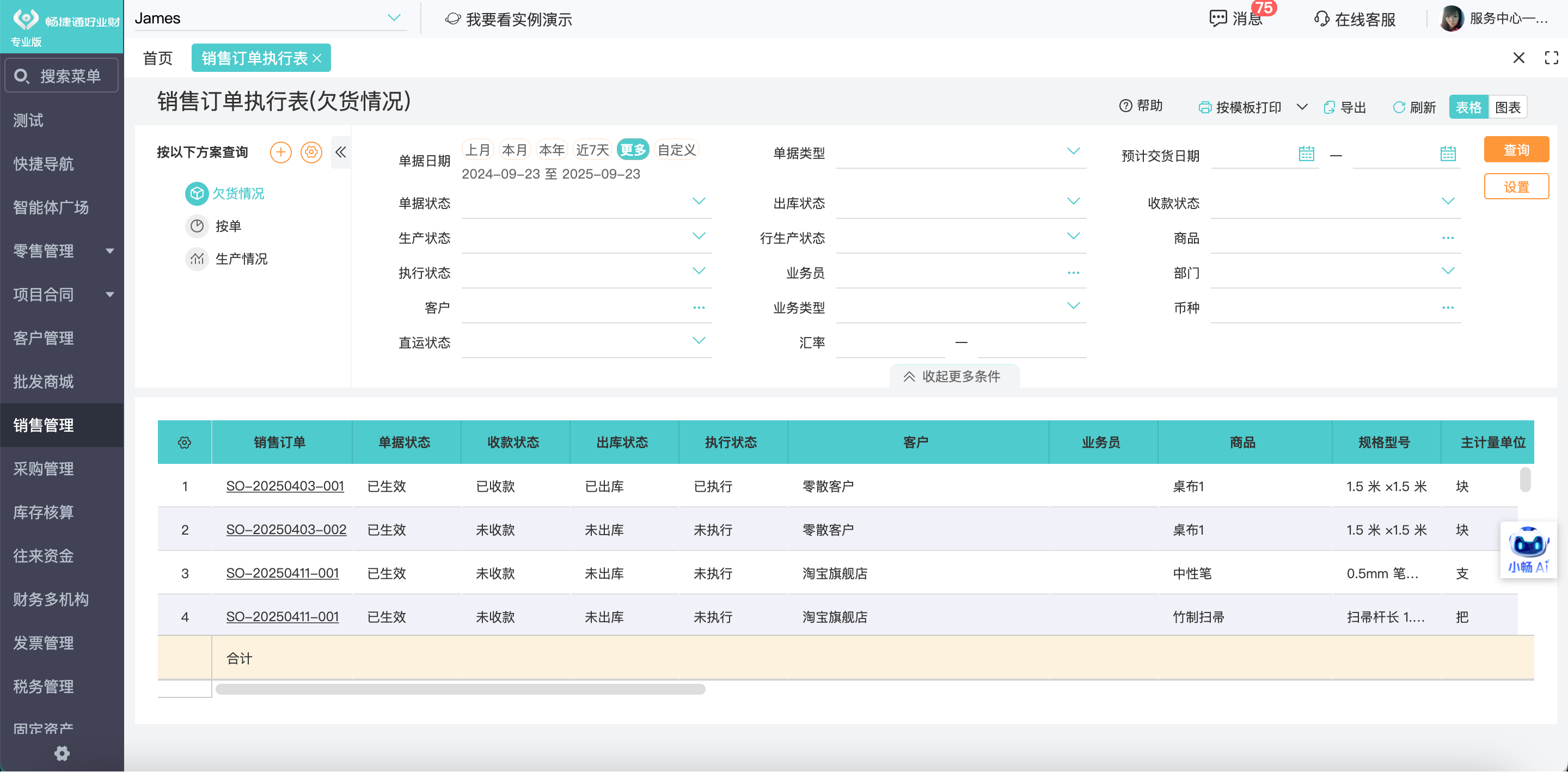
The sales order execution table monitors each order's delivery progress, shipped quantity, and collection status, removing blind spots so management and sales avoid late-delivery complaints and cash risk.
Measurable Results
Far Lower System Upkeep
Maintenance dropped from seven or eight people to a four-user team. A simplified interface hides unused modules and renames documents in plain language, cutting learning and training cost. The four remaining users cover the whole operation, and new starters are productive within a day rather than a month.
Higher Process Efficiency
Removing redundant requisition approvals, auto-generating vouchers from documents, and expensing auxiliaries lifted overall speed without sacrificing control. The time saved on each purchase and each production posting compounds across hundreds of transactions every week.
Practical, Accurate Cost Control
Main materials cost by BOM, auxiliaries by expense, and production cost consolidated monthly, accurate enough to price, simple enough to run. Management finally trusts the unit cost enough to quote confidently, even on custom batches it has never built before.
Conclusion
Right-sizing the ERP did more than trim cost: it gave the maker a lean, practical platform. For small electronics firms, fit beats feature count every time. The team stopped fighting the software and started using it, and the savings showed up not just in headcount but in the speed of every order that now flows without a manual detour. Less software overhead also means faster onboarding for new staff, who learn one clean workflow rather than a maze of modules. Less software overhead also means faster onboarding for new staff, who learn one clean workflow rather than a maze of modules.
Related reading
Solving Apparel Wholesale Pain Points with Online Selection and Smart Warehousing
An apparel wholesaler cut order-entry time, reduced churn, and tamed multi-warehouse picking with a cloud ERP. Online selection and attribute cataloging streamlined the flow.
Read guide →Customer Case StudyAustralia Frozen Meat Processor: Accurate Costing for Whole-Chicken Cutting
How a Melbourne frozen-meat processor used ERP barcode, BOM disassembly and batch control to cut receiving time and cost every chicken part precisely.
Read guide →Customer Case StudyHow a Beijing IC Company Achieved Finance–Operations Integration for Precision Management
A Beijing integrated-circuit maker unified purchasing, outsourcing, kit sales, and accounting in one ERP, automating cost allocation and cutting month-end close effort.
Read guide →