Outsourced Processing Goes Digital for a Shenzhen Electronics Firm
A Shenzhen electronics firm making air drums via OEM faced outsourced-process blind spots. Digital workbenches and allocated costs made every order traceable.
Company Profile / Background
The company is a Shenzhen technology firm that develops and sells electronic musical instruments, most notably air drum kits, using an outsourced production model. It owns design and sales while a third-party OEM builds to a BOM, purchasing most materials itself; the company supplies only a few custom components. In electronics, outsourcing has become the standard way to stay responsive and avoid heavy fixed-asset investment, but as SKUs multiply and supply nodes grow, the black box of outsourcing gets dangerous. Every extra node between the sales order and the finished carton is a place where materials, money, or meaning can go missing.
Core Challenges
No System for the Outsourced Workflow
From issuing the outsourcing order, to sending customer-supplied materials, to finished-goods receipt and fee settlement, everything was recorded by hand. With no digital control, progress was opaque and exceptions surfaced late.
Complex, Inaccurate Costing
The firm could not cleanly split outsourced material cost from processing fees, and customer-supplied versus factory-purchased materials blended together. Month-end costing meant heavy manual checking and errors that distorted pricing and profit analysis.
Hard Supplier Settlement
Tracking each supplier's material usage and leftovers was nearly impossible, and managing receivables-payables across several outsourcers was messy. Without systematic settlement, finance reconciliation dragged.
The Cost of the Outsourcing Black Box
When no one can see inside the subcontract, the business pays for visibility with expedites, write-offs, and apologies. A single missed return or double-paid fee is small on its own, but across dozens of orders it quietly erodes the very margin outsourcing was meant to protect.
How the System Solved It
The platform's outsourced-management, planning, and costing modules built a complete digital outsourcing system.
Full-Process Outsourced Order Management
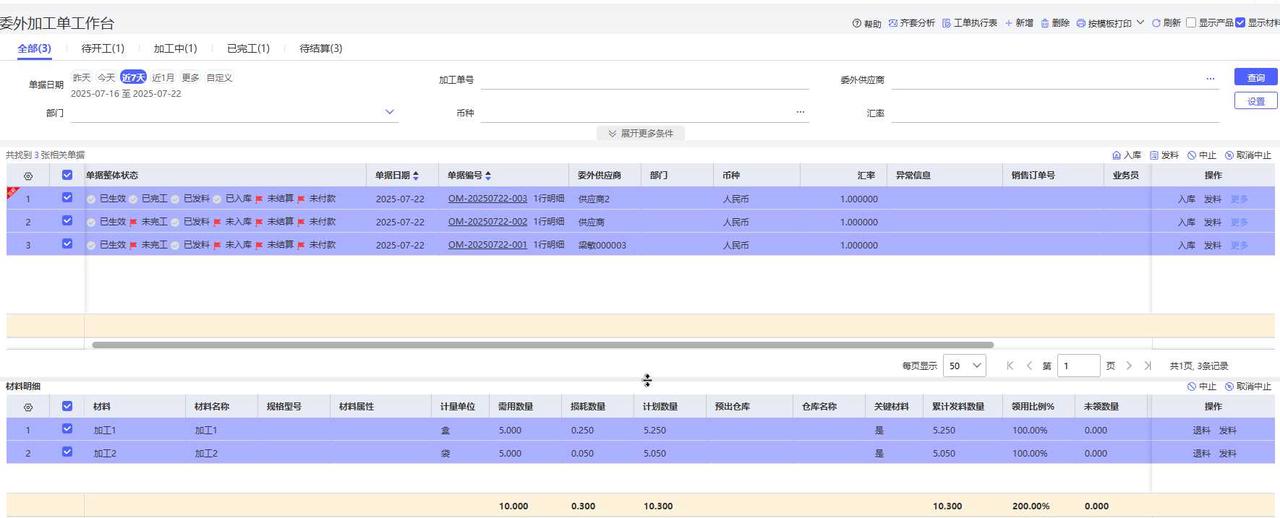
An outsourcing workbench centralizes the whole flow and monitors execution status in real time, ending the lag in subcontract progress feedback. Visual boards, status tags, and exception alerts make order status transparent and let the team catch problems early.
BOM Control and Smart Planning
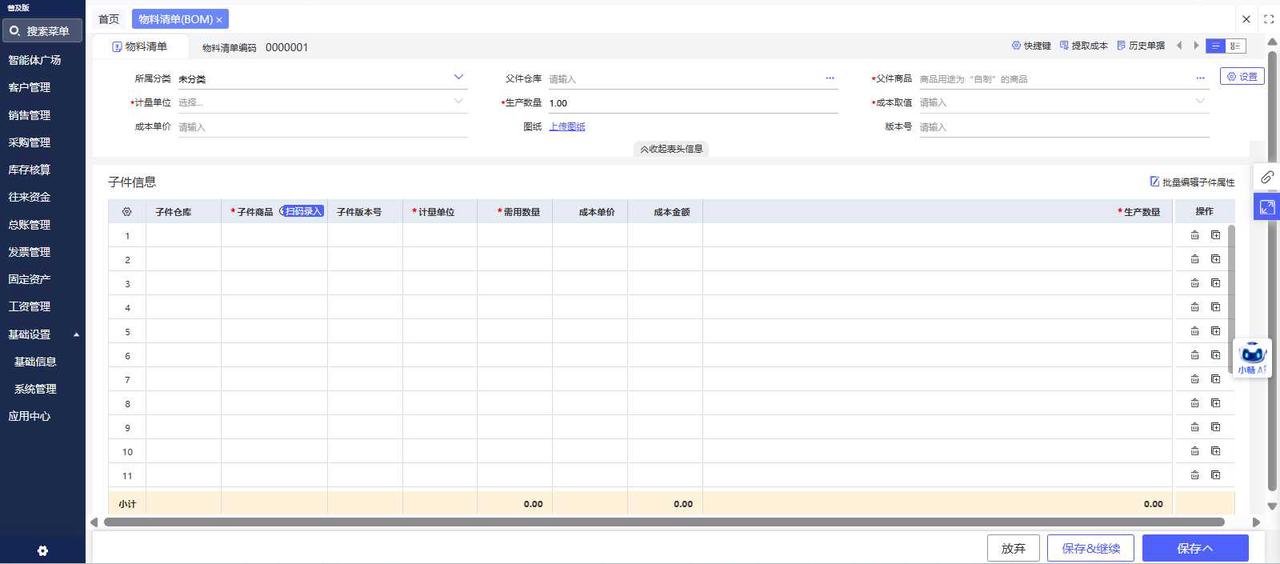
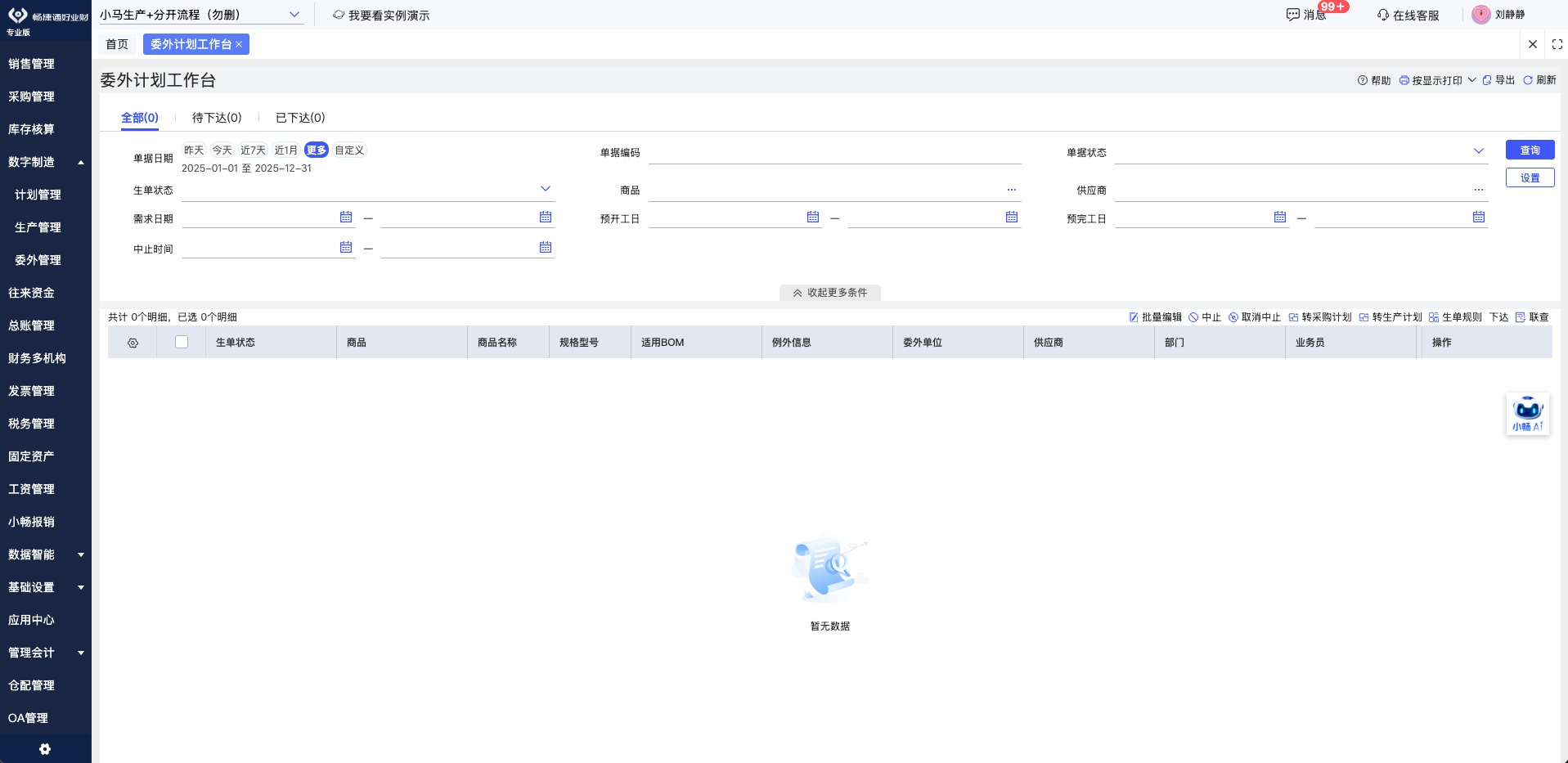
A dedicated outsourcing BOM lists only the customer-supplied materials the company buys, clarifying raw-to-finished relationships with multi-level BOM and version control. MRP-based planning turns material requirements into smart purchase suggestions that match production needs, avoiding overstock or shortage.
Precise Payable Write-Off
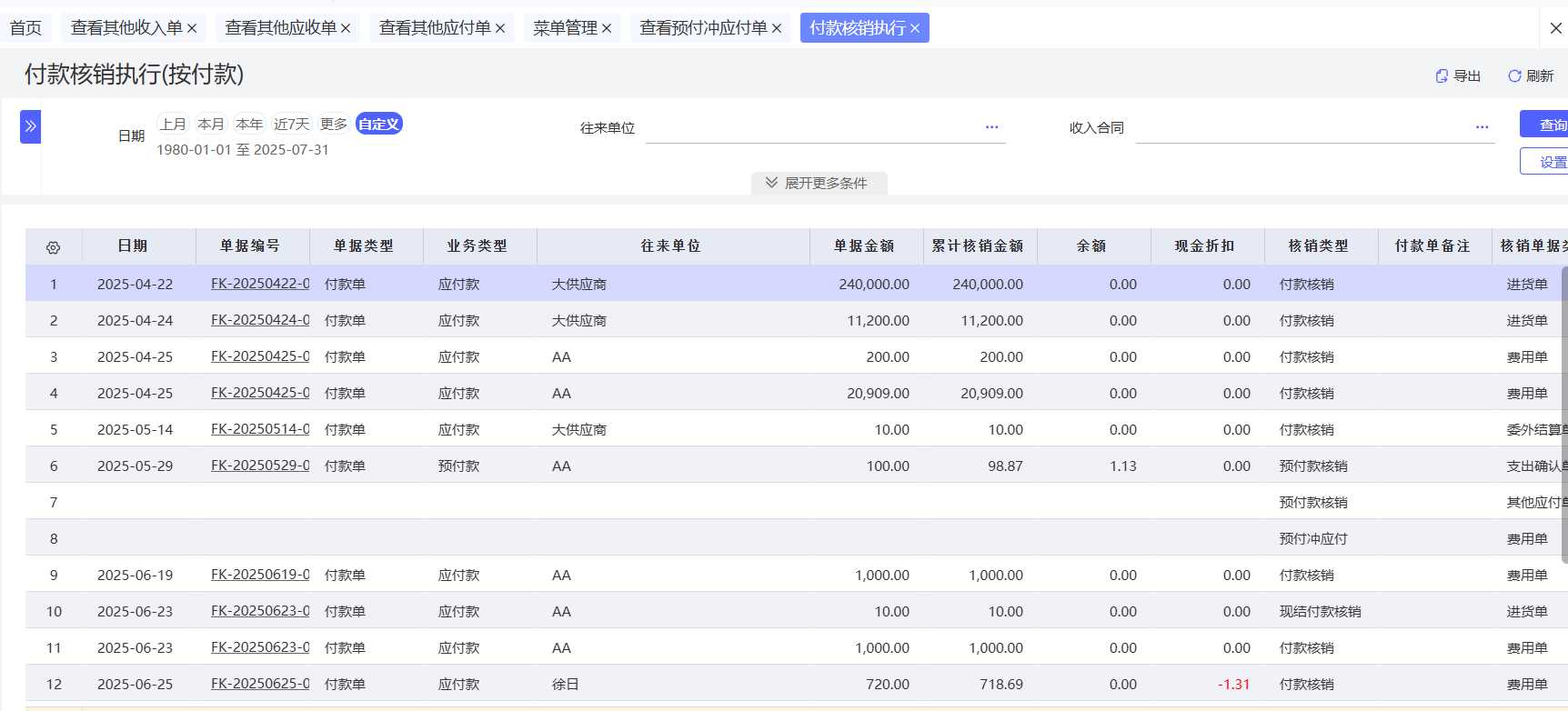
Payment write-off execution matches payments to payables automatically, completing the financial confirmation of payment and debt clearance while separating material purchases from processing fees. Partial-payment support writes off payables in time order, removing the duplicate-payment risk of manual checks.
Back-Filling History for True Tracing
Because the system keeps a dated audit trail of every outsourced document, the firm can import earlier manual records and let the engine recompute cost as if they had always been digital. That means even pre-go-live orders become comparable, so trends and supplier scores are built on complete history rather than a fresh start.
Measurable Results
End-to-End Visibility of Outsourcing
From order issue to material issue, receipt, and settlement, the full flow is tracked digitally with live status and early warnings, sharply raising control efficiency. Supervisors replaced daily status calls with a single glance at the workbench, and exceptions now surface before they become customer problems.
Automated, Fine Costing
The system auto-collects customer-supplied material cost and processing fees, completing month-end costing in one click and improving accuracy. Historical outsourcing data can be back-filled with adjusted dates for cost tracing. What used to be a multi-day scramble of spreadsheets is now a confirmed figure the morning after the period closes.
Clear Supplier Accounts
Separating material and processing payments, with partial payment and automatic write-off in time order, makes payables transparent, lifts reconciliation efficiency, and controls cash risk. Finance can answer a supplier query in minutes instead of promising a reply by week's end.
Conclusion
By digitizing outsourced processing, the firm replaced blind spots with traceability and rough cost with allocated precision. For electronics traders built on OEM, that discipline is the root of steady margin. The OEM model stays, but the guessing is gone, and that is what lets a small team run a complex supply chain with confidence. Traceability also strengthens the firm's hand in supplier negotiations, because every charge can be tied back to a finished order. Traceability also strengthens the firm's hand in supplier negotiations, because every charge can be tied back to a finished order.

Related reading
Solving Apparel Wholesale Pain Points with Online Selection and Smart Warehousing
An apparel wholesaler cut order-entry time, reduced churn, and tamed multi-warehouse picking with a cloud ERP. Online selection and attribute cataloging streamlined the flow.
Read guide →Customer Case StudyAustralia Frozen Meat Processor: Accurate Costing for Whole-Chicken Cutting
How a Melbourne frozen-meat processor used ERP barcode, BOM disassembly and batch control to cut receiving time and cost every chicken part precisely.
Read guide →Customer Case StudyHow a Beijing IC Company Achieved Finance–Operations Integration for Precision Management
A Beijing integrated-circuit maker unified purchasing, outsourcing, kit sales, and accounting in one ERP, automating cost allocation and cutting month-end close effort.
Read guide →