How a System Integrator Made Project Profit Visible and Automated Contract Management
A Beijing system integrator used project-based ERP to track profit per project in real time, automate contract renewals, trace serial numbers, and approve expenses on mobile.
The Profitability Challenge in System Integration
System integration is a technology-intensive service with long project cycles, complex cost structures, and demanding supplier management. Firms past a handful of concurrent jobs usually hit the same wall: they cannot see which engagements make money until long after. This case covers a Beijing integrator that rebuilt its project and contract backbone to put profit back in management's hands.
Company Snapshot
Based in Chaoyang District, Beijing, the firm sells server, network-security, firewall, router, and integration hardware, and also delivers system integration, managed services, and custom software. It runs every deal as a project, covering the full lifecycle from initiation and contract signing through procurement, on-site implementation, and delivery. The deployment served four active users.
Core Challenges Before the Upgrade
1. Opaque Profitability Left Decisions Without Data
Running several projects at once, the owner jumped between separate systems to piece together revenue, cost, and expense. Hand-built Excel profit sheets dropped data or miscalculated, so nobody could say which project was in the black and which was quietly losing money. Managers judged overruns on instinct because no real-time cost alert existed.
2. Manual Contract Control Missed Renewal Windows
The firm held a varied book of integration and maintenance contracts with mismatched expiry dates. Without tracking or alerts, contracts drifted toward expiration unnoticed and the renewal window was missed, hurting service continuity and client relationships.
3. Serial Numbers Were Hard to Trace
Every server and network device carried a unique serial number, yet the old approach could not follow a unit from goods-in to goods-out. When a customer needed support or a recall, the team could not quickly locate where an item came from or went, dragging down service quality.
4. Supplier-to-Product Mapping Was a Mess
Hardware came from multiple vendors with different models, prices, and lead times. Without a structured link between suppliers and products, buyers struggled to find the optimal source at purchase time, hurting speed and cost control.
The Solution Built on HaoYeCai
Using HaoYeCai (a project-finance ERP suite by Chanjet), the company combined project-contract management, inventory control, and financial accounting into one integrated system spanning the entire project lifecycle.
Project Initiation and Full Lifecycle Management
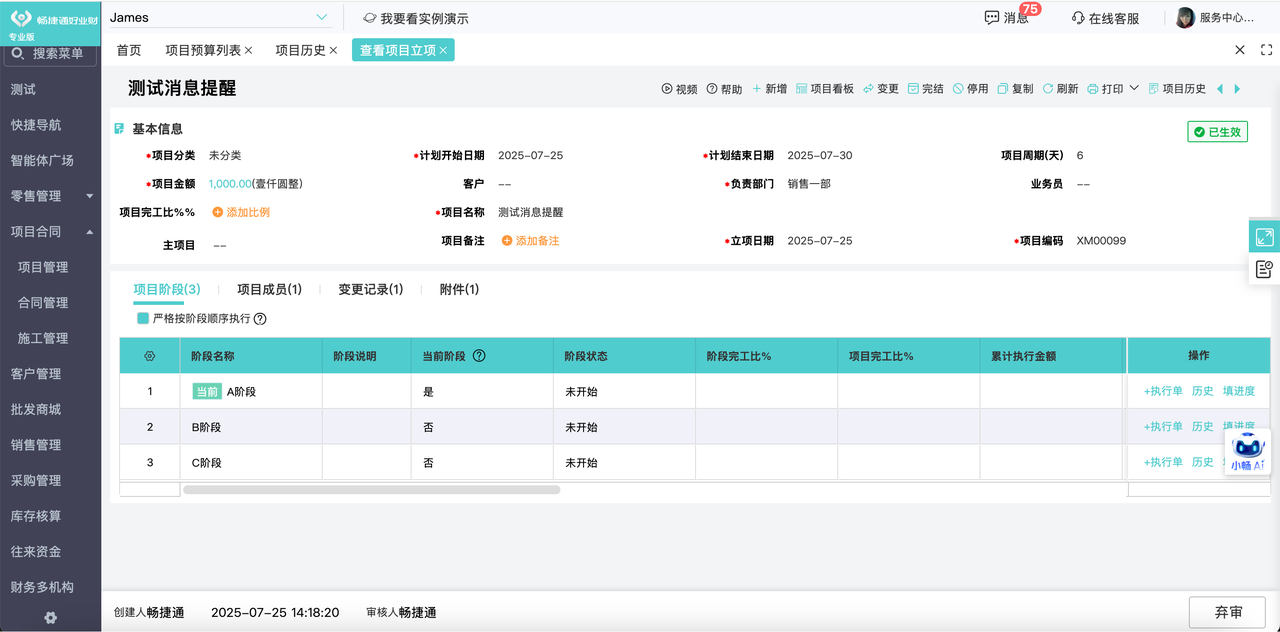
The Project Management module creates a standardized profile for each engagement, recording the name, start and end dates, team, and stage plan so information is consolidated. Its revenue contract links directly, keeping delivery and contract terms aligned and preventing the misunderstandings that cause rework.
Real-Time Project Profit Monitoring
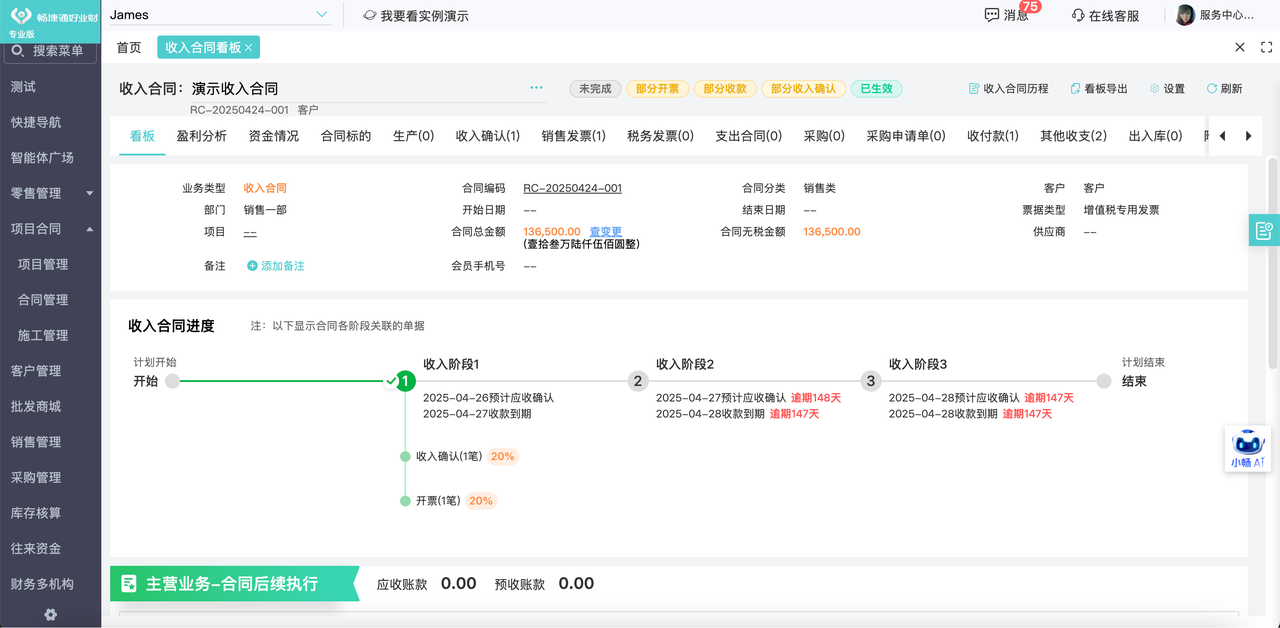
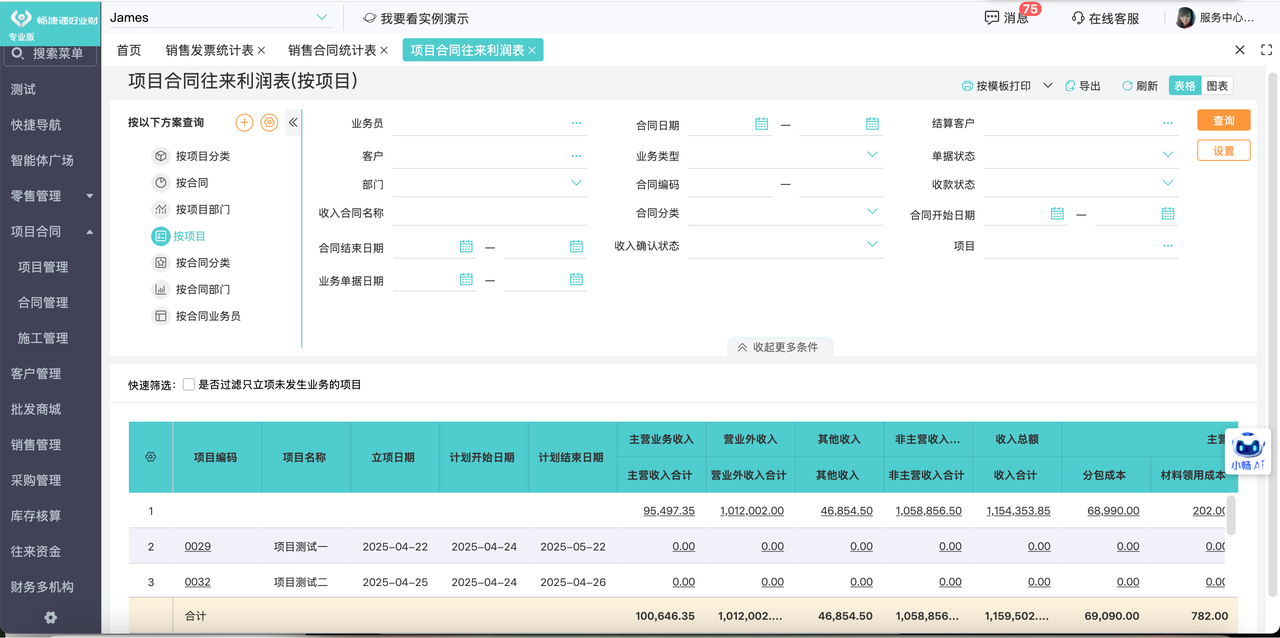
A revenue-contract dashboard presents each project's contract basics, collection progress, and revenue-recognition status in one place. The profit report pulls revenue, cost, and profit into a single view sliced by project or contract, so gain or loss on each engagement is precise. Receivables and payables are tracked live, flagging overdue invoices and unpaid subcontractor bills before they squeeze cash.
End-to-End Procurement Tracking
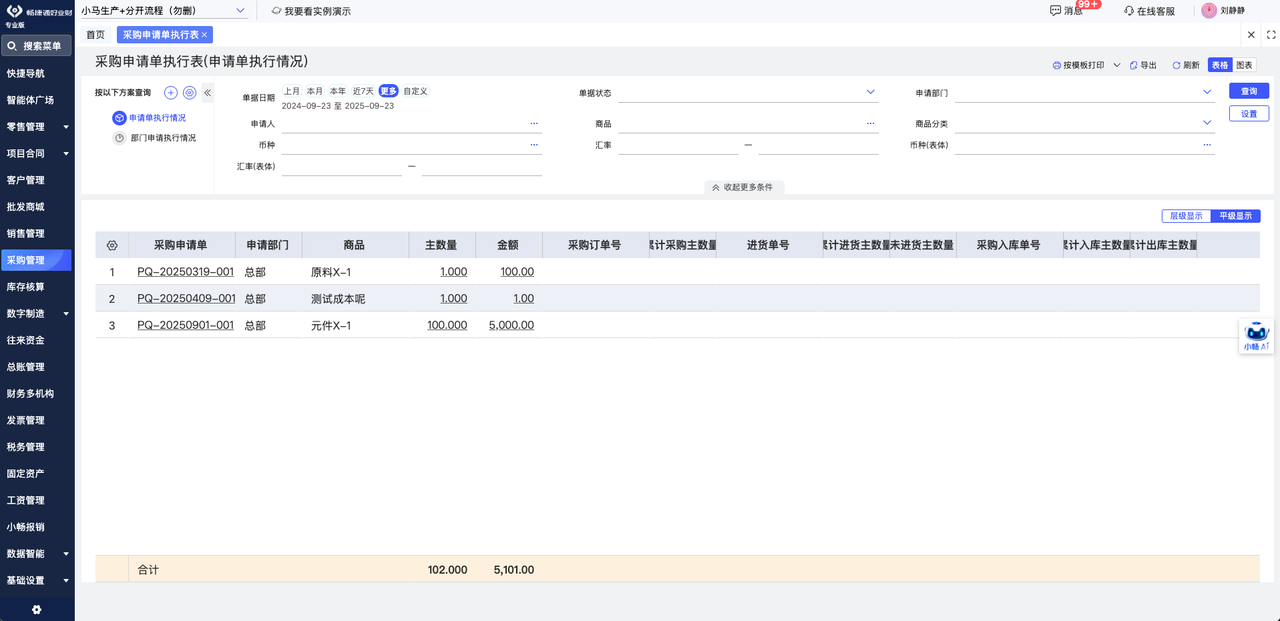
The purchase-requisition execution table follows each request from submission through order, receipt, and invoice capture. That visibility removes the risk of a project stalling because equipment never arrived, and warns managers early when procurement falls behind.
Fine-Grained Serial Number Management
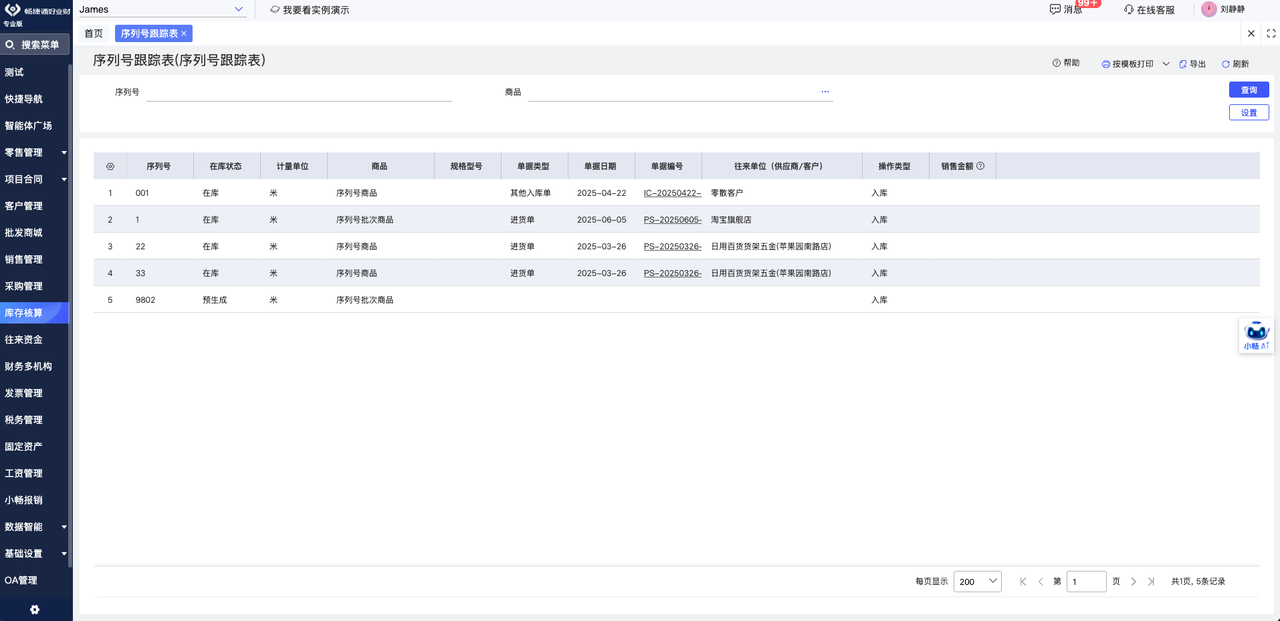
A serial-number tracking table records each hardware unit's full journey from purchase-in to sale-out, including inbound time, storage location, and outbound destination. When a customer needs service, the team can instantly see which supplier provided a unit and which client received it, speeding up support and recalls.
Mobile Expense Approval
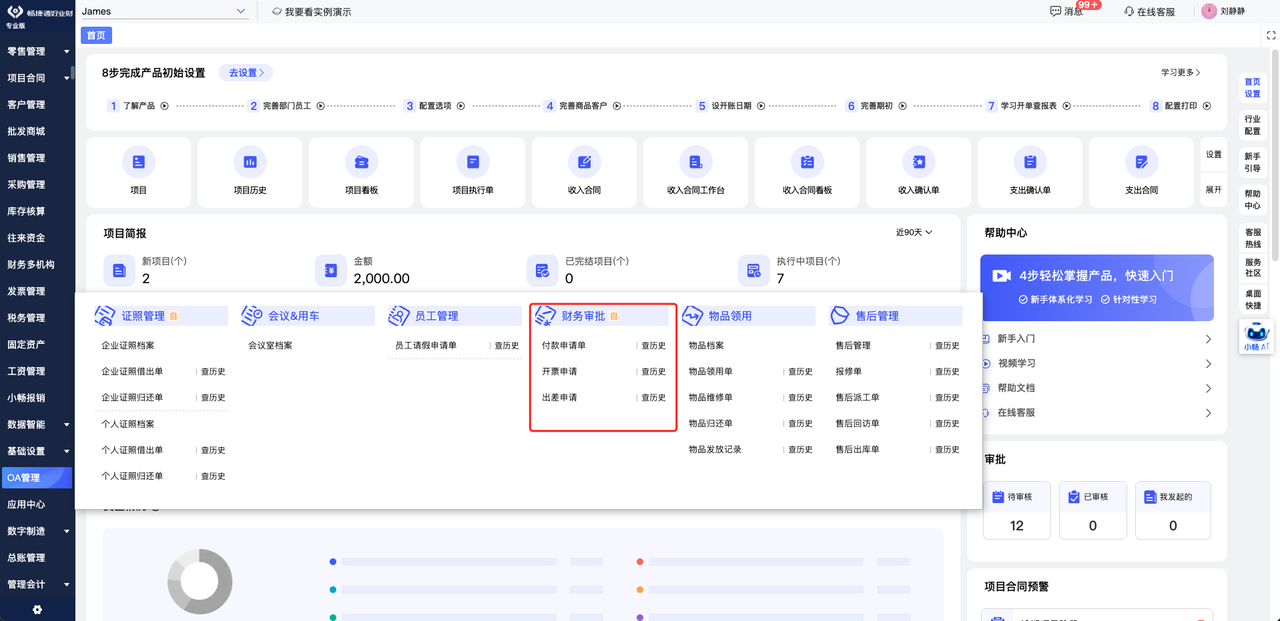
The financial-approval feature lets managers approve expense reimbursements and purchase payments from a phone, whether they are traveling, at home, or on site, so work never stalls waiting for a signature. Approval flows can be configured to match automatically by type and amount, keeping accountability clear and letting new hires adopt the process quickly.
Measurable Business Value
Transparent Profit Sharpens Decisions
With the dashboard and profit report, leadership sees each project's revenue, cost, profit, and cash balance in real time and can query across projects or contracts. Manual Excel roll-ups are gone, along with dropped rows and miscalculations, giving every decision a reliable data foundation.
Automated Contracts Keep the Business Running
Automatic expiry reminders notify the right people ahead of renewal dates, so contracts are never missed by accident. Systematic contract handling also helps the firm protect client relationships and capture renewal opportunities it used to lose.
Full Serial Traceability Speeds Service
End-to-end serial tracking means the team can trace any product from supplier to customer in seconds. For after-sales or recall scenarios, that fast location and response lifts customer satisfaction and service quality.
Visible Procurement Keeps Project Risk Contained
Live procurement tracking surfaces delay risks early, preventing the goods-not-arrived problem that stalls implementation. Transparent purchasing makes every project more controllable from kickoff to handover.
Conclusion
By implementing HaoYeCai, the integrator solved its hardest project-management pain points and built a transparent, efficient, and controllable project system. That foundation strengthens both delivery capability and profitability as the company competes in the system-integration market.
Related reading
Solving Apparel Wholesale Pain Points with Online Selection and Smart Warehousing
An apparel wholesaler cut order-entry time, reduced churn, and tamed multi-warehouse picking with a cloud ERP. Online selection and attribute cataloging streamlined the flow.
Read guide →Customer Case StudyAustralia Frozen Meat Processor: Accurate Costing for Whole-Chicken Cutting
How a Melbourne frozen-meat processor used ERP barcode, BOM disassembly and batch control to cut receiving time and cost every chicken part precisely.
Read guide →Customer Case StudyHow a Beijing IC Company Achieved Finance–Operations Integration for Precision Management
A Beijing integrated-circuit maker unified purchasing, outsourcing, kit sales, and accounting in one ERP, automating cost allocation and cutting month-end close effort.
Read guide →