Upgrading from Legacy T3 to Cloud ERP for Mobile Ordering and Reconciliation
A trading firm replaced its unstable legacy T3 system with a cloud ERP for mobile ordering and reconciliation. Finance and sales now work online without re-keying documents.
Company Profile / Background
The company is a trading firm dealing in home appliances, communication products, office supplies, and appliance and electronics repair services. Like many distributors that started on desktop accounting software in the mid-2000s, it had run Yonyou T3 since 2006. By the time it looked to modernize, T3 had been discontinued and no longer received updates, and the aging software crashed often enough to disrupt daily work. The business was healthy, but its backbone system had quietly become a liability.
Two organizational changes pushed the firm toward a decisive upgrade. Sales headcount was reduced, which raised a hard question: how do you keep existing customer orders flowing and hand accounts off cleanly when there are fewer people to cover them? Finance headcount was also reduced, which exposed how much of the accounting cycle still depended on someone being physically at a desktop, manually processing documents.
Core Challenges
An outdated, unstable legacy system
T3 was frozen and error-prone. Because the software was no longer maintained, every crash or glitch had no fix coming, and staff had learned to work around instability rather than trust the system. That eroded confidence in the data the system produced.
Sales staffing cuts threatened order continuity
With fewer salespeople, the firm needed a way to ensure existing customer orders kept flowing and that accounts were handed off without dropping. New reps taking over old accounts had no fast way to see what a customer paid last time or which tier price applied.
Finance staffing cuts exposed efficiency gaps
With fewer finance staff, manual bookkeeping could not keep up. Business documents sat unprocessed, remote work was impossible, and the finance workload piled up. The team needed to do more with fewer people, which a paper-and-desktop process simply could not support.
How the System Solved It
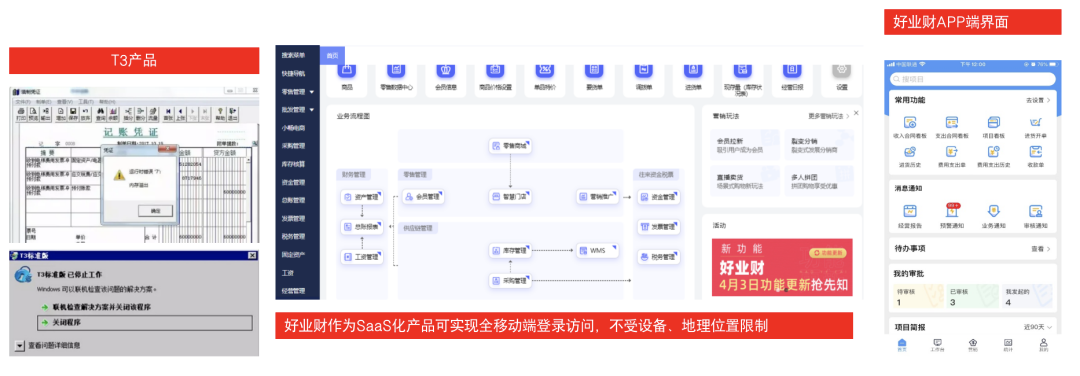
Moving the whole business online
The firm upgraded from T3 to the HaoYeCai cloud ERP suite (the ERP product by Chanjet), taking the entire business online. Sales staff can now accept orders online and enter documents quickly from both the mobile app and the computer, removing the dependency on a specific machine in the office.
Faster customer hand-off with price references
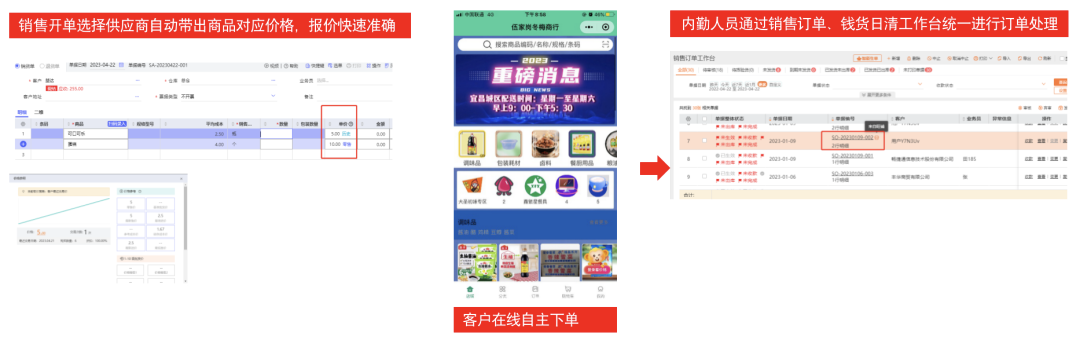
At order entry, the system automatically displays the customer's tier price and historical transaction price, with a price reference panel to guide the rep. A rep picking up an old account can quote correctly on day one, which directly addresses the risk that came with a smaller sales team.
Online store with self-service ordering
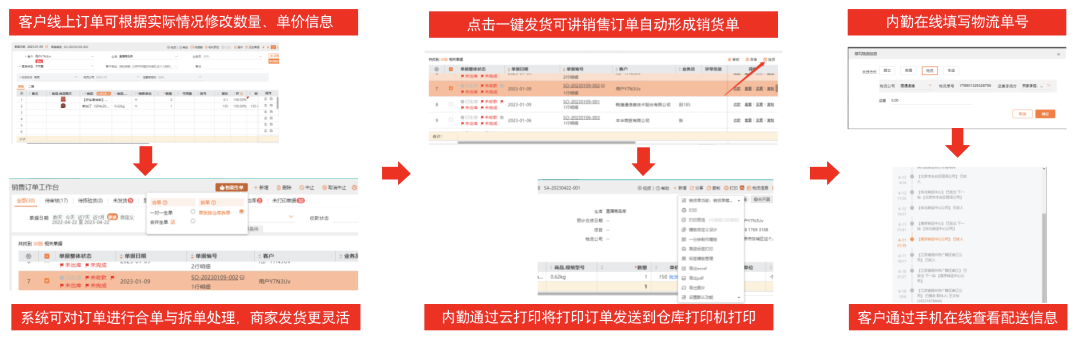
The firm opened a HaoYeCai online store (Wangpu) to guide customers into self-service ordering. Customers place orders and pay online, order auto-approval is enabled, and shipping documents print automatically. Once the warehouse ships, logistics information is sent back so customers can track delivery in real time on their phones.
Mobile finance and automated reconciliation
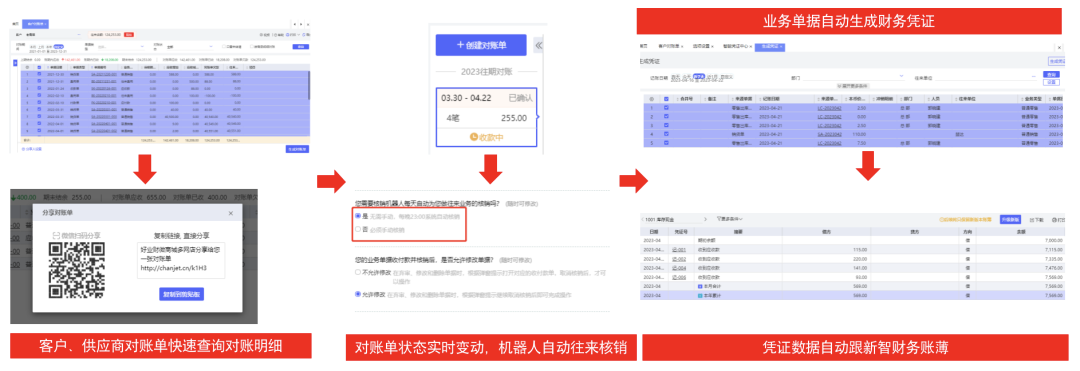
The fully mobile app lets finance work from anywhere, which was impossible under T3. When a sales invoice takes effect, the system automatically forms the customer's accounts receivable. Statements can be generated by customer or supplier for online reconciliation, and receivables and payables are written off automatically. The smart voucher center turns routine business documents into financial vouchers with one click, ending manual voucher entry.

Measurable Results
Remote, resilient operations
Replacing a crashed-prone desktop system with a cloud ERP meant finance and sales were no longer tied to one office machine. Documents get processed on time, remote work is normal, and a smaller team can cover the same workload because the software carries the routine work.
Cleaner hand-offs and faster bookkeeping
Auto-applied tier and historical prices let new reps serve old accounts confidently, while one-click vouchers removed manual entry from the accounting cycle. Reconciliation that used to mean chasing paper is now a query and a write-off.
Conclusion
The move from a discontinued T3 installation to a cloud ERP was less about adding features and more about removing fragility. For a trading firm running lean on both sales and finance, the combination of mobile ordering, self-service customers, and automated reconciliation turned a system that held the business back into one that let a smaller team do more. It is a clear example of why distributors on legacy desktop software should treat an upgrade as risk management, not just a tech refresh.
Related reading
Solving Apparel Wholesale Pain Points with Online Selection and Smart Warehousing
An apparel wholesaler cut order-entry time, reduced churn, and tamed multi-warehouse picking with a cloud ERP. Online selection and attribute cataloging streamlined the flow.
Read guide →Customer Case StudyAustralia Frozen Meat Processor: Accurate Costing for Whole-Chicken Cutting
How a Melbourne frozen-meat processor used ERP barcode, BOM disassembly and batch control to cut receiving time and cost every chicken part precisely.
Read guide →Customer Case StudyHow a Beijing IC Company Achieved Finance–Operations Integration for Precision Management
A Beijing integrated-circuit maker unified purchasing, outsourcing, kit sales, and accounting in one ERP, automating cost allocation and cutting month-end close effort.
Read guide →