Yunnan Construction Firm Lifts Project Accounting Efficiency by 32% with Integrated ERP
Yunnan Xinyuan Construction adopted a project-finance ERP to centralize its projects. The system ended manual reconciliation and lifted project accounting efficiency by 32%.
Company Background
Yunnan Xinyuan Construction Co., Ltd. was founded in 2001 in Dali, a city in China's scenic Yunnan Province. With more than two decades of engineering experience, the company has grown into an established contractor whose core business spans municipal public works, building construction, highway engineering, and water conservancy and hydropower projects, alongside the design of safety technology prevention systems. Its qualifications cover general contracting for building construction, professional contracting for decoration, municipal public works, earthwork, and stone masonry works.

The Struggle of Managing Projects Across Districts
As the business expanded, the number of active projects kept climbing, yet the work was spread across different regions. Reimbursements and approvals had to be filled in by hand, and costs for labor, materials, and equipment could not be tied to the right project in a timely way. Project data was often incomplete, which meant the finance team could not produce the reports that different managers and stakeholders actually needed. On top of that, project leaders lacked a full view of progress, cost, and execution, so the entire project management process cried out for optimization.
Like many contractors, Yunnan Xinyuan faced a different problem at each stage of its journey. The startup phase was dominated by winning business and securing cash flow; now, moving from a growth stage toward maturity, the management team wanted to take the company to the next level. That ambition made clear that the old manual approach had to give way to digital tools. A chance encounter with Chanjet HaoYeCai, followed by discussions with its pre-sales engineers, gave the firm a concrete path to dismantle those long-standing pain points one by one.
Key Pain Points Before Going Digital
- Too many projects: finance staff repeatedly reconciled with project departments, creating a heavy workload, slow reconciliation, and long turnaround cycles.
- Scattered projects: the owner could not track progress in real time, cross-department communication was costly, and cash inflows were not captured promptly.
- Hard cost collection: manual accounting left cost control lagging, which sometimes pushed costs too high and tipped projects into loss.
Building One Integrated Project-Finance Data Source
With HaoYeCai's integrated business-finance data, Yunnan Xinyuan began using the project dashboard and the revenue contract workspace to see every project's execution in real time. The dashboard surfaces progress, revenue, collections, inventory, cost, expenses, and invoices at a glance, which lets accountants understand project fund status with far less effort and gives managers continuous visibility. By reading each project's income, spending, and profit from a single screen, the company finally had a reliable basis for project decisions.
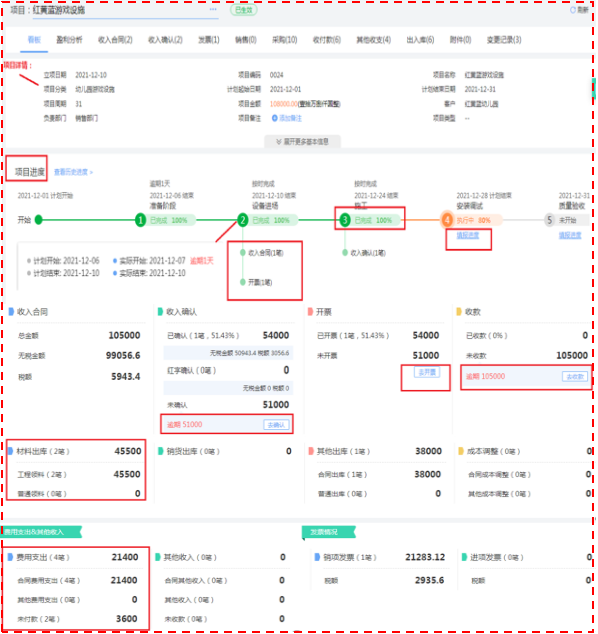
The same platform also helped the company stand up a professional, standardized, and real-time financial management system. Finance could now run multi-dimensional statistics and consolidate reports across the group, making it easy for leadership to understand project performance. Just as importantly, the software cut down the large volume of repetitive and statistical work, solved the timeliness and accuracy of document flow, and left a clear audit trail for every transaction.
Real-Time Visibility for Every Project
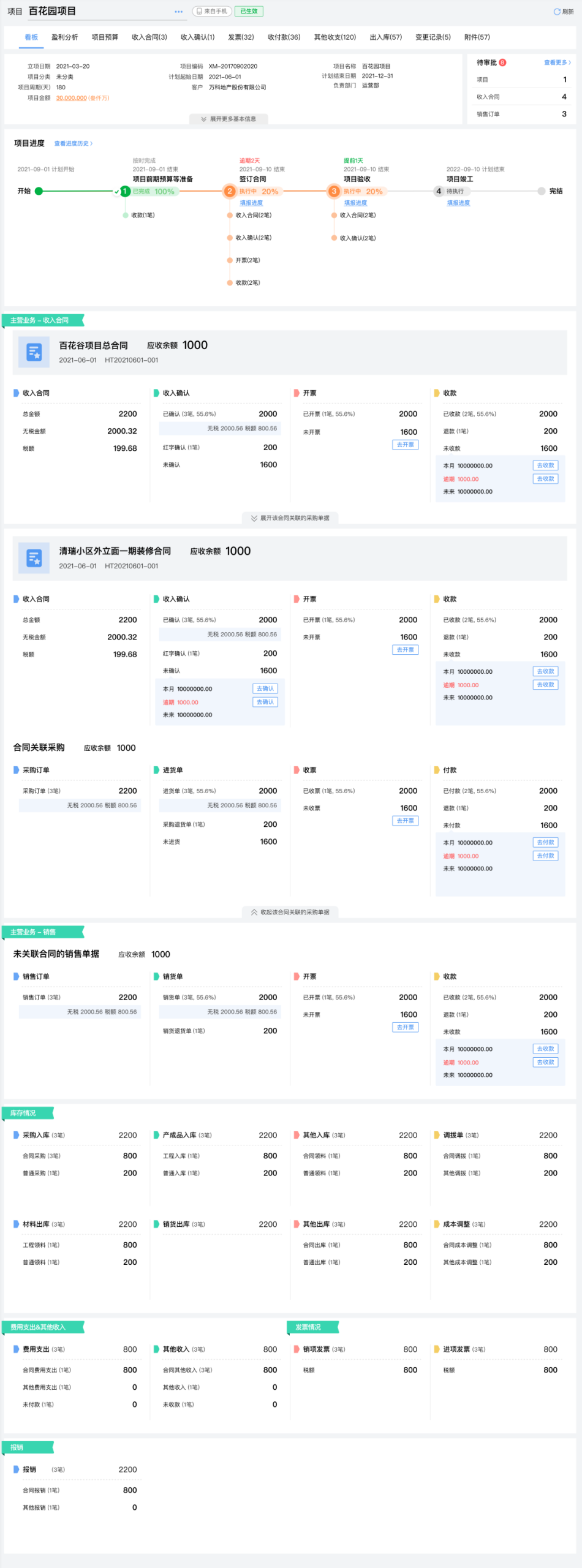
HaoYeCai's project management module handles multi-project data and progress in one place, showing a clear daily breakdown and summary of income, expense, cost, fund flows, inventory, and profit. Reconciliation became straightforward for accountants, and reports could be forwarded to the owner with a single click, giving leadership peace of mind without waiting for month-end packs.
Smarter Collections and Profit Decisions
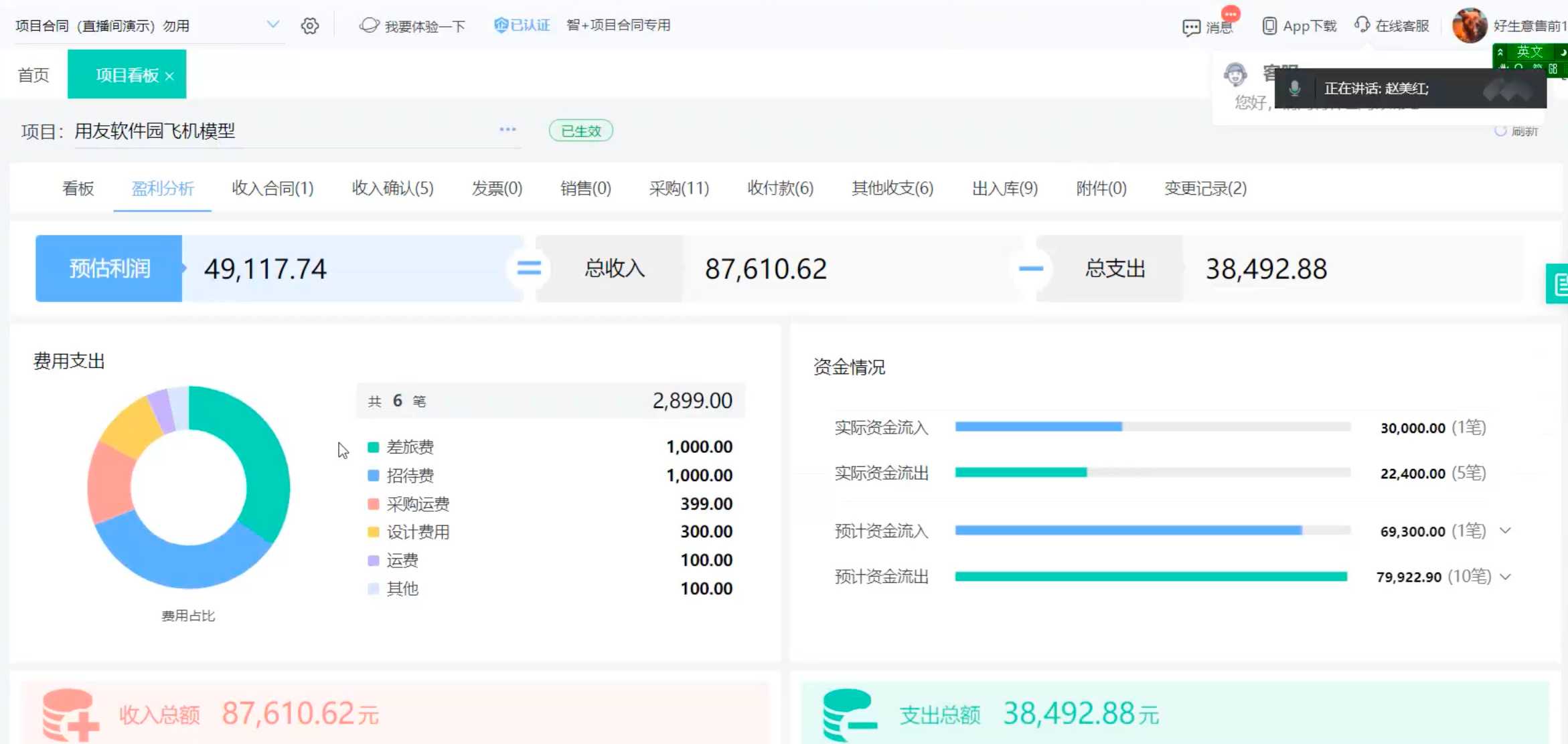
The project dashboard also lets the owner master all project data at once. Collection and settlement plans can be staged against project progress, with reminders sent before due dates, intelligent revenue recognition during the process, and overdue warnings afterward. Combined with live data analysis, project profit can be calculated in real time, so the company can quickly judge whether a job is profitable and back its decisions with hard numbers.
Subcontract Cost Control to Avoid Losses
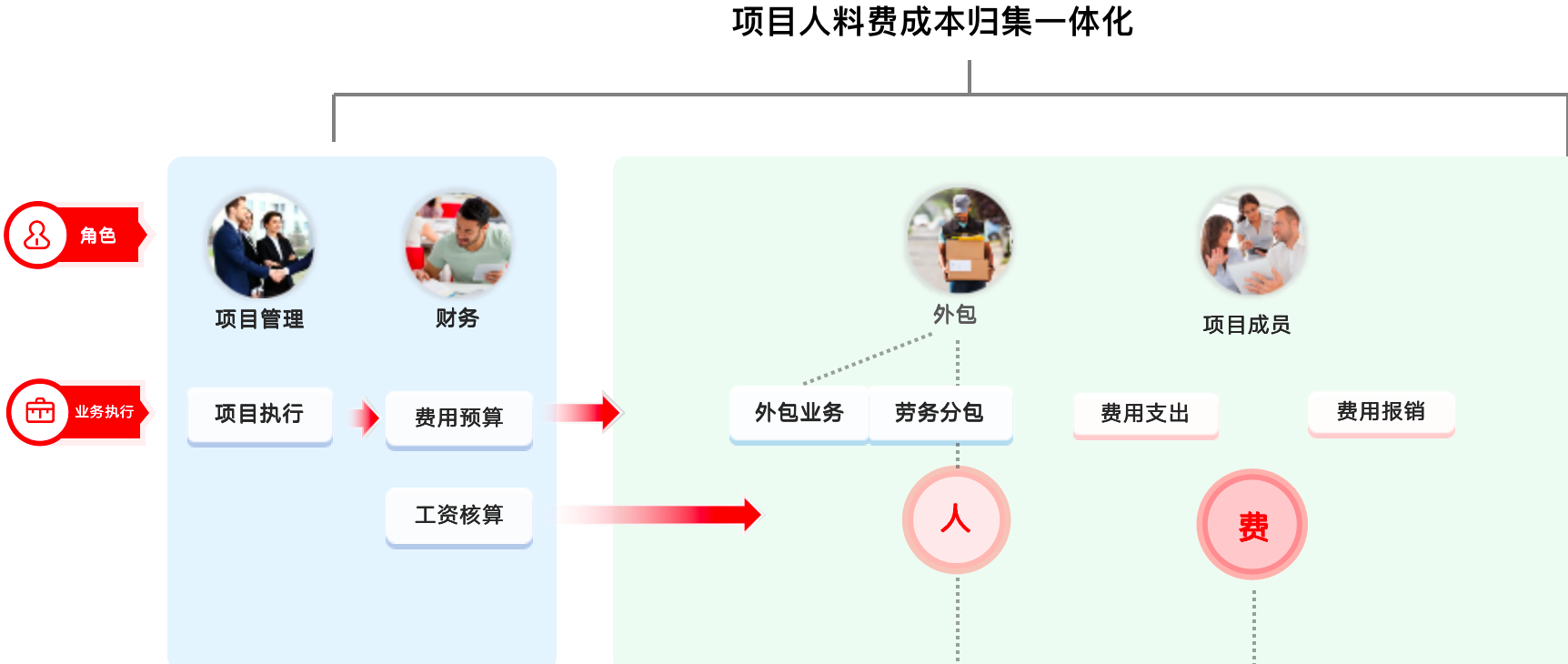
To keep project margins safe, HaoYeCai provides an integrated solution for labor and outsourced cost accounting. A general contractor can pass parts of a project to a qualified subcontractor, agree a settlement amount, and sign a subcontract. Payments are then settled by progress in stages and aggregated into the total project's subcontract cost, where they can be viewed in real time. That visibility helps the company avoid profit-eroding surprises and keeps every project on a healthy footing.
The Payoff: 32% Higher Accounting Efficiency
The guiding idea was simple: manage projects well and spend money wisely to maximize returns. Through Chanjet HaoYeCai, Yunnan Xinyuan linked procurement to projects, attached warehouse receipts to specific jobs, and let finance locate contract execution instantly through reconciliation statements. The owner now follows overall progress through the project dashboard, briefs, and contract board. Costs incurred during a project are gathered by job in real time, and business documents automatically generate financial and project profit reports, helping the finance team lift its accounting efficiency by 32%.

Related reading
Solving Apparel Wholesale Pain Points with Online Selection and Smart Warehousing
An apparel wholesaler cut order-entry time, reduced churn, and tamed multi-warehouse picking with a cloud ERP. Online selection and attribute cataloging streamlined the flow.
Read guide →Customer Case StudyAustralia Frozen Meat Processor: Accurate Costing for Whole-Chicken Cutting
How a Melbourne frozen-meat processor used ERP barcode, BOM disassembly and batch control to cut receiving time and cost every chicken part precisely.
Read guide →Customer Case StudyHow a Beijing IC Company Achieved Finance–Operations Integration for Precision Management
A Beijing integrated-circuit maker unified purchasing, outsourcing, kit sales, and accounting in one ERP, automating cost allocation and cutting month-end close effort.
Read guide →